The top 3 attractions at a glance
San Sebastián is a great place to spend a weekend. The beautiful surroundings also make longer holidays possible. If you're travelling in France or Spain and only plan a day trip, here are my top 3 must-see attractions:
Historic Old Town
Playa de La Concha
Monte Igueldo
1st Kursaal
We start with an absolute landmark of Donostia-San Sebastián: the Kursaal(Google Maps).
The German name is a holdover from the 19th century, when a similar building already stood on this site and all such multi-purpose buildings were called Kursaal.
Today's Palacio de Congresos y Auditorio Kursaal(www.kursaal.eus)- its full name - was finally built between 1989 and 1999 and even won a European architecture prize. The Kursaal mainly hosts congresses and events, such as the famous San Sebastian International Film Festival.
Especially at night, the modern building complex is also an eye-catcher from the outside. The Kursaal is then often illuminated in a colourful and varied way.
Another eye-catcher is the Puente del Kursaal, the Kursaal Bridge, which leads across the Urumea River towards the old town. The green and white lanterns on the bridge look like small lighthouses and form a great contrast to the futuristic Kursaal.
Tip: Speaking of bridges, you should also take a look at the Puente de María Cristina. It also leads across the Urumea, is built in the monumental neo-baroque style and, with its four towers, is reminiscent of the famous Pont Alexandre III in Paris. You will find the bridge about one kilometre upstream from the Kursaal(Google Maps).
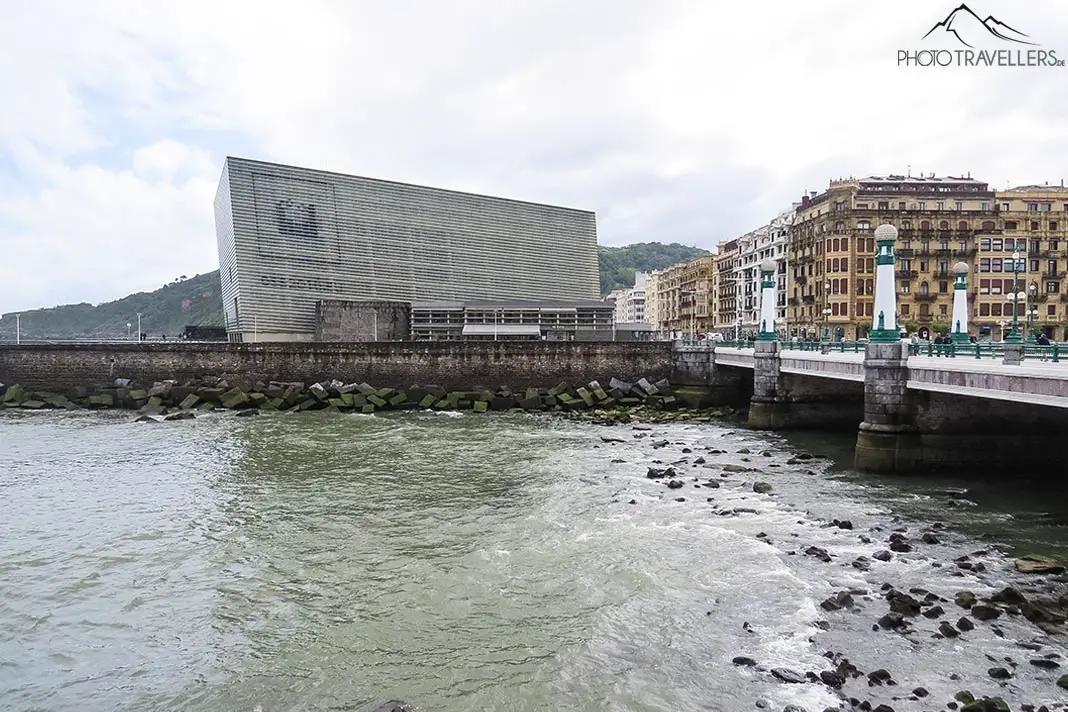 The Kursaal with the Kursaal Bridge is one of the landmarks of Donostia-San Sebastián.
2nd Historic Old Town
We cross the Urumea River and arrive in the historic old town of Donostia-San Sebastián(Google Maps). It is called Parte Vieja-Alde Zaharra, which means "old part" - like the city name itself, again in Spanish and Basque.
By the way, the old town is not that old. In 1813, there was a big fire in Donostia and it was only afterwards that the historic centre as we know it today was built and restored. Exactly 50 years later, in 1863, the old city walls were demolished - so unfortunately you can't visit them today either.
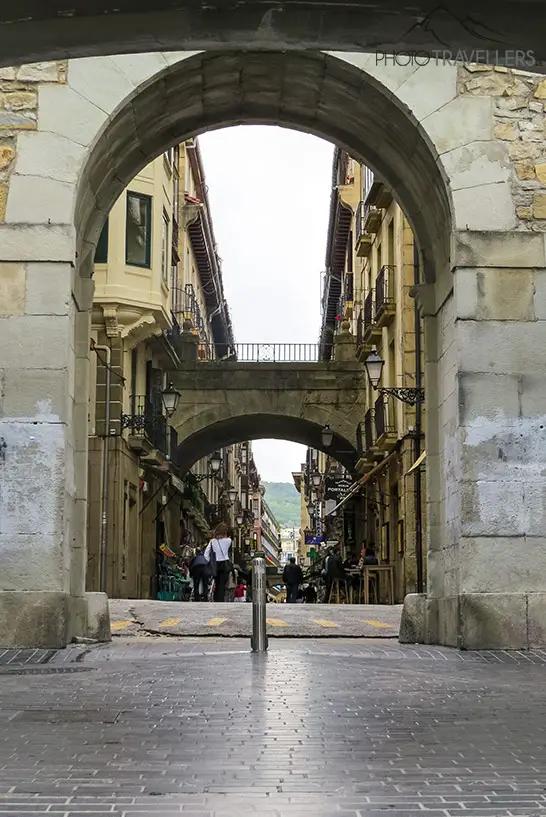 This is the Calle Puerto, one of the most famous promenades in the historic old town of San Sebastian.
One of the central squares in the old town of Donostia is the Plaza de la Constitución, or Konstituzio Plaza in Basque(Google Maps). This used to be the city's bullring - today it is still reminded by the many cramped flats with their small balconies, which served as boxes back then and are therefore still numbered today.
In addition, the old town hall of San Sebastián is located here, which is now used as the town library. There are also other cultural and many gastronomic offerings in the square. So you should definitely stop by here!
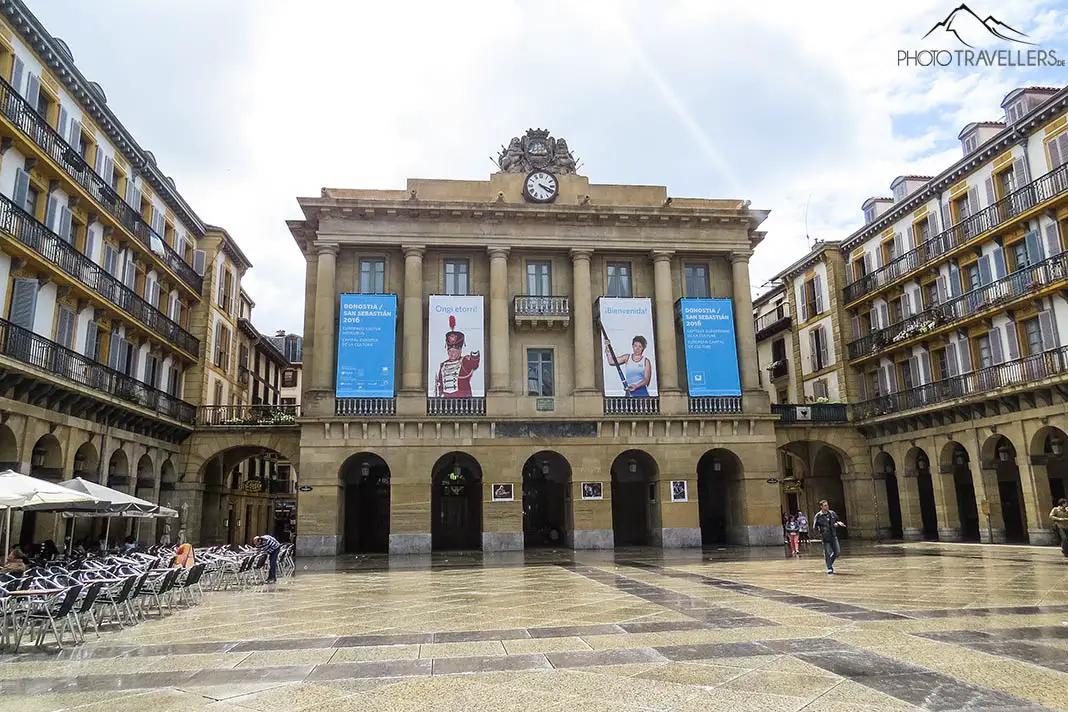 The central Plaza de la Constitución with the old town hall and the numbered balconies.
San Sebastian's new town hall was built in 1945(Google Maps). The building still in use today on the edge of the old town actually used to house the city's casino until gambling was banned in the 1920s. Even today, however, the magnificent building is a reminder of the luxury of that time.
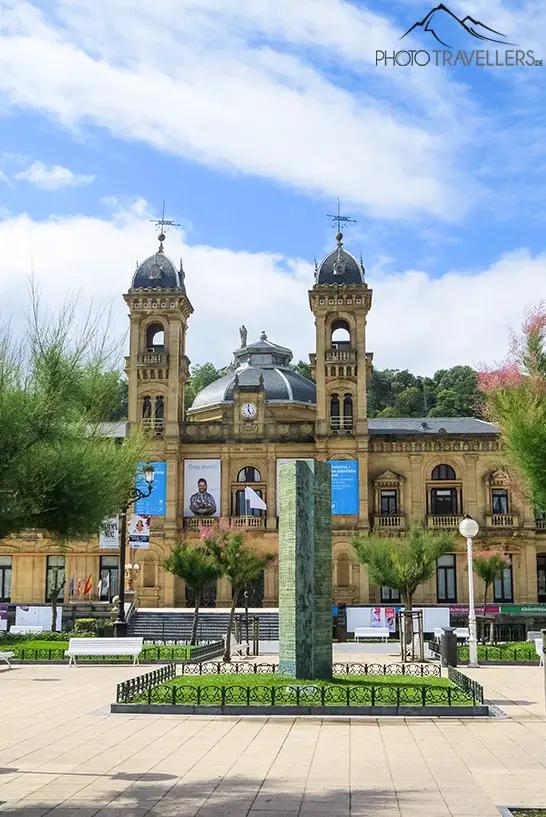 The magnificent old casino is now the home of Donostia-San Sebastián's city council.
Another highlight in this part of the city is the San Telmo Museum(website). It was opened in 1902, making it the oldest museum in the Basque Country. More than 26,000 exhibits on Basque history are on display - and all in an old monastery building from the 16th century(Google Maps). Entrance costs around 6 euros.
3. pintxos bars
We'll stay in the historic old town for a moment, because here, as promised, I'd like to introduce you to a real culinary highlight.
It's about the so-called pintxos. These are small appetisers that you get in pubs and bars and usually snack on with a drink. Some say they are the tapas of the Spanish north. But I'm not sure they like it so much there, because pintxos have a long tradition, especially in Donostia-San Sebastián.
The main difference to the famous tapas is the way they are served. The pintxos, whose name is derived from the Spanish word for "skewer", namely "pincho", are skewered on a small toothpick. This keeps the components together and prevents them from falling off the slice of bread on which they are often served.
This is also practical later when it comes to paying. Then you can simply count the empty skewers on the plate and calculate the price.
You should definitely try a glass of Sidra with your pintxos. This is the name of the local cider, which you can even get on tap between mid-January and Easter. Sometimes the host will call out "Txotx!" and if you reach the barrel first, you'll be in charge of pouring the Sidra yourself.
The best pintxos with sidra can be found in one of the many pintxos bars in the old town of Donostia-San Sebastián. My personal tip: the Juantxo Taberna(website) in the middle of the central street Enbeltran Kalea(Google Maps).
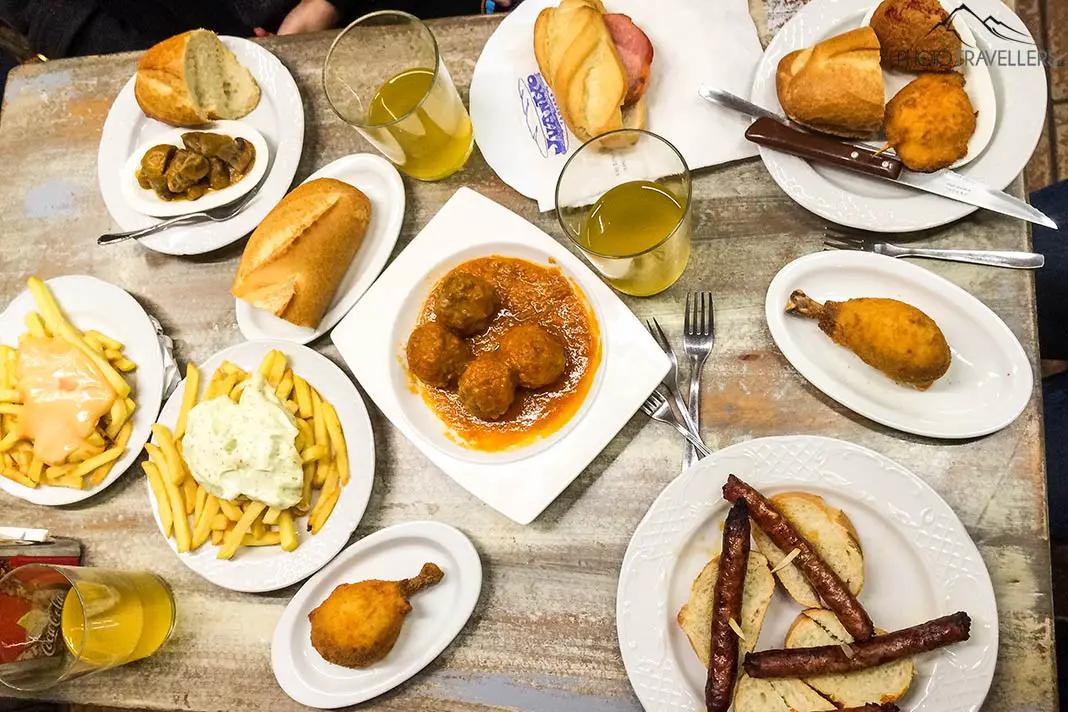 We treated ourselves to this delicious selection of local pintxos and traditional cider at the Juantxo Taberna.
⭐ The perfect guidebook for your holiday in Donostia-San Sebastián.
This great little book is not your typical travel guide, but it tells you exactly what you need to know for your holiday in Donostia-San Sebastián. Authentic anecdotes, real insider information and exciting insider tips - an absolute recommendation!
*Advertising link / Images from the Amazon Product Advertising API
4 Catedral del Buen Pastor
Before we go to the beach, I'll show you one last sight in the city centre. It is the Catedral del Buen Pastor, the Cathedral of the Good Shepherd.
It stands exactly between the Urumea River and the beach(Google Maps) and was built in the neo-Gothic style at the end of the 19th century.
Visible from afar is the 75-metre high church tower, which is the highest in Donostia-San Sebastián and the entire surrounding province of Guipúzcoa. The interior of the church is relatively simple.
An interesting anecdote about the Catedral del Buen Pastor is this: When the foundation stone of the cathedral was laid, the king had to sign the important documents. At that time, however, it was Alfonso XIII, who was only two years old. The problem was then solved by his mother guiding his hand. Funny idea, isn't it?
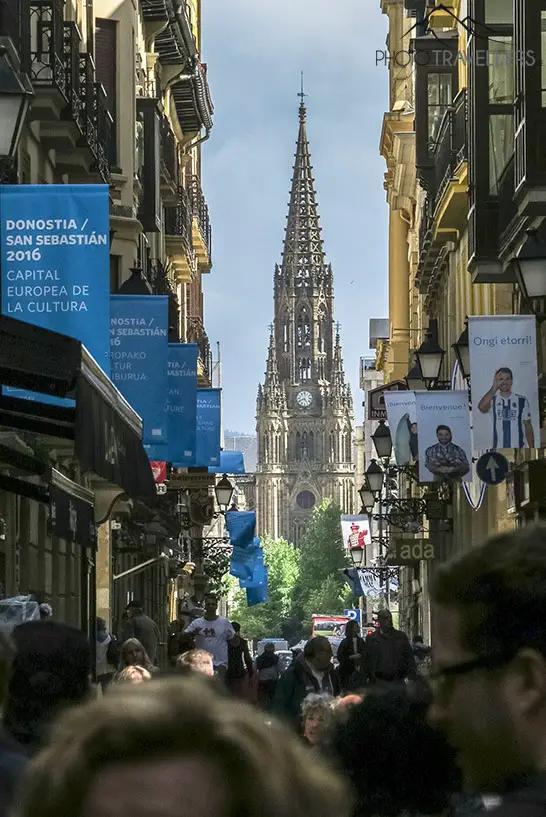 The view of the Catedral del Buen Pastor through the narrow streets of the old town
Activity | Price | Ticket |
Tandem paragliding flight in Donostia - San Sebastian | from 150 Euro | |
Tandem paragliding in Zarautz, near San Sebastian | from 95 Euro | |
Private surfing lessons in Donostia - San Sebastian | from 45 Euro | |
San Sebastian: Boat tour with stop in Santa Clara | from 7 Euro | |
San Sebastian: Hop-On/Hop-Off panoramic train ride | from 5 Euro |
5 Playa de La Concha
Yes, there are great beaches in the north of Spain too. Admittedly, the weather here is a bit more changeable and the sea a bit rougher, but that shouldn't stop us from having a great bathing experience.
The best place to swim is Playa de La Concha(Google Maps) because of the rather small waves. It is considered one of the most beautiful city beaches in the world and is only a stone's throw away from the old town, with which it is connected by an inviting beach promenade.
The central beach with fine white sand is located in the bay of the same name, La Concha, which means "the shell" in German and is due to its curved shape. From here you have a great view of the two mountains that frame the cityscape of Donostia-San Sebastián and about which I will tell you more later.
At the western end of the bay is the smaller Ondarreta beach(Google Maps). It is particularly popular with families with children, but it is also ideal for sporting activities such as beach volleyball.
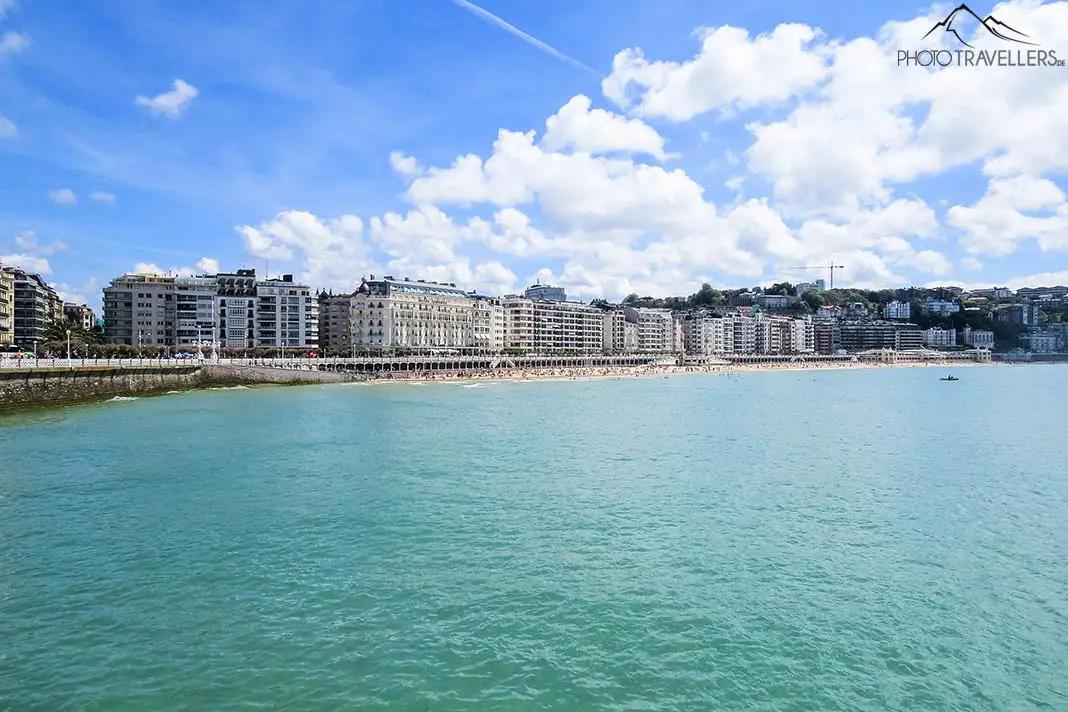 View of La Concha bay with the beach of the same name and the promenade.
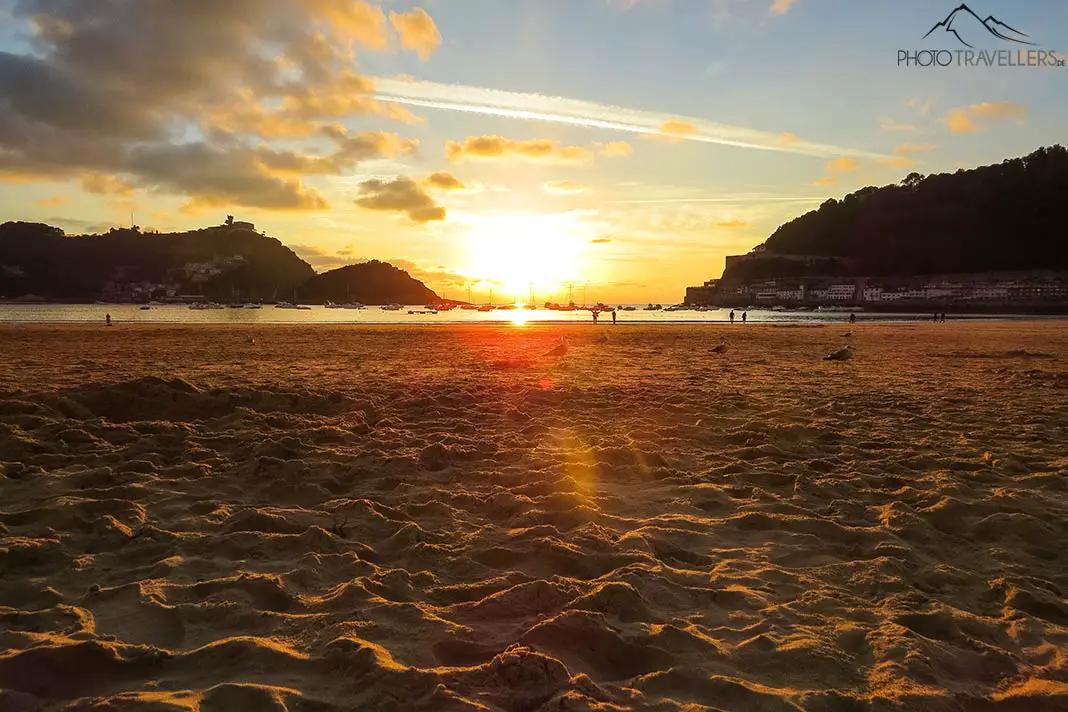 And this is the view in the other direction: sunset at the beach Playa de La Concha
Speaking of sports: surfers should also have been to Donostia at least once. Because La Zurriola beach, which is located on the other side of the river near the Kursaal(Google Maps), is a true surfer's paradise. There's not much swimming here, but thanks to the wind and waves, you're sure to meet many like-minded water sports enthusiasts.
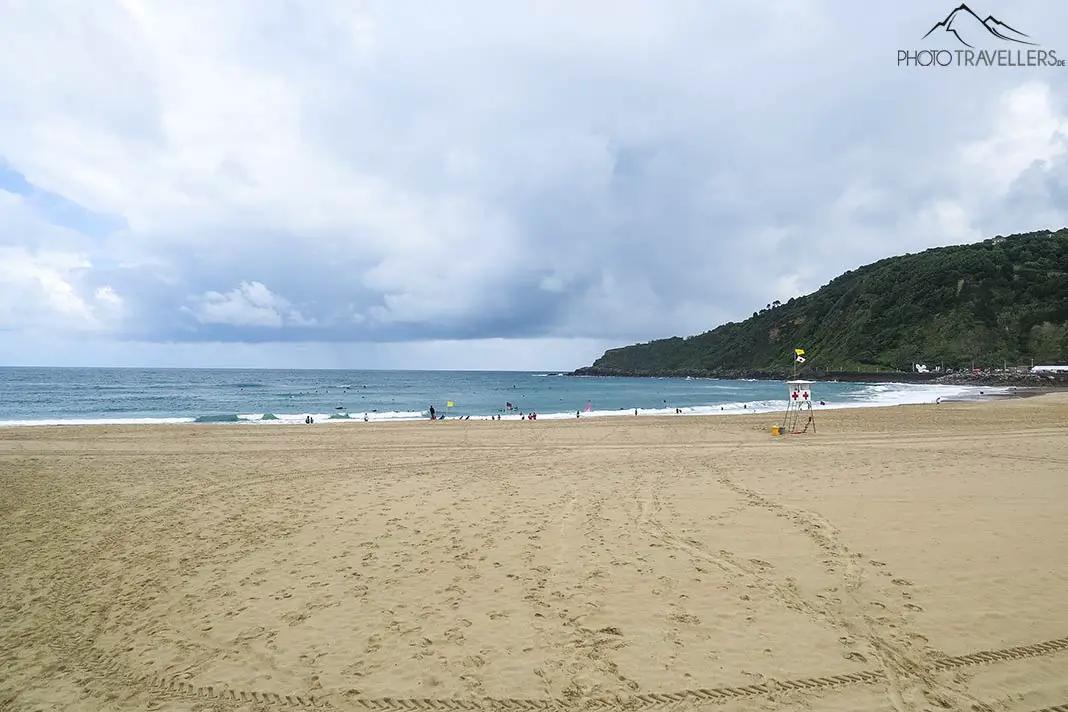 The smaller sandy beach of La Zurriola is not so good for swimming, but all the better for surfing.
6 Palacio de Miramar
The next sight in Donostia-San Sebastián is a little insider tip. But behind the Palacio de Miramar lies an exciting story that I don't want to keep from you!
This impressive mansion is located right between the beaches of Playa de La Concha and Ondarreta(Google Maps). It is decorated in English style with some neo-Gothic elements and was built in the 19th century.
At that time, Queen Maria Christina of Austria reigned in Spain after the death of her husband King Alfonso XII. She chose this spot in Donostia to build her summer residence.
One of the reasons for this was certainly the spectacular view over the bay of La Concha. The name itself speaks for this, because Miramar means "sea view"!
You should definitely not miss this panorama, because the magnificent gardens of the palace are open to the public today. However, the mansion itself cannot be visited - it only opens its doors for certain events and private functions.
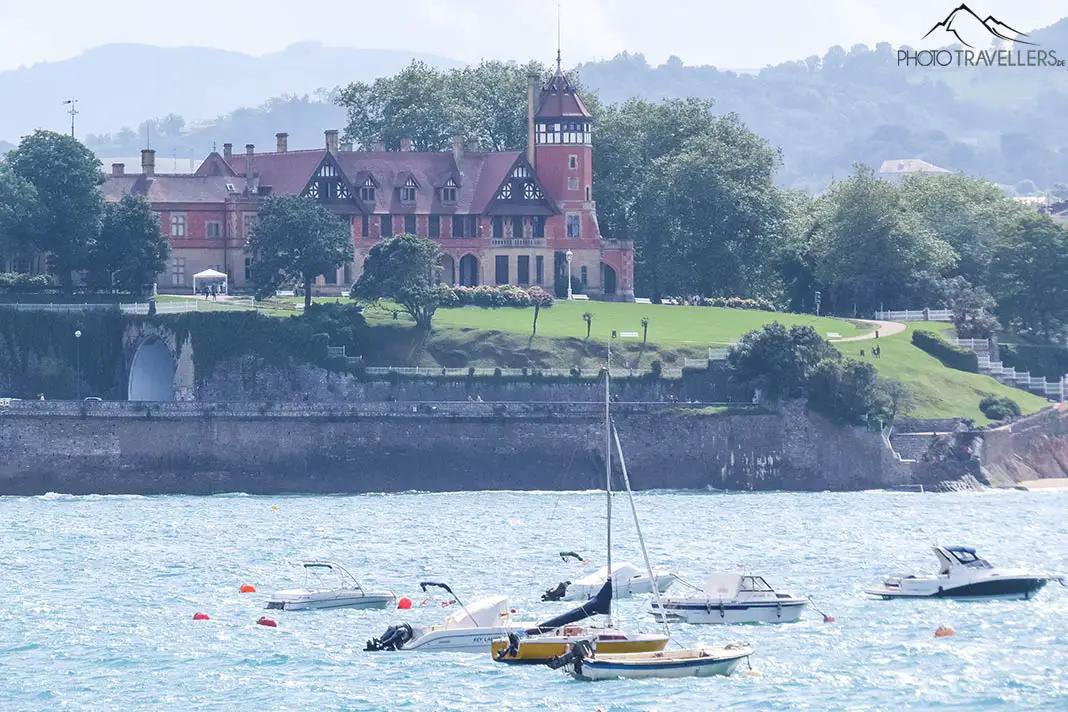 The beautiful Palacio de Miramar, with its superbly landscaped gardens, is one of Donostia-San Sebastián's top sights.
7 Peine del Viento
At the very end of Ondarreta Beach is our next sight, a fascinating sculpture with the beautiful name Peine del Viento(Google Maps). This means something like "wind crest" in German.
The work of art was completed in 1977 and is one of the most famous ensembles by Donostia-born architect Eduardo Chillida. And on this particular project, he was even able to collaborate with his school friend Luis Peña Ganchegui, a Basque architect.
Fun Fact: you can also admire a similar sculpture designed by Eduardo Chillida in Germany. It stands in front of the Federal Chancellery and is meant to symbolise German reunification.
The Peine del Viento in San Sebastián consists of three separate steel structures set into the rocks above the water at the western end of La Concha Bay. This proximity creates a unique natural spectacle when the waves wash around the sculpture and rush through the natural holes in the rocky ground.
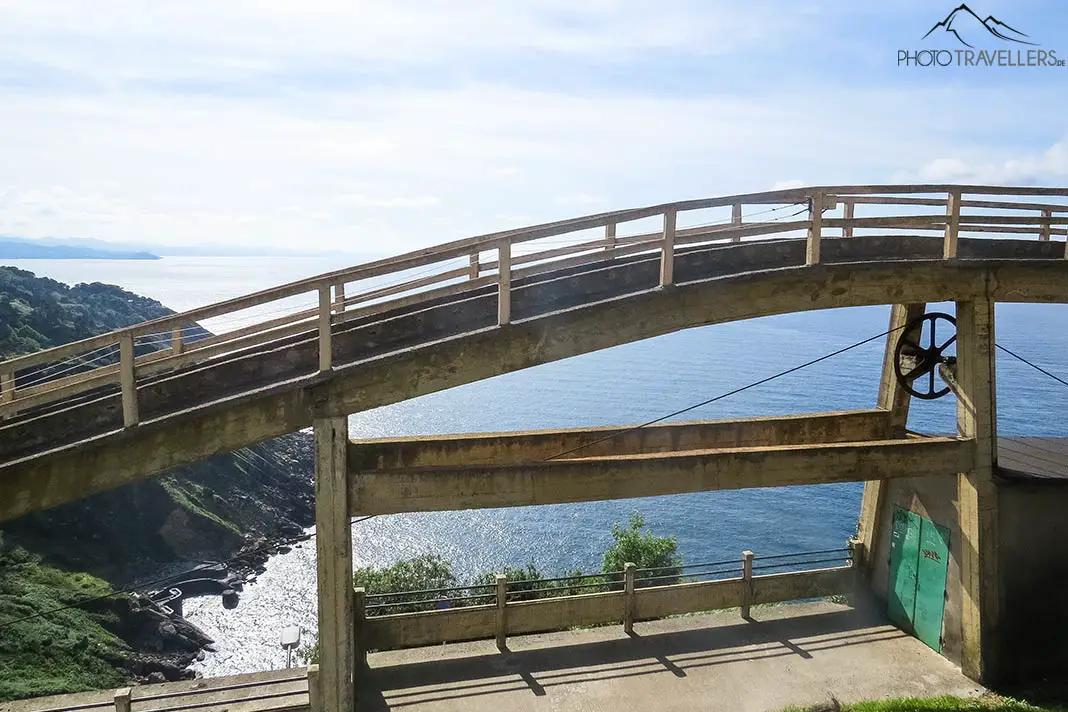
Incidentally, the three parts of the sculpture, each weighing ten tonnes, were originally supposed to be flown in by helicopters from the US Embassy. But the US Embassy said no, so the inhabitants of Donostia-San Sebastián had to get creative themselves. They built a bridge with rails over the sea to transport the individual elements to their place.
8 Isla de Santa Clara
This next attraction is so striking that you will notice it on every panorama of Donostia-San Sebastián. It is a small island whose shape is strongly reminiscent of a turtle - the Isla de Santa Clara.
It lies gently embedded in the middle of La Concha Bay and is only 400 metres wide and 48 metres high(Google Maps). In the 16th century, people suffering from the plague were quartered here. However, the island was never really inhabited, and it still isn't today.
However, there is an uninhabited lighthouse, a small bar and a beach. The special thing about the beach is that it only comes out for a few hours a day when the tide is out.
This is why Isla de Santa Clara is a popular destination for excursions and is regularly visited by small ferries in the summer months. If you are looking for a sporty alternative, you can rent a kayak and go there yourself. Or even swim - it's "only" 400 metres from Ondarreta beach.
In addition, I recommend taking a short hike on the island itself. This way you can enjoy the view of the promenade of Donostia-San Sebastián and explore the beautiful nature of Isla de Santa Clara on your own!
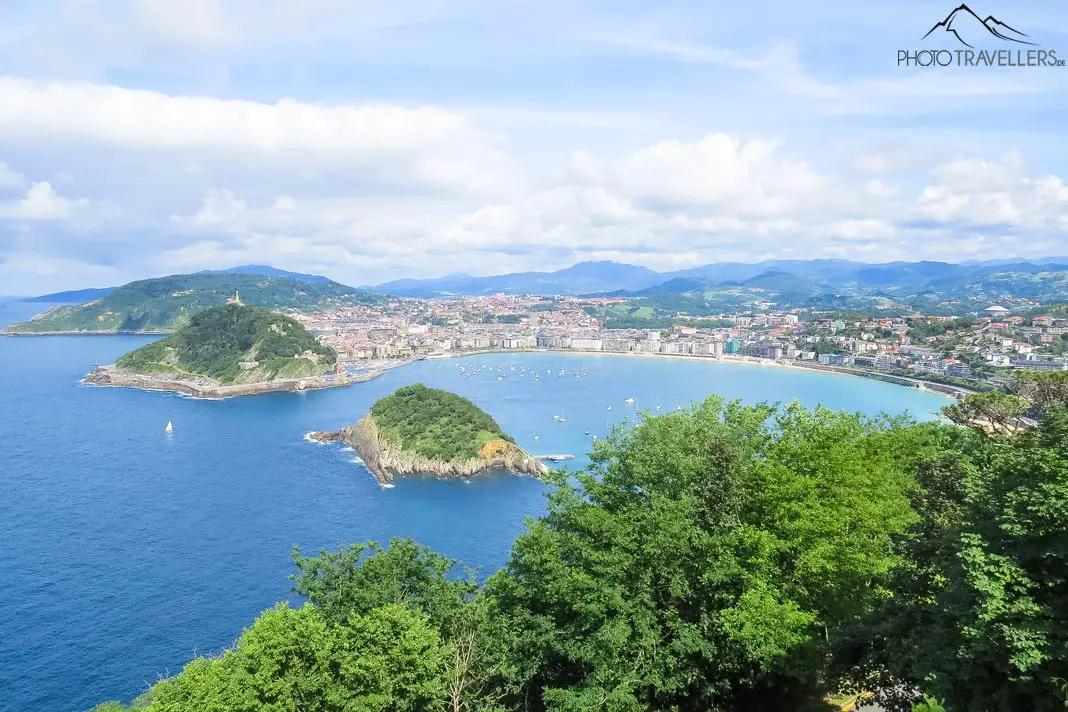 The view of Isla de Santa Clara from Monte Igueldo - I'll tell you more about this top sight now.
9 Monte Igueldo
Now we come to an absolute must-see in Donostia-San Sebastián. It's the city's local mountain, Monte Igueldo(Google Maps).
From here you have one of the most beautiful views over the bay of La Concha. To get to the top, take the Funicular del Igueldo, which was inaugurated in 1912. It takes about 3 minutes to get to the top at about 150 metres. The timetable depends on the weather and the season, so it's best to check the exact times on site.
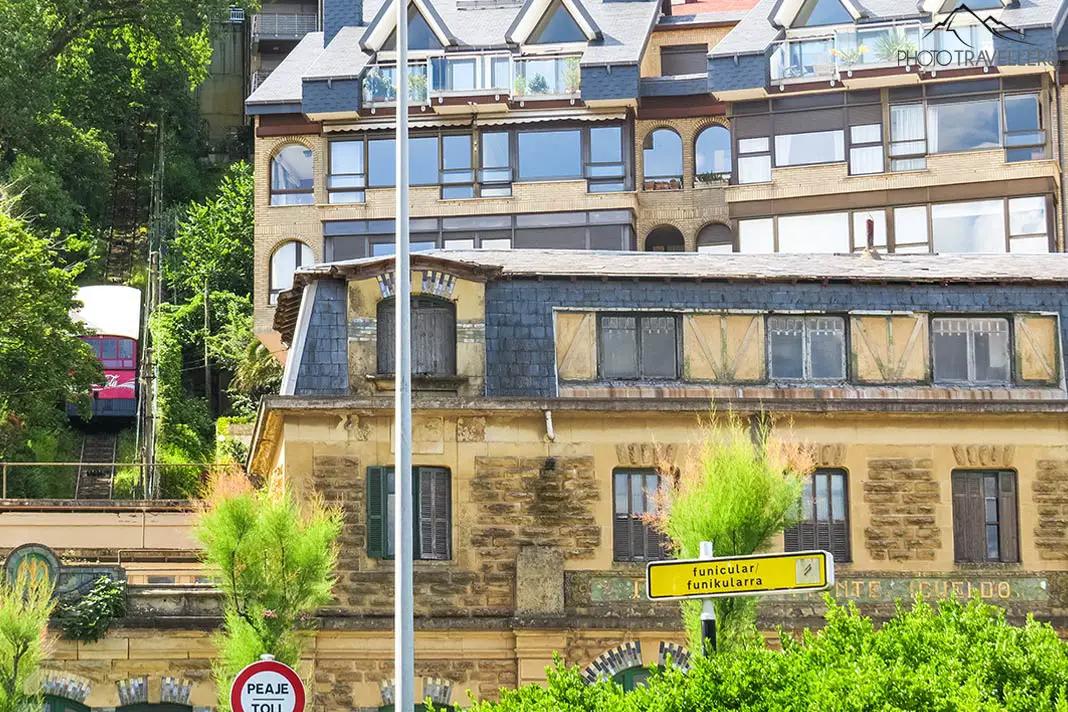 This old funicular takes you up to Monte Igueldo, one of the landmarks of Donostia-San Sebastián.
Once at the top, the next highlight - apart from the spectacular view, of course - is the old lighthouse. Even before the 16th century, light signals were sent from this spot for passing ships. However, a lighthouse was not built until the middle of the 18th century.
The old tower was in operation until 1854, when a more modern lighthouse was built on Monte Igueldo. Later, however, the striking tower was restored and is now accessible as a viewing terrace with a breathtaking panorama.
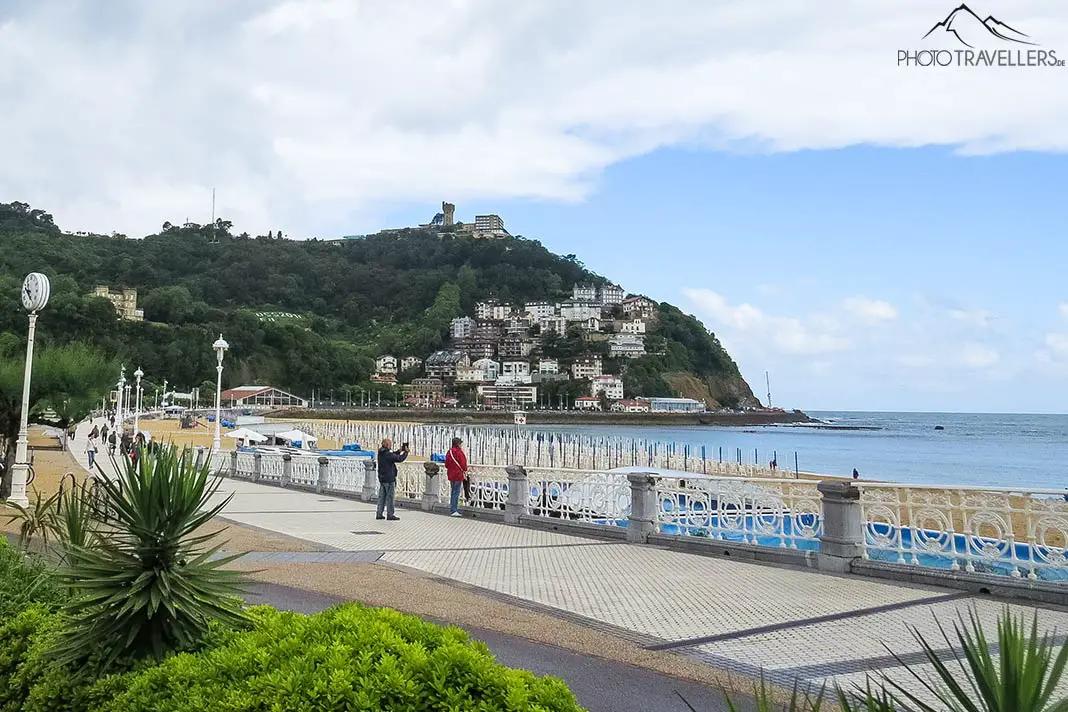 This is the view of Monte Igueldo from the beach promenade - at the top you can see the tower of the old lighthouse.
And then there is an absolute top attraction on Monte Igueldo: the amusement park(website). Like the funicular railway, it was opened in 1912 and houses exciting rides such as a water roller coaster and a labyrinth.
Entrance to the park is free, but there is a charge for the individual rides. It's definitely worth it, though, because you can catch some exclusive views of Donostia-San Sebastián.
 Roller coaster with a view - I can definitely recommend this ride on Monte Igueldo.
10th Monte Urgull
Directly opposite Monte Igueldo is Monte Urgull(Google Maps). The two mountains thus form a perfect natural setting for the bay of La Concha and San Sebastián itself.
There is no cable car to this mountain, but there are many great trails to the top. So take a little extra time and climb Monte Urgull on foot! It's worth it, because from Monte Urgull you also have an excellent view of the coast, the beaches and the entire bay.
Once you reach the top, the Castillo de la Mota awaits you. The old fortress played an important role in defending the city from enemy attacks from the 12th to the 19th century.
Another landmark of Donostia belongs to the fortress: the 12.5-metre-high statue of Jesus. You can see it from the foot of the hill.
Finally, a little insider tip: on the northern slope of Monte Urgull there is an old English cemetery where the soldiers who died in the Napoleonic wars around the fortress of the mountain in 1813 are buried.
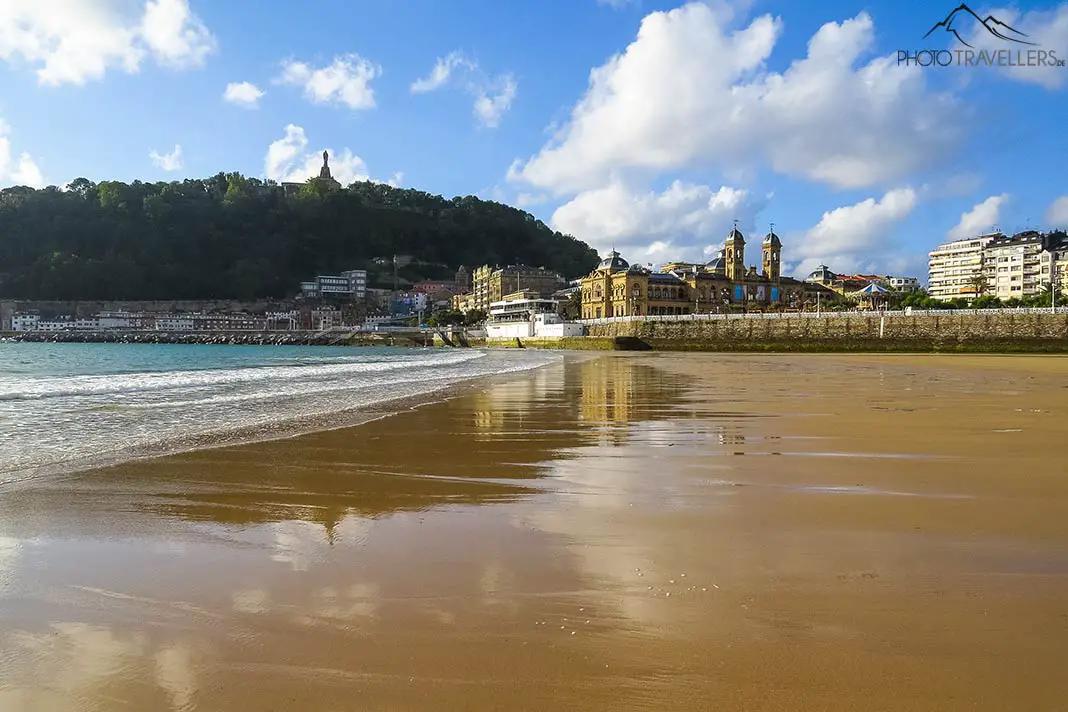 View of Monte Urgull with its statue of Jesus from Playa de La Concha - at the foot of the mountain you can also see the town hall, which used to be a casino.
Tip: The third and last local mountain of Donostia-San Sebastián is Monte Ulia. It is located a little further east behind Zurriola Beach(Google Maps) and is home to an old watchtower and a youth hostel.
What you should know about Donostia-San Sebastián
I told you at the beginning that Donostia is in the Basque Country and that Basque is spoken here - it is, by the way, the only language today that is not genetically related to any other known language and whose origins cannot therefore be clearly determined.
The Spanish name of the city, San Sebastián, means "Saint Sebastian" and was mentioned for the first time in the early 11th century.
The Basque name Done Sebastian also means "Saint Sebastian" - however, the term evolved over time first to Donebastia and then to Donostia
San Sebastián is part of the Way of St. James along the coast, the so-called Camino de la Costa
Together with Wroclaw, Donostia-San Sebastián was European Capital of Culture in 2016