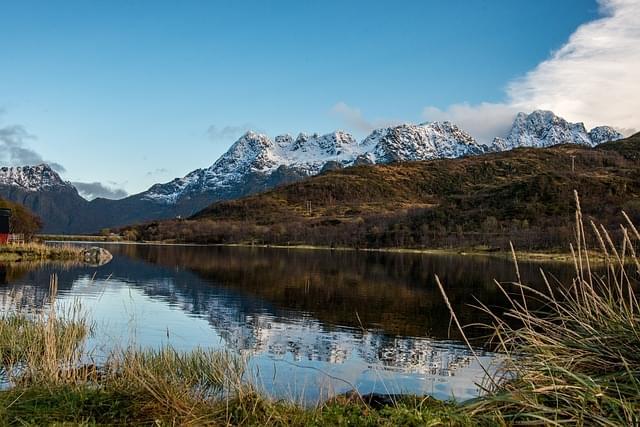
 The Lofoten Islands lie in the turbulent waters of the Norwegian Sea, above the Arctic Circle. This beautiful settlement offers tourists majestic landscapes of high mountains, deep fjords, seabird colonies and long surfing beaches.
Informed travel: useful info
Inhabitants: over 24,000
Main towns: Svolvær.
Languages: Norwegian
Local currency: nok - Norwegian krone (€1.00=9.73 nok)
Climate: it is rather mild compared to other places at the same latitude. During the coldest period, which peaks in February, the average minimum temperature is -3°, while the average maximum is 1°. During the hottest months, July and August, temperatures range from 11° to 15°.
Vaccinations: No vaccinations or special hygiene precautions are required.
It is advisable to take out an insurance policy before departure that covers medical expenses and the possible repatriation by air (or transfer to another country) of the patientEntry requirements: although not a member of the EU, Norway has been a member of the Schengen area since 2001. The accepted travel and identification documents are a passport or identity card valid for travel abroad, which must be valid for the entire period of stay in the country. In some cases (bank transactions, bank transfers, etc.) it is compulsory to show your passport.
Distance from Italy: 2644.4 km (14-15 hours flight time)
Where they are located
Norway's archipelago stretching northeast between the Nordland and Troms chains, located about 200 km from the Arctic Circle. Their particular agulation exposes them to the phenomenon of the midnight sun.
How to get there
From Milan or Rome: to go to the Lofoten Islands one must first reach Oslo via airlines such as Lufthansa, Norwegian, KLM, Air France, and Brussels Airlines. With the exception of Norwegian, all airlines have a stopover (London, Berlin, Paris). Once in Oslo, one has to take a domestic flight to one of the Norwegian municipalities in Nordland County, such as Bodø or Evenes, both of which have their own airports. The two municipalities connect to various locations in the Lofoten Islands by train (10 hours), ship or plane (30 minutes). Flights to Evenes from €292.00 - Flights to Svolvær from €369.00
Frommajor European capitals: from London, Paris and Berlin the following airlines operate direct flights to Oslo: Norwegian Air International, Ryanair, British Airways, Air France, Sas and easyJet. Flights last between one hour and forty minutes and two and a half hours.
When to go? Info on climate and best time
Month | Average temperatures (min/max) | Precipitation (days/mm) |
|---|---|---|
January | -1 / 1° | 20 days / 143 mm |
February | -1 / 0° | 18 days / 111.7 mm |
March | 0 / 1° | 17 days / 95.8 mm |
April | 2 / 4° | 13 days / 92.1 mm |
May | 5 / 8° | 16 days / 79 mm |
June | 9 / 12° | 12 days / 59.8 mm |
July | 12 / 15° | 14 days / 66.8 mm |
August | 11 / 14° | 14 days / 66.8 mm |
September | 9 / 11° | 15 days / 83.3 mm |
October | 5 / 7° | 17 days / 129 mm |
November | 2 / 5° | 15 days / 134 mm |
December | 0,5 / 2° | 17 days / 147 mm |
Climate: coastal climate makes for mild winters and cool summers
Best time: May to July to admire the Midnight Sun. December and January to admire the Aurora Borealis
Period to avoid: from a strictly climatic point of view, the winter months are colder and rainier, so if you are not interested in seeing the aurora it is better to choose another period.
Advice: temperatures can vary a lot during the course of a day, so it is advisable, whether it is summer or winter, to have all kinds of clothes in your suitcase. In the winter months (November-March), equip yourself with heavy clothing, gloves, hat and scarf. Boots with soft rubber soles are also recommended, but not essential. Sunglasses in case of snow, skin cream and lip balm are not to be forgotten if you do not want to risk paying the price of an arctic cold. In summer, there are few days suitable for shorts and t-shirts, and almost none if you are far north. Long-sleeved trousers and t-shirts and a jumper are recommended, just to be on the safe side.
Which island to go to?
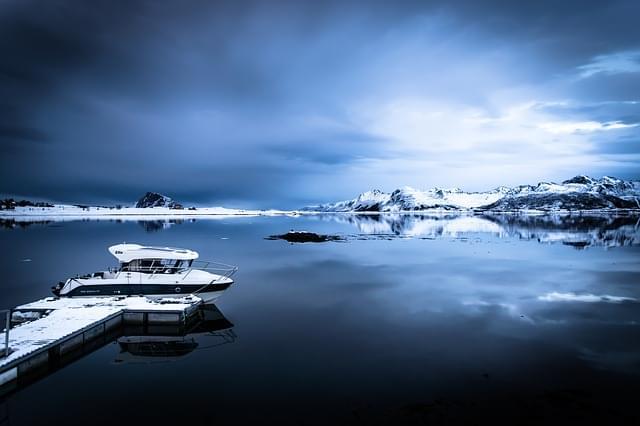 There are five Lofoten Islands, with a total area of 1,227 km². The different islands of the archipelago are connected by bridges, roads and tunnels that make it easy to travel from one island to another by car, in addition to the convenient ferry system.
Vaeroy is the island where there is no winter - at least not comparable to the rest of Norway. Despite its proximity to the Arctic Circle, temperatures never drop below zero, thanks to the mitigating action of the Gulf Stream. Here, as on all the other islands, there is no shortage of breathtaking views of fjords and majestic mountains.
Vestvågøya is definitely much larger and different from the other islands. As soon as you emerge from the underwater tunnel that connects it to Flakstadøya, the different landscape immediately jumps out at you. The relief becomes gentler, and the wild makes way for the cultivated. Settlements, fields and plains increase, and the environment becomes suitable for everyone - including children - and no longer just for sportsmen. The main town in Lofoten, Svolvær, is located here.
Flakstadøya is characterised by a picture-postcard landscape of rugged mountains that seem to rise out of the ocean, golden beaches that make their way through the rocks, and beautiful fjords, including the Selfjorden, which separates it from Moskenesøya, and the Nappstraumen, through which one reaches Vestvagøya.
11 things to see: sights and attractions
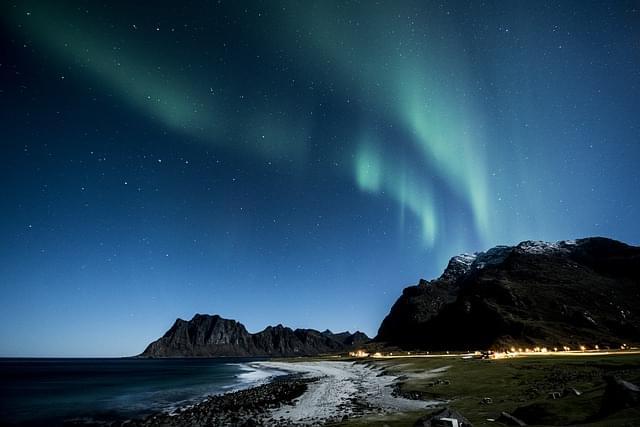
Reine: a fishing port located south-west of the town of Moskenes, above the Arctic Circle. It is one of the most famous places on the islands, given its picturesque location at the foot of steep cliffs.
Rorbu: traditional buildings used by fishermen, now converted into flats for tourists, where one cannot fail to sleep at least one night.
Stockfish Museum: located in Å - the village with the shortest name in the world - the museum is dedicated to the history of Norwegian fishing, one of the most famous in the world.
Lofotr Viking Museum: a museum based on the reconstruction and archaeological excavation of a Viking village. It is located in the small village of Borg, near Bøstad
The Midnight Sun: occurs throughout the year in Lofoten, which lies beyond the Arctic Circle. From late May to early June, the sun never dips below the horizon line in these areas.
The aurora borealis: in the winter period it is possible to admire this other wonderful natural phenomenon.
The Lofoten tourist road: this 230 km route alone is worth renting a car for. The route, starting from Raftsundet in mainland Norway, goes all the way to Å. The itinerary focuses on the sights, landscapes and beauty of the archipelago, and is divided into 11 stages.
Svolvær: it is the capital of the islands, the oldest city in the Arctic Circle and an excellent starting point for tourists. A favourite destination for many artists, who have found inspiration here, it is home to various artworks, art galleries and a well-known museum on World War II. From the harbour it is possible to go on whale watching and orca watching excursions, and boat trips around the Raftsundet Strait,
Nusfjord: this is a picturesque fishing village that has preserved the unique character of its buildings, built in the late 19th and early 20th century. Moreover, this is the area where industrial fishing was born, and some evidence of it can still be admired.
Henningsvær: is one of the most important fishing villages in Lofoten, only connected by land to the other islands since 1981. This has preserved both the local community and the local architecture from modernity, turning the area into an oasis of the 'past', where everything stands still in time.
Moskenes Island: offers an endless array of natural and historical attractions. Here you can visit the coastal cave of Kollhellaren in Refsvika, which contains cave paintings dating back some 3000 years, admire traces of a settlement dating back thousands of years, and take boat trips across the Moskstrømmen, one of the strongest ocean currents in the world.
What to do in the Lofoten Islands: excursions and tours
How much does a holiday in the Lofoten Islands cost? Prices, offers and tips
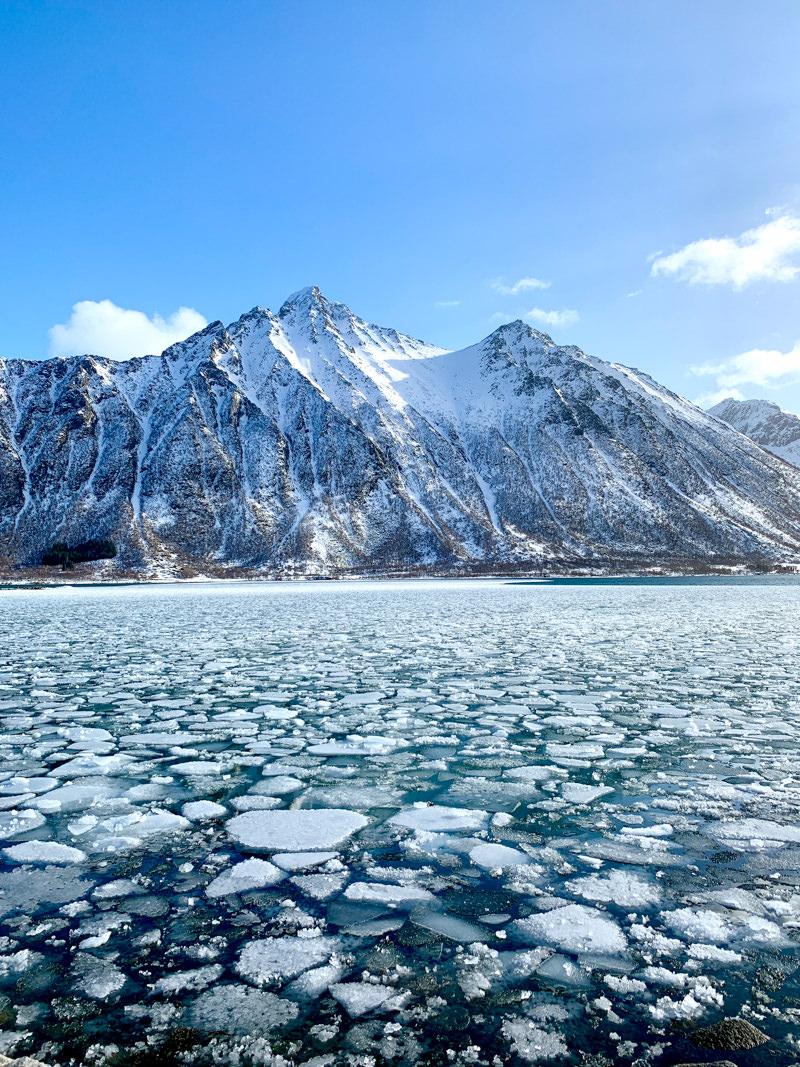 Photo by Giulia Bean. The average cost per night for a room can vary greatly, depending on the area chosen. In mountain huts run by the Novergese Trekking Association, it is possible to stay from €10.00 per night, while for a dormitory you can pay €55.00 per night, which becomes €61.00 in a two-star hotel. For car rental, rates range between €60.00 and €90.00 per day. The cost of petrol per litre is €1.43 while, as far as meals are concerned, you can spend between €13.00 and €23.00, for the main course alone
Where to stay: Hotels and b&b from €61.00 per room
Cheap flights: Flights to Svolvær from €369.00 - look at the offers