 Mauritius is a place of exceptional beauty, visited by hundreds of tourists from all over the world. With magnificent beaches and activities to enjoy, the island is a continuous discovery that wins the heart of each of its guests. In addition, this enchanted place is also home to animal species of unique beauty.
Here is everything you need to know about this little piece of paradise!
Informed travel: useful information
Inhabitants: 1.265 million
Capital: Port Louis
Languages: Mauritian Creole, English, French
Local currency: Mauritian Rupee (€1.00=38.79 MUR )
Climate: tropical, with average temperatures of 28 degrees throughout the year
Time zone: GMT+4 (2 hours ahead of Italy)
Vaccinations: no vaccination required
Entry requirements: Passport, return ticket. Visa not necessary for stays of less than 90 days
Distance from Italy: 8,775 km (10 - 13 hours flight time)
Where it is and how to get there
Mauritius is located in the south-western Indian Ocean. Politically, this island is referred to as the Republic of Mauritius. Geographically, this territory is associated with the African continent. In fact, to be more precise, Mauritius and some of the surrounding islands, together with the territory of Réunion make up the so-called Mascarene Islands.
Mauritius is located not far from the east coast of Madagascar, about 1,100 km, which can be travelled in less than 2 hours by plane.
To arrive there are usually no direct flights between Italy and Mauritius. Generally, there is a stopover in Zurich with Swiss Airline or depart from London with Turkish Airlines and British Airways, which operate this route with high frequency at acceptable prices - compare flights
When to go? Info on climate and best time
Month | Average temperatures (min/max) | Precipitation (days/mm) |
|---|---|---|
January | 23 / 30° | days 16 / mm 235 |
February | 23 / 30° | days 16 / mm 265 |
March | 23 / 29° | dd 17 / mm 205 |
April | 22 / 28° | dd 17 / mm 210 |
May | 20 / 27° | dd 14 / mm 155 |
June | 19 / 25° | dd 14 / mm 95 |
July | 18 / 24° | dd 16 / mm 100 |
August | 18 / 24° | dd 15 / mm 90 |
September | 18 / 25° | dd 10 / mm 60 |
October | 19 / 26° | days 10 / mm 60 |
November | 20 / 28° | days 10 / mm 75 |
December | 22 / 29° | dd 12 / mm 170 |
Climate: tropical with average temperatures ranging between 20° and 28°. Rainfall in a year is dd 167 / mm 1720. The average sea temperature is close to 27°.
Best period: the best months are May, October and early November, during which there is a warm, dry climate that is extremely pleasant. In general, the whole period from the end of April to November is fine; in July-August the temperatures tend to drop a little and the trade winds may be a nuisance, but they are ideal for water sports.
Period to avoid: January to March. The cyclone season corresponds to the summer season, from November to April, but their period of maximum activity is January, February and early March.
Which islands are in the archipelago and where to go
 Generally, when one speaks of Mauritius, one means the main island of the republic of the same name. The latter can be defined as an archipelago composed of several islands. The main ones are:
Mauritius: the island of the same name is the largest. Here you will find the capital Port Louis, the main link to foreign countries. The southern part of this island is recommended because the climate is generally mild and pleasant. A wide variety of amenities are available that will not make you regret the western lifestyle. If you are making a trip to this territory for the first time, the advice is to stay on this island.
Rodrigues: is a small island located northeast of the main resort. This territory is very small but has an amazing climate. Its average temperatures often hover around 30°. Still, there are some incredible places in Rodrigues, with golden beaches lapped by crystal-clear waters. A must for those who love the sea and want to spend a dream holiday.
Agalega: this is actually a territory composed of two small, separate islands: the North Island and the South Island. On the north island is the only airstrip and method of connection with the rest of the republic of Mauritius. The Agalega is an unspoilt place. There are few services, this is because life is very simple and the population still lives in small family villages.
Cargados Carajos (St. Brandon): northeast of Mauritius, they are a complex of about 40 islets and emerged shoals, mostly used as fishing stations. It is inhabited by about 60 people, mostly on the islet of Raphael. A small paradise ideal for an excursion.
What to see: beaches and places of interest
City of Port Louis, Mauritius 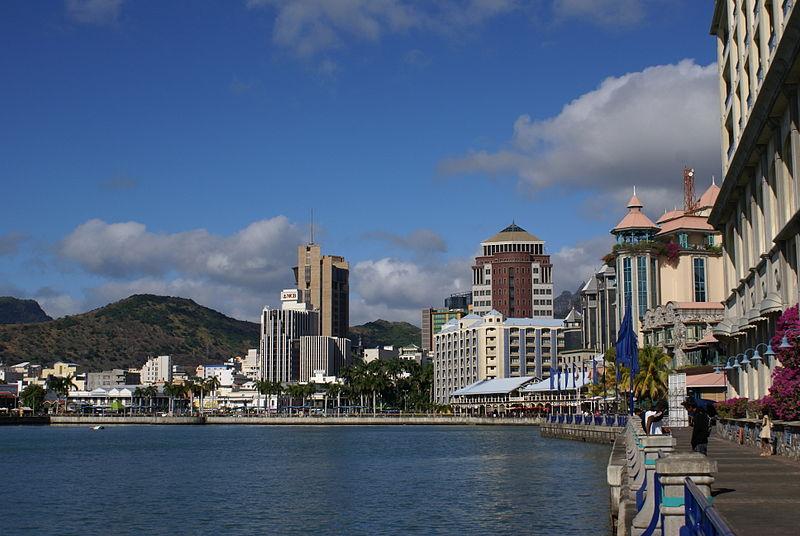
le Morne Brabant, Mauritius 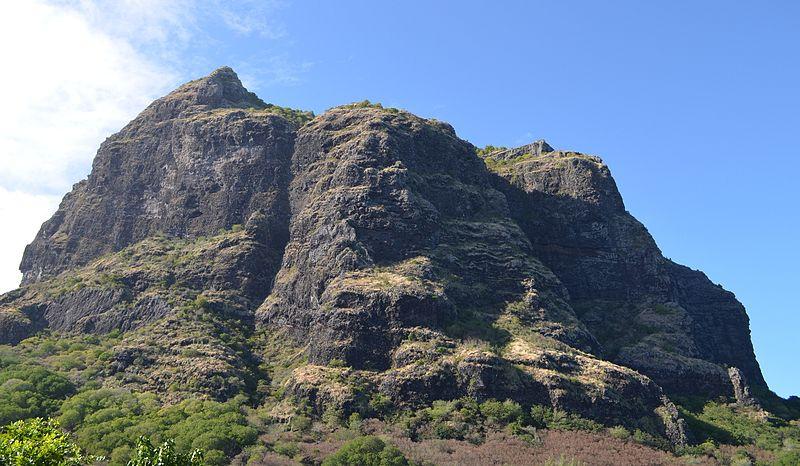
Les 7 cascades, Mauritius 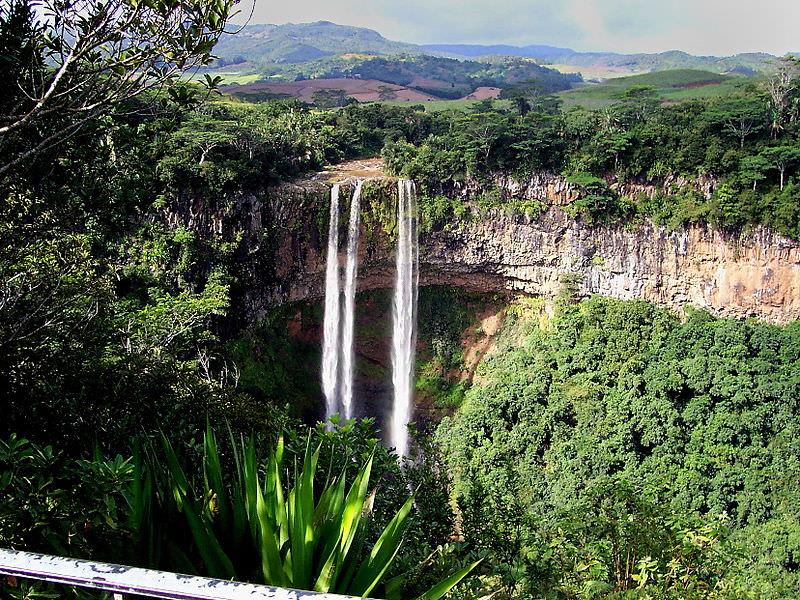
Ebony Forest, Giant Tortoise 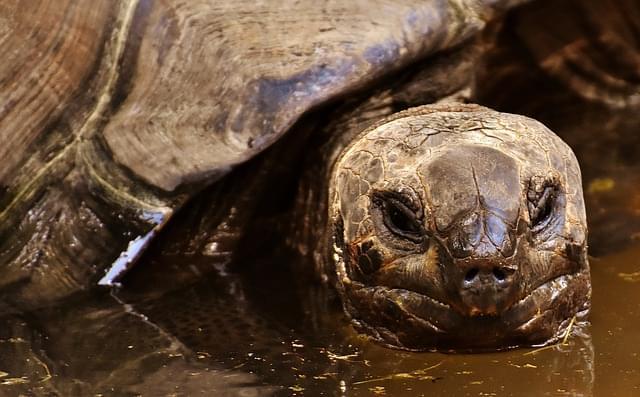
Chamarel, the Land of 7 Colours 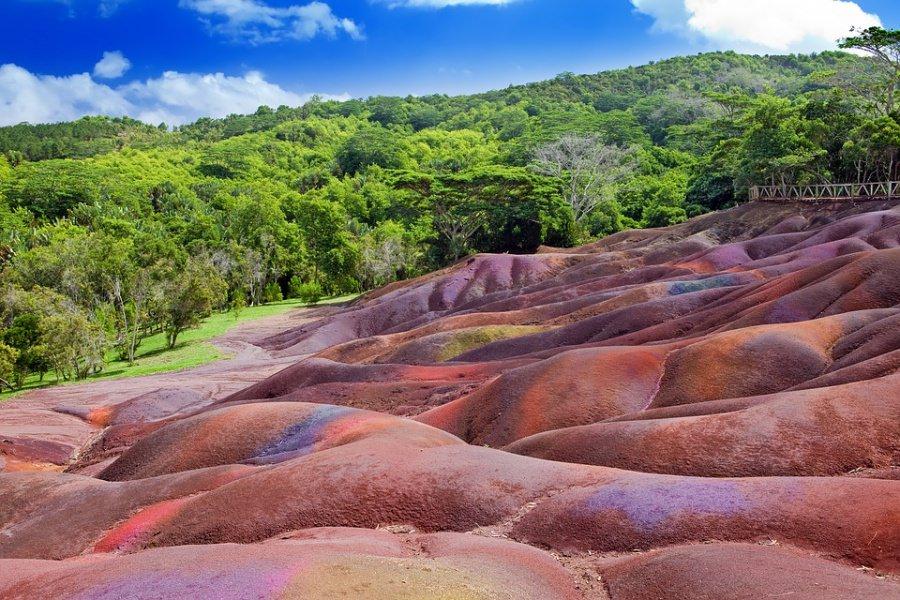
Deer Island (ile-aux-cerves), Mauritius 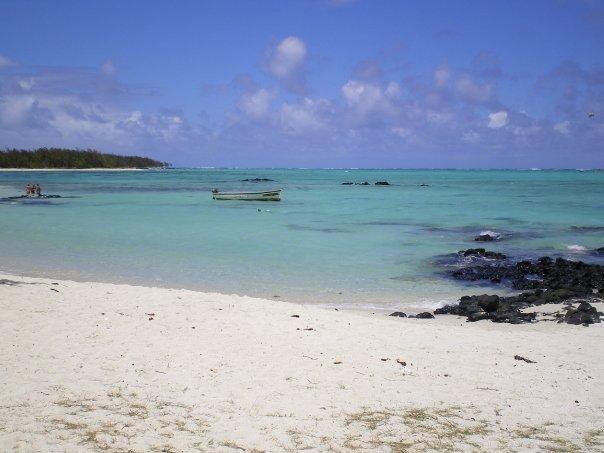
Flic en Flac, Mauritius 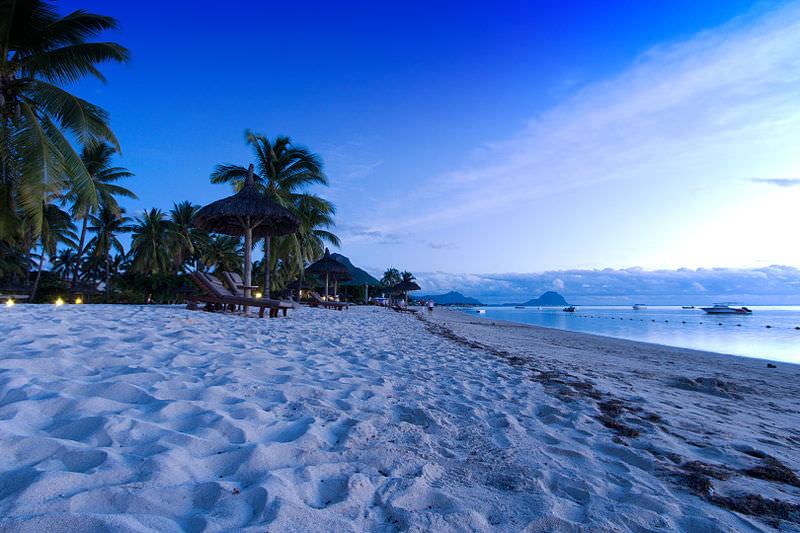
Tamarin Bay, Crystal Rock 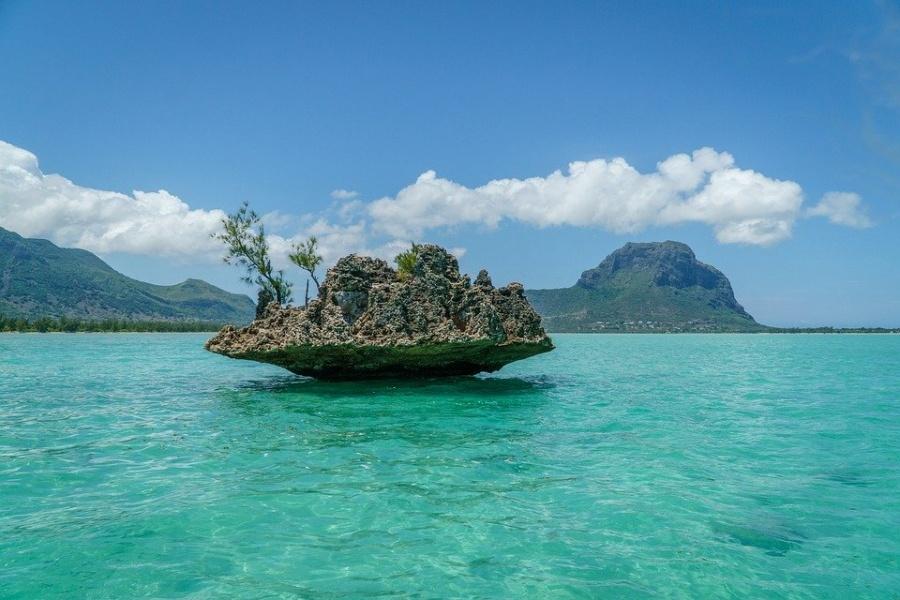
Belle Mare, Mauritius 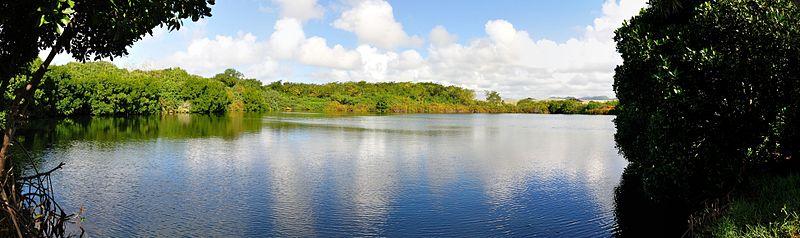
1/14
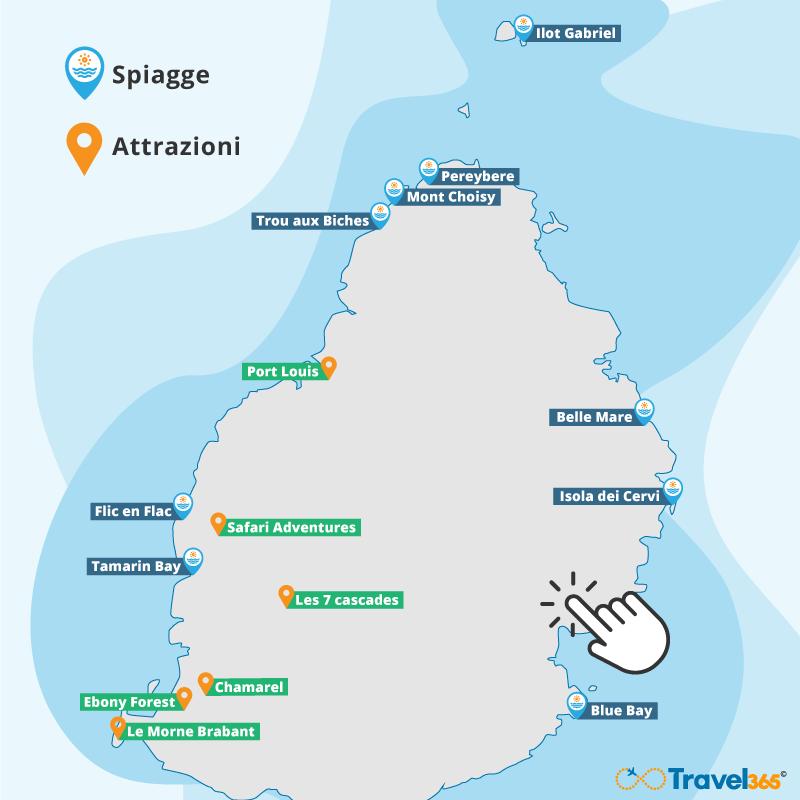
Port Louis: the island's main city, colourful and lively, a place where all problems seem to fly away. Experiencing the atmosphere of the capital is truly unique, an experience worth living. A 1-day guided tour is recommended.
Le Morne Brabant: a gigantic mountain filled with natural vegetation and a UNESCO heritage site. Don't miss the experience of a climb, to enjoy a true paradise for nature lovers.
Les 7 cascades: a magical place where you can observe no fewer than 7 different waterfalls. Not to be thrilled at the sight of such a spectacle of nature is truly a feat.
Ebony Forest: the nature reserve and heart of Mauritius. A green lung to be explored from top to bottom. Venturing into it is an amazing adventure, a continuous discovery of nature.
Chamarel, the land of 7 colours: perhaps one of the most unique places on earth. Here you can witness a geological structure composed of no less than 7 different colours. The different shades make this land look like a daydream.
Deer Island: a place located in the northern part of Mauritius. It is a beach where the sand is white and the water is practically transparent.
Flic en Flac: another heavenly sea place. Visiting Flic en Flac will feel like being on a film location. The sand at this location is soft and clean while the waters that lap the coast are blue and warm.
Safari Adventures: a wonderful activity not to be missed for animal lovers. A real safari that will bring you into close contact with some dangerous but wonderful specimens, such as the much-feared lions!
Tamarin Bay: at Tamarin Bay, you can snorkel and admire dolphins and other marine species. An indescribable experience, which will make you feel unique and unforgettable emotions. More information here.
Belle Mare: this area is famous forsnorkelling. You can dive into the seabed and enjoy a colourful adventure.
Blue Bay: beautiful beach with the best stretch of coral reef to visit on a tour that includes snorkelling. This beach, due to its important biodiversity, belongs to the Blue Bay Marine Park.
Pereybere: A beautiful beach in the north-west of Mauritius characterised by palm trees and fine, light-coloured, gently sloping sand. To be visited by taking advantage of the convenient tour of the northern coast.
Ilot Gabriel: a small islet in the north of Mauritius with a beautiful beach, palm trees and vegetation. Opposite is Ile Plat, which can also be reached on foot at low tide; the sea separating the two islands is rich in fish and it is easy to spot and swim with turtles.
Trou aux Biches: a quiet beach away from the tourism of Grand Baie, characterised by palm trees, casuarina trees and fine sand. The various facilities present offer various sports activities as well as catering and accommodation services.
Mont Choisy: 3 km crescent-shaped beach with various facilities. It can be visited via a combined tour that also includes the botanical garden.
What to do in Mauritius: excursions and tours
Getting around
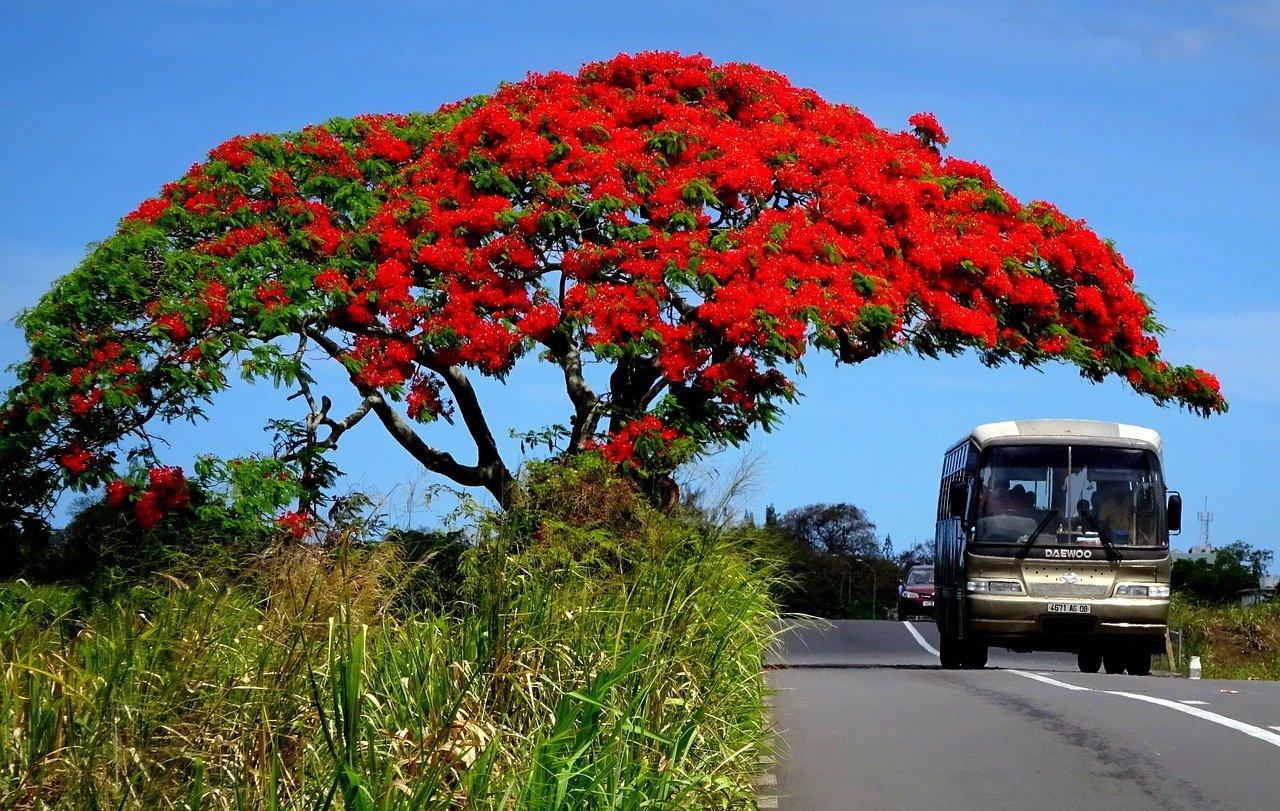 The island of Mauritius is small and has both working, paved roads and wilder paths, as well as the 4-lane highway.
Getting around onfoot is especially recommended in Port Louis, the capital.
However, to reach the beaches along the coast or the nature reserves inland, it is always better to hire a car (from €30.00 per day) or a scooter (from €5.00 per day).
Rental services are available at the airport, and a few criteria should be borne in mind: on the island you drive on the left, to drive you must be at least 23 years old and have an International Driving Licence valid for 12 months.
For those who want to save money and move like the islanders on the bus, there are several companies serving the entire island, whose tickets are very cheap.
Recommended solutions and means of transport: rent a car or motorbike
Solutions and means of transportnot recommended: walking, unless you stay in the centre of Port Louis
How much does a holiday in Mauritius cost? Prices, offers and advice
Type of trip | Sleeping | Eating | Transport | Attractions | Total cost per week | Average cost per day |
|---|---|---|---|---|---|---|
Low cost | €300,00 | €210,00 | €300,00 | €172,00 | €982,00 | €140,00 |
Medium | €600,00 | €500,00 | €400,00 | €172,00 | €1.672,00 | €238,00 |
Luxury | €1.200,00 | €700,00 | €500,00 | €172,00 | €2.572,00 | €367,00 |
NB: The prices in the table above are per person.
 Normally, Mauritius is to be regarded as an expensive destination.
The average cost for a holiday during the European summer period, i.e. between June and August, is around €2,200 per person. The high cost is due not so much to the flight, but rather to the accommodation, as any hotel on the island is quite expensive.
As far as transport is concerned, the advice for not spending too much is to rent a car. In this way, it will be possible to fully explore the island at a cost that falls within the medium-high range, without spending exorbitant amounts. On average, with a local operator, the rental cost is €30.00 per day.
Also quite expensive are the various excursions on the island, which cost a minimum of €50.00 per person.
There isplenty of choice, however, in the area of catering. Those on a high budget can indulge in the island's typical restaurants, while those on a low budget can rely on take-away outlets or restaurants in shopping centres.
Where to stay: Hotels, accommodation and resorts from €70.00 per room - see offers
Low cost flights: from €574.81 - look at the offers
Flight+ hotel: return flight + 7 nights from €1,567.00 per person - look at the offers