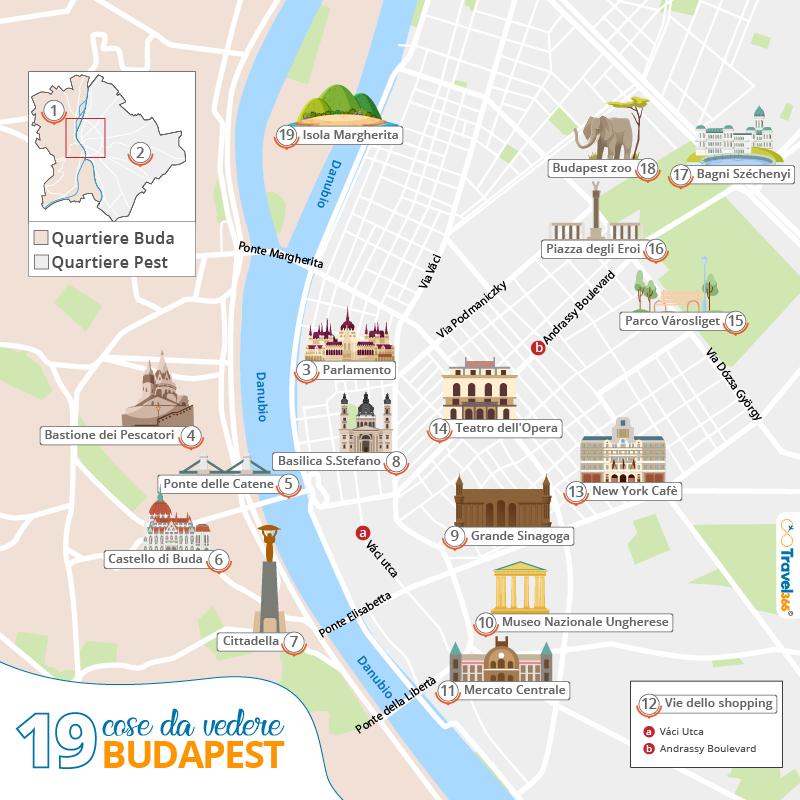
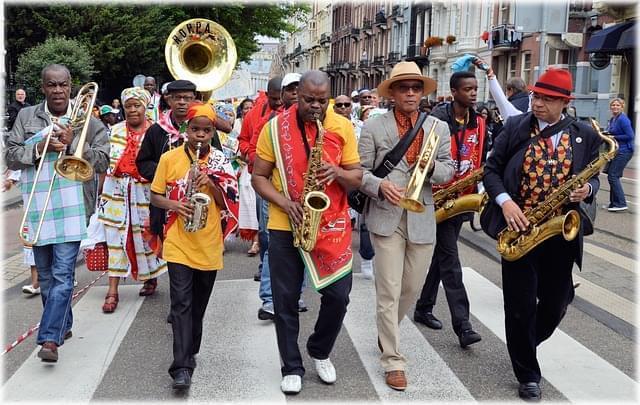
 The smallest state in South America, Suriname was born around a dense convergence of rivers that reflect the lively rhythm of its multi-ethnicity. From Paramaribo, the effervescent capital and Dutch colony, to the impenetrable forests of the hinterland, the people of Suriname will give you a warm welcome to the country, whether they are descendants of the original African tribes, Dutch and British colonialists, entrepreneurs transplanted here from India, Indonesia or China, or simply from indigenous American Indian communities. Let's find out what to see in Suriname.
Where it is located and how to get there
Suriname is located on the north coast of South America and faces the Atlantic Ocean, bordered by French Guiana to the east, Brazil to the south and Guyana to the west.
There are no direct flights to Suriname, you have to make a stopover in Holland or Brazil or Guyana. Flight prices start at €1,063.00 (see offers). The best way to move within the country is to take small planes that connect Paramaribo to the different Nature Reserves. The alternative is to travel by bus, which is very cheap and used. You will have to agree on the price of the ticket with the driver before boarding.
When to go: best time
Suriname is mainly characterised by an equatorial climate, hot and humid all year round, with very heavy rainfall. It is characterised by two seasons: a rainy season, from December to mid-August, and a dry season, from late August to late November. Due to the heavy rainfall, the territory is mainly covered by rainforests and mangroves.
Best period: mid-August to mid-November. During these months, which correspond to the dry season, temperatures will be higher, but heavy rains are avoided. During the rainy season you may not be able to get out of the hotel.
Period to avoid: the rainy season is from mid-November to mid-August, and the rainiest months, where it rains almost every day, are May and June. Finally, Surinamene is out of the path of hurricanes, which move further north over the Caribbean.
What to see in Suriname
1 - Paramaribo
 The capital of Suriname looks like a combination of the style of the characteristic American Wild West and the wonderful Dutch capital, Amsterdam.
Paramaribo is an energetic city full of sights to see and activities to do and is the most incredible capital city in Guyana. Strolling through the city, recognised by Unesco as a World Heritage Site, you can admire immense grassy squares outlined by Dutch colonial buildings characterised by their typical black and white colouring. On the streets of Pardo, as the locals call it, you can appreciate its multi-ethnicity by sampling traditional European, American and Indian food, as well as admiring its fascinating religious buildings, where synagogues, cathedrals and mosques stand side by side in a truly unique atmosphere.
2 - Galibi Coppename Nature Reserve
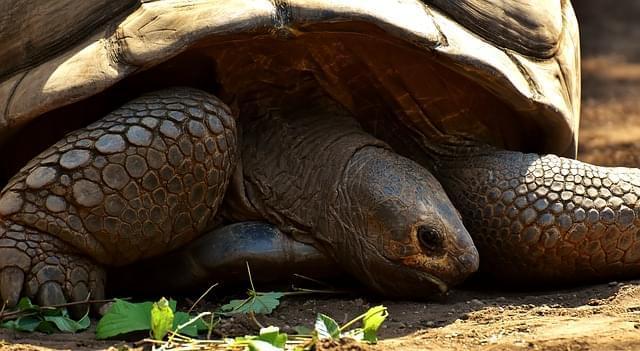 This enchanting nature reserve was officially opened in 1969 and is located at the mouth of the Coppename River. The Galibi Coppename is a birdwatcher's paradise, safely home to numerous families of walruses on its shores, and attracts hundreds of turtles during the egg-laying season that takes place between April and August.
STINASU, an acronym for the Foundation for the Protection of Nature in Suriname, organises several guided tours within the reserve with the aim of promoting research and responsible tourism in the interest of the integrity of their natural beauty. It is possible to visit the Gabibi Coppename reserve independently for around €75.00 per person (including transport and food), while organised tours range from €120.00 to €150.00.
3 - Commewijne River
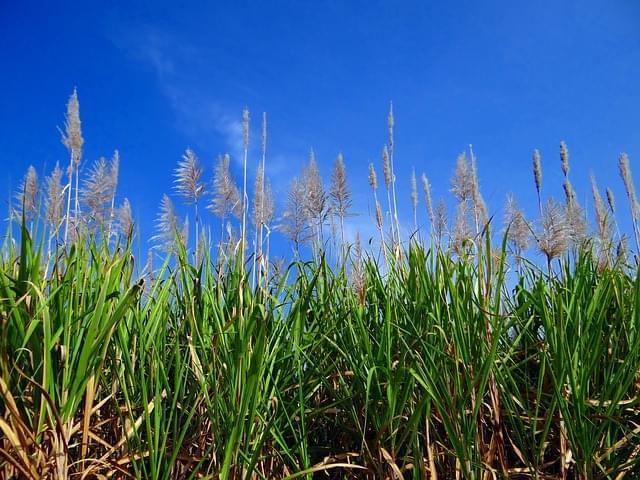 One of Suriname's many sites of natural interest that constitute its greatest strengths is the Commewijn River. All along its course you will find ancient estates with huge plantations of cocoa, coffee and sugar cane.
One of the tourists' favourite activities is to rent a bike for the day and ride along the most scenic and well-maintained roads all around the plantations. Another popular option is a water taxi trip departing from Paramaribo. Most organised tours have as their main destination Frederiksdorp, an old plantation that has been renovated and converted into a beautiful hotel and restaurant.
Along the way, you will also find Fort Nieuw Amsterdam, where artefacts dating back to the slave trade are preserved and where you can also observe Dutch engineering dams built to contain the river. An example of a tour you can take advantage of is the one-day tour departing from Paramaribo, which starts at 9am and ends around 5pm; the cost is €65.00 and includes a local guide, lunch, snacks, fruit and drinks.
4 - Joden Savanne
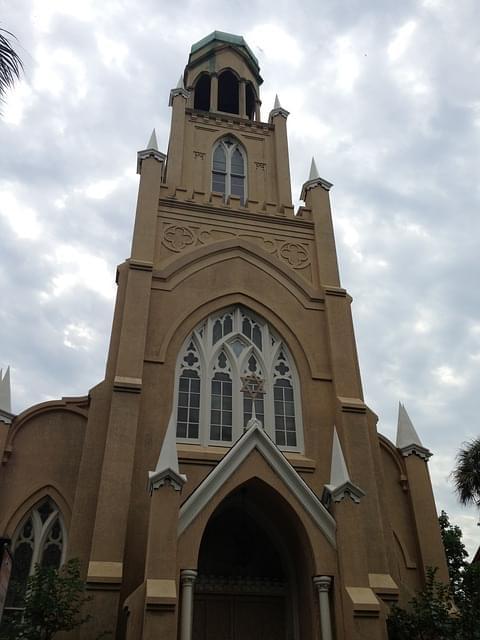 Just south of Paramaribo, on the banks of the Suriname River, is the Joden Savanne, or the Jewish Savannah. Founded in the 17th century, it originally began as a farming community that was developed by Spanish Jews fleeing persecution. Most of the crops grown there are sugar cane and there is a longhistory of slavery being used as labour in the fields. In the Joden Savanne it is possible to visit, in addition to the immense green expanses and beautiful nature that grows luxuriantly along the riverbanks, the ruins of the first Synagogue ever to be built in the Western Hemisphere. Another particularly fascinating site to admire are the ancient Jewish cemeteries surrounding the Joden Savanne. Admission for visits is allowed from 8.15 am to 5.30 pm and it is possible to either visit independently or choose to book an organised full-day tour with prices around €75.00/€90.00.
5 - Suriname Mosque
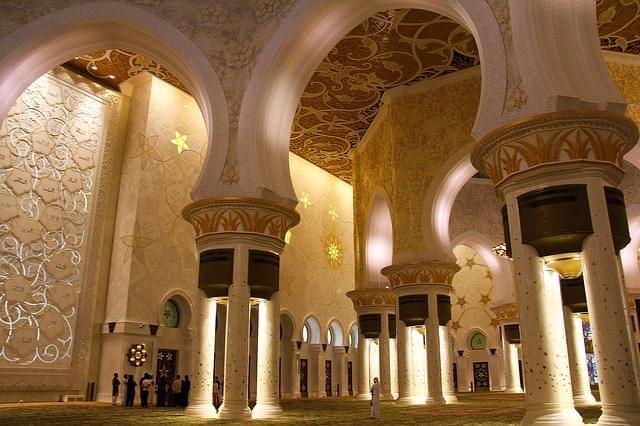 As we have already pointed out several times, one of the most fascinating features of Suriname is that it is a state that derives its immense wealth from its multi-ethnicity, making it a paradise for those who like to experience many different world cultures in one place. As evidence of this, one of the country's most popular artistic and cultural highlights is the wonderful Suriname Mosque, the largest in the entire Caribbean, located in the capital Paramaribo. The construction of this Mosque took about twenty years since it was built entirely without the aid of machines. What really leaves us speechless, however, is its location: the Suriname Mosque stands right next to the Nevah Shalom Synagogue. Precisely because of its iconicity as a place of harmony and union between different cultures and religions, as well as its architectural beauty, this Mosque is one of the most recommended places to visit for tourists who want to experience this wonderful reality.
6 - The Presidential Palace
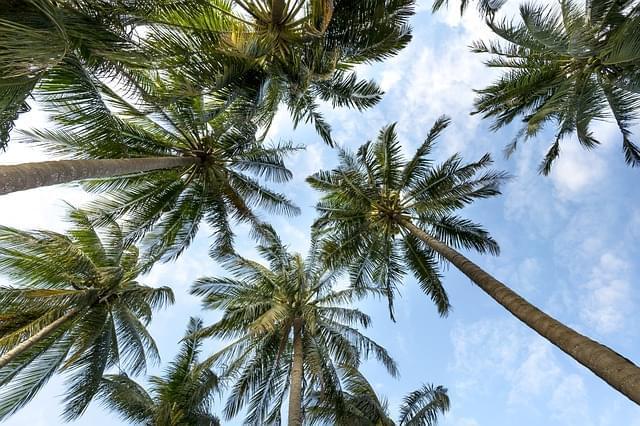 While the Surinamese capital is an attraction in itself, the Presidential Palace located right in front of Independence Square represents Dutch architecture in all its colonial splendour. In addition to the President's residence, the building also houses the National Assembly of Suriname, the Congress building, the Court of Justice and the Ministry of Finance. It is part of the UNESCO World Heritage Sites and another of its attractions is located just behind the main building, the immense Palm Garden that surrounds the entire property and inside which you can stroll admiring the beauty of its tall, brightly coloured trees. Unfortunately, it has not been possible to visit the interior of the palace for some years now, but even just from the outside it remains a must-see attraction on your trip to Suriname.
7 - Central Suriname Nature Reserve
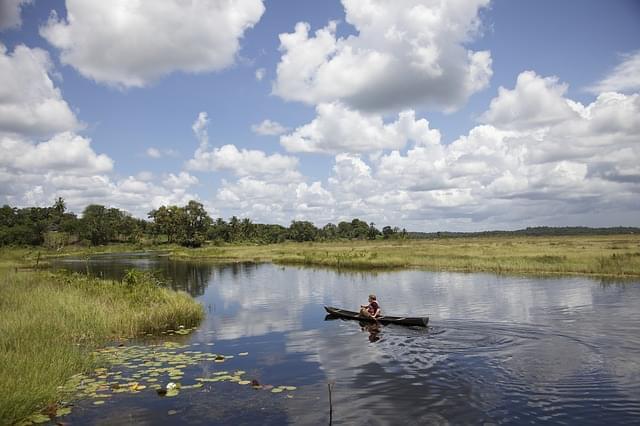 Covering 16,000 square kilometres, this epic nature reserve covers 12% of Suriname's geographical area and was opened in 1998 thanks to a generous donation of no less than one million dollars from Conservation International. Approximately 40% of the flora and fauna that you can admire here can only be found in the Guyana territories, and the vast majority of the reserve consists of wild, dense and impenetrable vegetation. As you can therefore imagine, visiting the park is a challenge from a physical point of view, but one that is definitely worth trying, obviously only and exclusively with a local guide. The generally most visited spot is the Raleighvallen, the Raleigh Falls, and some of the more unusual residents of the reserve that you will see are the spider monkeys, electric eels and the cock of the rock, a spectacular orange and red coloured bird.
8 - Saint Peter and Paul Cathedral
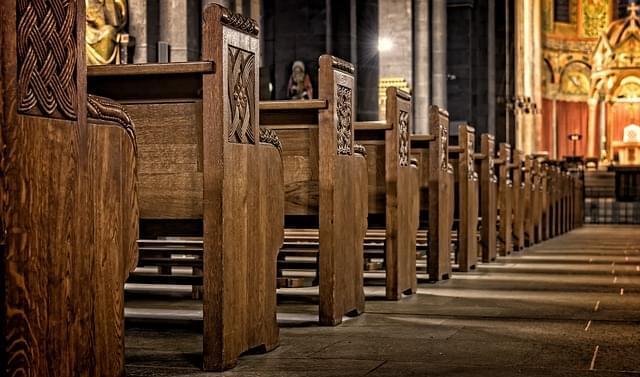 This unique Roman Catholic Cathedral is the largest church built entirely of wood in South America. The Cathedral is the seat of the Roman Catholic Diocese of Paramaribo. The beautiful wooden interior consists of intensely carved columns and ceilings with classical motifs and completely pure wooden walls, which have never been covered with paint in its history. Because of its beauty and uniqueness, it is one of the most visited sites of interest in the capital city of Paramaribo, and how can you blame it: even the outside view is absolutely breathtaking, and the meticulously decorated interior makes it a gem of art and architecture in a spectacular setting.
9 - Arya Dewaker Hindu Temple
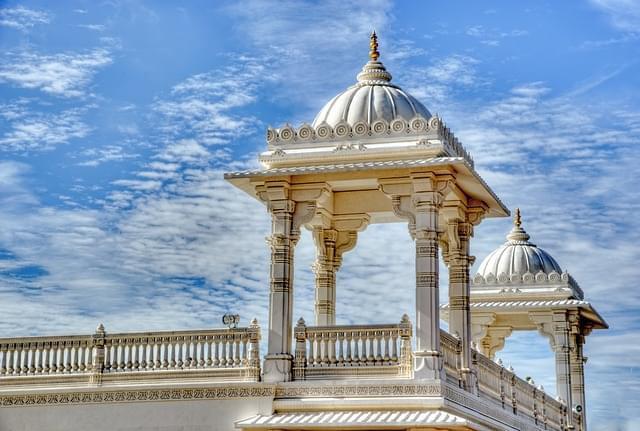 This isthe largest Hindu temple in Suriname, built by the Arya Dewaker Hindu Association, as a representation of another great community and culture present in this multi-coloured state. This spectacular temple includes within its complex a school and an orphanage for which it accepts donations from visitors who come to admire its beauty.
More than 30,000 people live in the Hindu community around the temple. It was designed by a Dutch architect and consists of two octagonal buildings that house meeting rooms, a library and ceremonial rooms. Every detail inside the temple is designed to reflect aspects of the sunlight and although there are no images of deities, you can observe many symbols of the Sanskrit and Hindi traditions.
10 - Neotropical Butterfly Park, Lelydrop
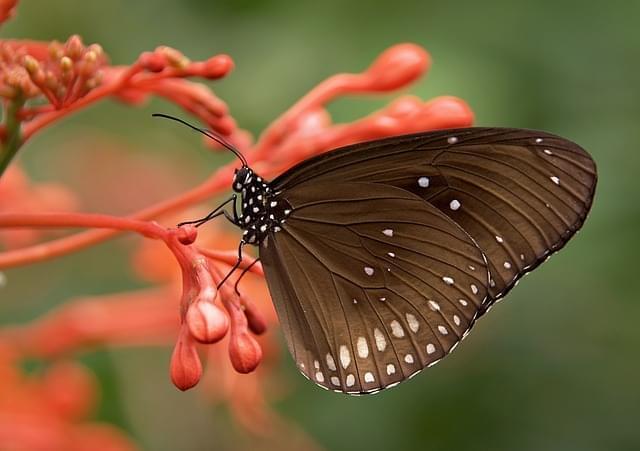 This absolutely unique park has everything it takes to be put at the top of the list of any tourist eager to experience nature and its wonders in a setting where it is nature at its most primordial state that is the focus of attractions in this state. The Lelydrop, the Neotropical Butterfly Park, is known for its beautiful landscapes, its collection of extremely rare butterflies and the very interesting museum displaying a large number of species of insects indigenous to Suriname, as well as many specimens of turtles and reptiles, including the dreaded boa constrictor. No less than seven acres of land are dedicated to butterfly breeding, while another equally interesting area is the farm with fields where the plants on which each species feeds are cultivated. Entry is permitted from 8.30 am to 3.30 pm.
Recommended itineraries
10-day itinerary: Paramaribo and jungle exploration
Day 1: departure from Italy, arrival in Paramaribo and accommodation in hotel
Day two: visit Paramaribo and its main attractions, such as Independence Square, the Presidential Palace and the Palm Garden
DayThree: morning departure from Paramaribo; arrival in Kwamalasamutu and accommodation in your room; visit of the village and the different tribes living in this area; return to hotel, dinner and overnight
Day Four: morning departure from Kwamalasamutu; arrival in Sipaliwini in the early afternoon, accommodation in rooms and afternoon at leisure; return to hotel, dinner and overnight
Day five: visit Sipaliwini, its tribe and a chance to meet the chief; visit the surrounding area and the river where the camp is located; accommodation, dinner and overnight
Day six: Departure from Sipaliwini; arrival at Mamia and daily exploration of the jungle, discovering the flora and fauna that inhabit this area, and excursion on the Four Brothers; return to Mamia, dinner and overnight
Day 7: Morning of exploration, including a boat ride on the river; return to Sipalawini, accommodation in your room, dinner and overnight
Dayeight: departure from Sipalawini, excursion into the jungle, including a stop at Iwanasamu, until Kwamalasamutu; accommodation in the room, dinner and overnight
Day 9: departure from Kwamalasamutu and return to Paramaribo; accommodation in hotel, dinner and overnight
Day 10: departure from Paramaribo, return to Italy
How much does it cost? Price details
Price per person from: from €2,800.00 per person
Price includes: flights from/to Italy, overnight stays, internal transfers, lunches and dinners, guide
Theprice does not include: insurance, tips, optional extra excursions
9-day itinerary: travel between Paramaribo, nature parks and fishing villages
Day 1: departing from Italy; arrival in Paramaribo and accommodation in hotel
Day 2: visit Paramaribo and its main attractions, such as Independence Square, the Presidential Palace and the Palm Garden
Day 3: Departure from Paramaribo; transfer by plane to Kabalebo and check into the hotel; in the afternoon, first outing to explore the surrounding forest; return to the hotel, dinner and overnight stay
Day four: day excursion into the jungle around Kabalebo, to discover the flora and fauna that inhabit this area, and hike to the top of the nearby mountain, from where you will be able to admire a beautiful view of the entire forest; return to hotel, dinner and overnight
Day five: Second day of jungle hiking, including a canoe ride on the river to the Moi Moi waterfall; return to hotel, dinner and overnight
Day six: last free morning in Kabalebo; in the afternoon, departure from Kabalebo and return by plane to Paramaribo; accommodation in hotel, dinner and overnight
DaySeven: day excursion to discover the fishing villages along the coast, including Totness village; return to Paramaribo, dinner and overnight
Day eight: free morning for a last tour of Suriname's capital; afternoon departure from Paramaribo by plane to return to Italy
Day nine: arrival in Italy
How much does it cost? Price details
Price per person from: from 2.900,00 per person
Price includes: flights from/to Italy, overnight stays, internal transfers, lunches and dinners, guide
Theprice does not include: insurance, tips, optional extra excursions
Travelling Information: useful info and necessary documents
Inhabitants: 543,925
Capital: Paramaribo
Languages: Dutch
Local currency: Surinamese dollar SRD (€1.00=8.46 SRD)
Climate: tropical, with very high maximum temperatures and abundant rainfall both on the coast and inland
Time zone: UTC -3 (5 hours behind Italy)
Vaccinations: no vaccination required (yellow fever vaccination recommended by WHO)
Entry requirements: passport, return ticket. Visa not necessary for Italian citizens for stays of less than 90 days.
Distance from Italy: 7,957 km (13-16 hours flight time) from Rome to the capital