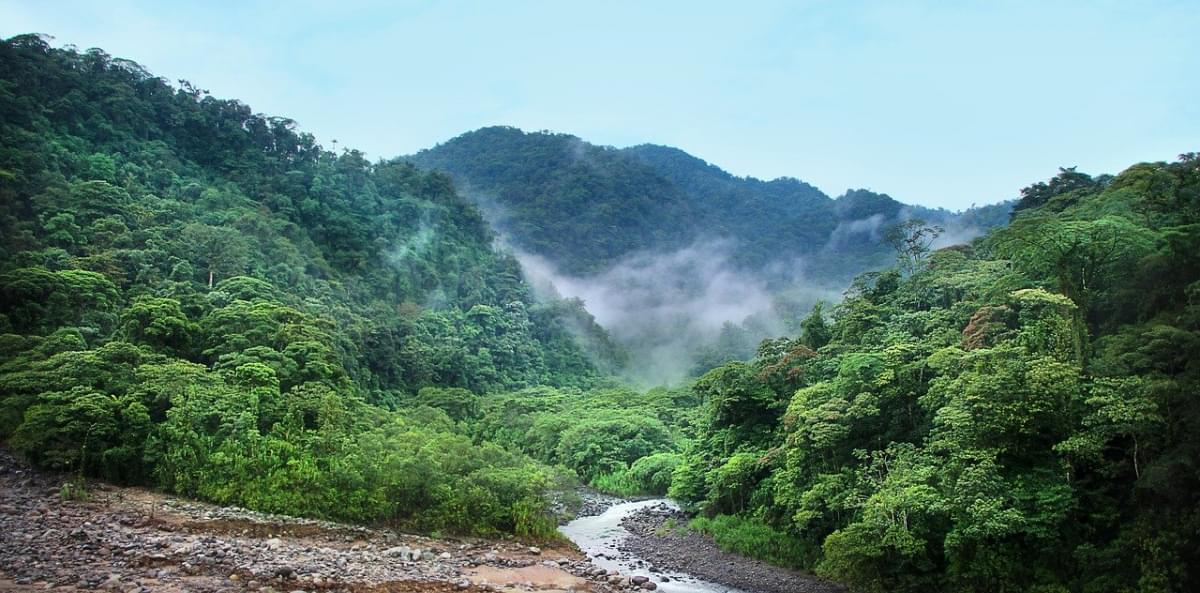
 A country in Central America, Costa Rica is a true paradise on earth because here nature reigns supreme: forests and jungles where you can encounter endemic species such as sloths, wonderful white sandy beaches lapped by crystal-clear sea, volcanoes to discover. In recent years, this state has become a little more touristy, but fortunately the ecosystem has remained intact.
Here is what you need to know if you are planning a trip to Costa Rica: where it is, when to go and what to see!
Travelling informed: useful info
Inhabitants: 4,900,000
Capital: San José
Languages: Spanish, English
Local currency: Costa Rican colón (CRC) / Exchange rate: €1.00 = 703.05 CRC
Time zone: -7h compared to Italy
Vaccinations: no compulsory vaccinations. Tetanus, hepatitis A and B vaccinations recommended
Entry requirements: passport with residual validity of 90 days, return air ticket. Tourist visa not necessary for stays up to 3 months
Distance from Italy: 9,783 km (15-18 hours flight time)
Where it is located
Costa Rica is a southern state in Central America and borders Nicaragua to the north and Panama to the south. It is washed by the Caribbean Sea to the east and the Pacific Ocean to the west. Its territory is characterised by a series of mountain ranges with volcanoes and peaks reaching 4000 m, valleys and coastal areas.
Getting there
Costa Rica's main airport is theJuan Santamaria International Airport in San José. Incoming flights from Europe land here, while from Central America and the United States several connections use the other major airport, Daniel Oduber Quiros International Airport, in the Guanacaste region.
FromMilan or Rome: there are no direct connections from Italy. You can fly with Iberia with a stopover in Madrid (total duration 15 h), with KLM with a stopover in Amsterdam (19 h), with Lufthansa with a stopover in Frankfurt (18 h) - Compare flights from Rome or Milan
From major European capitals: several direct flights. British Airways direct flight London-San Jose (14 h), Iberia direct flights from Madrid (10 h 50 min), Lufthansa from Frankfurt (11 h) - Compare flights to Costa Rica
When to go? Info on climate and best time
Month | Average temperatures (min/max) | Precipitation (days/mm) |
|---|---|---|
January | 14 / 24° | 2 days / 15 mm |
February | 14 / 24° | 0 days / 5 mm |
March | 15 / 25° | 2 days / 20 mm |
April | 17 / 26° | 5 days / 45 mm |
May | 17 / 27° | 17 days / 230 mm |
June | 17 / 26° | 20 days / 240 mm |
July | 17 / 25° | 17 days / 210 mm |
August | 16 / 26° | 21 days / 240 mm |
September | 16 / 26° | 22 days / 310 mm |
October | 16 / 25° | 22 days / 305 mm |
November | 16 / 25° | 13 days / 145 mm |
December | 14 / 24° | 4 days / 40 mm |
Climate: Three climatic regions can be identified. Temperate in the highlands and the capital area (dry season Dec-Apr with min 15° and max 25°, rainy season May-Nov, with min 17° and max 26° and heavy rains); warm temperate in the Pacific coastal area (higher temperatures and an average of 30° all year round); equatorial in the Caribbean coastal area (only one season, average 28° and heavy rains)
Best period: December to April when the rains are mostly absent, except on the Caribbean coast, and the heat is pleasant and not annoying
Period to avoid: May to October November, particularly September and October, when the rains are torrential and the danger of hurricanes and typhoons higher
The main cities
In Costa Rica there are several small towns and interesting places that are often used during a trip as a base for discovering the beauty of the country. Here are the main ones:
San Jose: the capital, the international airport is located here. Perfect base for excursions to the Poàs Volcano National Park (2,740 m), Irazù Volcano (the highest in the country) and rafting on the Rio Reventazòn or the Rio Pacuar.
Quepos: 160 km from the capital, a perfect base for visiting the Manuel Antonio National Park, where endemic animal species are encountered and where one can dive into dreamy beaches.
Limon: main city on the Caribbean coast, reachable by bus from San José and equipped with an airport. Ideal base for visiting the Tortuguero National Park and the transboundary Natural Park la Amistad, between Panama and Costa Rica.
Nicoya Peninsula: along this peninsula facing the Pacific there are several villages such as Montezuma or Santa Maria, perfect for visiting the beaches in the area such as Playa Cuevas, Playa Lagartillo, Samarara Beach and many others.
Puerto Viejo: accessible by direct bus from San José (1 h 40 min). Perfect base for visiting the Cahuita National Park and beaches such as Playa Cocles, Playa Chiquita and Punta Uva.
Sights in Costa Rica
Parque Nacional Marino Ballena
Cahuita National Park
Parque Nacional Volcán Arenal
Bosque Nuboso Monteverde Biológica Reserve
Parque Nacional Manuel Antonio
1/13
ParqueNacional Volcán Arenal: surrounded by dense forests that cover the lower slopes and nearby hills, characterised by a diverse and wild terrain with a high degree of biodiversity. Several tours to the Arenal volcano, La Fortuna and hot springs are possible here. Also not to be missed is the boat excursion to the Arenal Lagoon
Reserva Biológica Bosque Nuboso Monteverde: the country's most famous cloud forest, consisting of a mist-shrouded virgin forest with moss-covered creepers, ferns and bromeliads and where torrents run wild
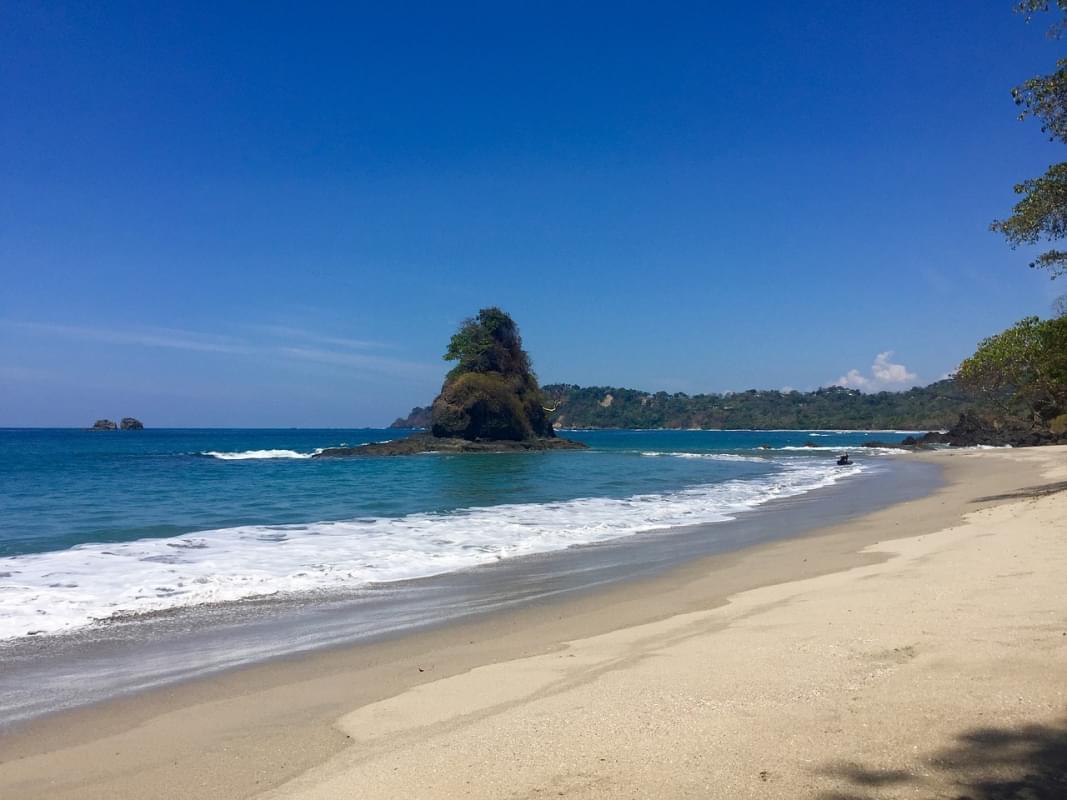
Parque Nacional Manuel Antonio: characterised by nature and wildlife, palm trees, crystal clear waters, white beaches, playful monkeys, tropical birds, iguanas and sloths.
San Josè: capital of Costa Rica, a typical Central American city with colourful markets to be discovered on a gastronomic tour, important museums (Natural History Museum and Museum of Pre-Columbian Gold) and an interesting historic centre. Several tours depart from here to discover the Arenal volcano, hot springs and zipline.
Irazù Volcano: part of the park of the same name, it comprises 10 cones and covers 500 square kilometres, is 3432 m high and from its summit you can see the two Oceans. Among the highlights is the Diego Haya crater with its multi-hued green lake, surrounded by beautiful nature
Turrialba: a small town located on the slopes of the volcano of the same name, which returned to activity in 2016, is famous for the Pacuare canyons and waterfalls, where it is possible to go on one of the 10 most beautiful rafting trips in the world.
Tortuguero: called the little Amazon, in the north-east of the country, is a Natural Park where you can watch the spectacle of hundreds of turtles in a line building nests and leaving their eggs there, around an extensive beach of black sand. The area is also home to frogs, monkeys, birds, fish and over 500 species
Parque Nacional Marino Ballena: 180 kilometres from San José, this is an area made up of four fascinating beaches where whales, dolphins and sea turtles live, as well as being a special habitat for several species of sea birds and reptiles
Cerro Chirripó: the highest mountain in Costa Rica, at 3,820 m high. It is home to a park that has been declared a Biosphere Reserve and UNESCO World Heritage Site. The ideal place to discover different habitats, where you can meet tapirs, jaguars, monkeys
Poás Volcano Park: home to the active volcano of the same name, famous for its 2 km diameter crater inside which is a hot lagoon. Nearby there is also a lake that forms waterfalls and a belvedere from which to admire a splendid panorama.
Cahuita National Park: 42 km south of the city of Puerto Limón, it is famous for its sea and seabed ideal for snorkelling and discovering underwater life. Sea urchins, parrot fish, angel fish, manta rays, barracuda, moray eels, lobsters and turtles live here
Drake Bay: a small village nestled in the Osa Peninsula and surrounded by the Corcovado National Park. The perfect destination for those who want to totally immerse themselves in nature, with hikes in the tropical forest, trekking between waterfalls, horse riding on the beach and snorkelling diving in the company of beautiful whales and playful dolphins
Playa De Coco: offers all the best of Costa Rican tourism between enchanting beaches and nightlife. A perfect place for water sports such as surfing, kitesurfing, and diving among manta rays, whale sharks... and sharks!
The main itineraries in Costa Rica
There arethose who decide to visit Costa Rica together with other CentralAmerican states such as Panama or Nicaragua, and those who prefer to dedicate an exclusive trip to this country.
Depending onthe days available and what you like best, you can follow different itineraries that touch on more or less areas of the state. Here are the main ones:
Tour ofCosta Rica in 10 days: a trip suitable for those who do not have too much time and want to get to know the most beautiful parts of the country. After landing in San José, you visit the capital and the next day leave for the Tortuguero National Park, where you stay for a couple of days. Then we transfer to La Fortuna to explore the Arenal volcano in a full day. We continue on to Playa Tamarindo where we spend the last 2 days discovering the Nicoya pensila
Grand Tour of Costa Rica in 20 days: a complete itinerary to get to know and fall in love with the country. Main stops and places include San José, Poas Volcano Park, Arenal Volcano Park, Rio Celeste Waterfalls, Monteverde Forest, Rincon de la Vieja National Park, Tamarindo, Playa Cochal and Playa Hermosa, Manuel Antonio National Park, Playa Uvita and Ballena Marine Park
Costa Rica's sea, forests and volcanoes in 14 days: an itienerary to discover the country's diverse environments dedicated to those with just two weeks to spare. Highlights include San José, Catarata de la Fortuna, Arenal Volcano, Manuel Antonio Park, Monteverde Forest and Tortuguero National Park
What to do in Costa Rica: excursions and tours
How much does a holiday in Costa Rica cost? Prices, offers and advice
 Costa Rica has two international airports: San José-Juan Santamaria International Airport in the capital San José and Daniel Oduber International Airport in Liberia, in the province of Guanacaste.
It is possible to discover this state with the help of agencies that organise itineraries and tourist packages, or to travel independently.
For a do-it-yourself trip, we recommend renting an all-terrain car (from €25.00 per day) and staying in dwellings and eco lodges (hostels from €12.00 per night, private rooms with bathroom from €30.00 per night). As far as food is concerned, keep in mind that on average a plate of rice, beans, and meat or fish costs about 2,500.00 CRC (€3.50). Consider a minimum expenditure of about €70.00/€80.00 per day for accommodation, travel and excursions.
If you opt for an all-inclusive solution, consider a minimum expenditure of €1600.00 per person. If you like scuba diving or snorkelling, we recommend one of the wonderful diving trips offered by divecircle.com, including flights, accommodation and marine activities such as diving with manta rays, sharks and dolphins.
Where to stay: Hotels and B&Bs from €30.00 per room - see offers
Cheap flights: to San José from €483.00 - look at the offers