Its name translates as "the bay of the descending dragons" and it's not hard to see why Halong Bay has such a mythical appeal.
Located in northern Vietnam in the Gulf of Tonkin, the most visited tourist attraction in Vietnam combines a spellbindingly beautiful coastline with an emerald sea where thousands of limestone monoliths ripple. Add to this paradise caves studded with stalactites, picturesque islands and miraculously constructed floating fishing villages, and you have a true destination of choice.
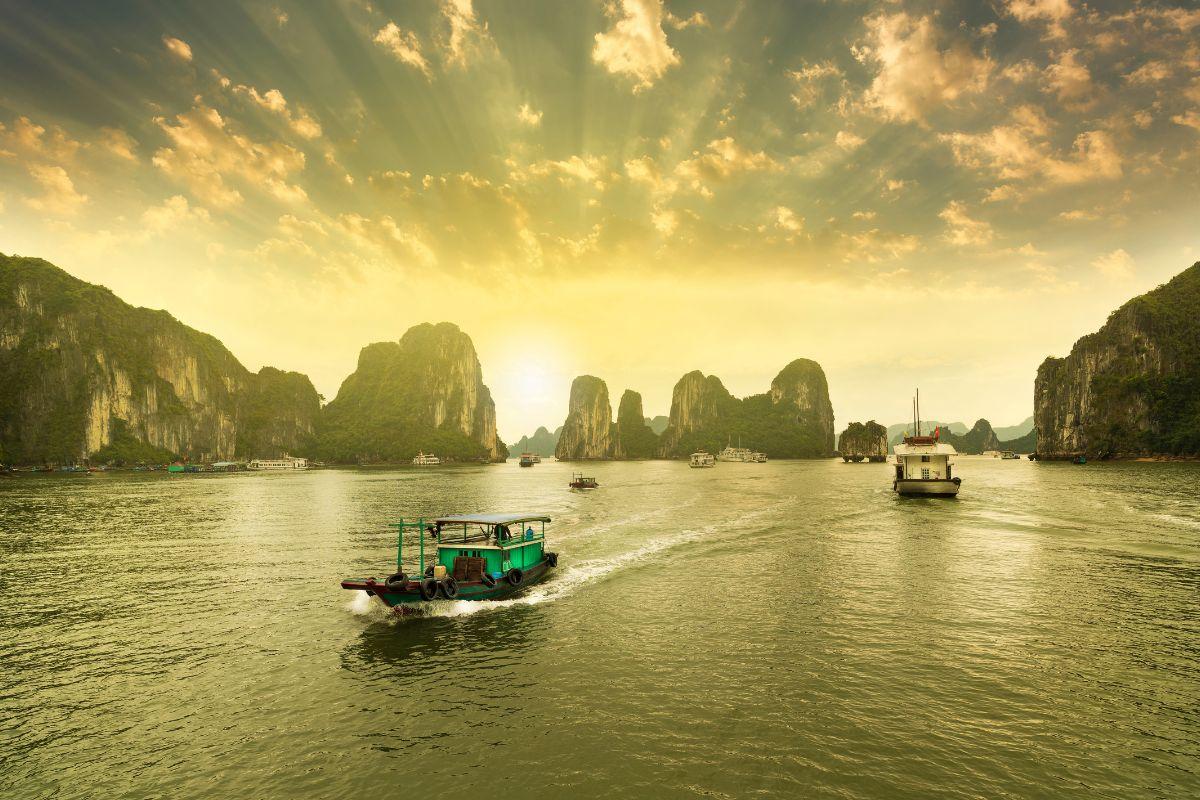 Halong Bay, one of the seven natural wonders of the world, has nearly 2,000 karst formations and small unspoiled islands.
Only 40 of the islands are inhabited, and only a few of them are developed enough to offer hotels, restaurants and recreational opportunities to visitors, including the large island of Cat Ba, where most cruise ships dock.
Yet many visitors who arrive in Halong Bay on a cruise spend their nights on board, enjoying the daytime snorkelling, kayaking or sunbathing.
A UNESCO World Heritage Site and world-famous for the beauty of its its landscapesHalong Bay has also always been considered a prime destination for relaxing cruises.
How to see and enjoy the best of Halong Bay, Vietnam Vietnam ? Start here - and plan your trip for an unforgettable experience!
Where is Halong Bay located?
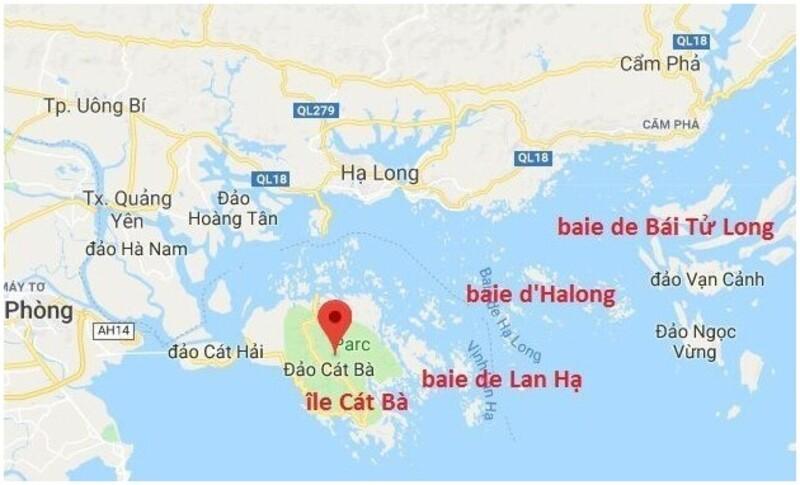 Halong Bay, located in the Gulf of Tonkin in Quang Ninh province, north-east Vietnam, is 165km from the capital, Hanoi.
Where to stay in Halong Bay?
Elegant hotel in Halong Bay - Muong Thanh Luxury
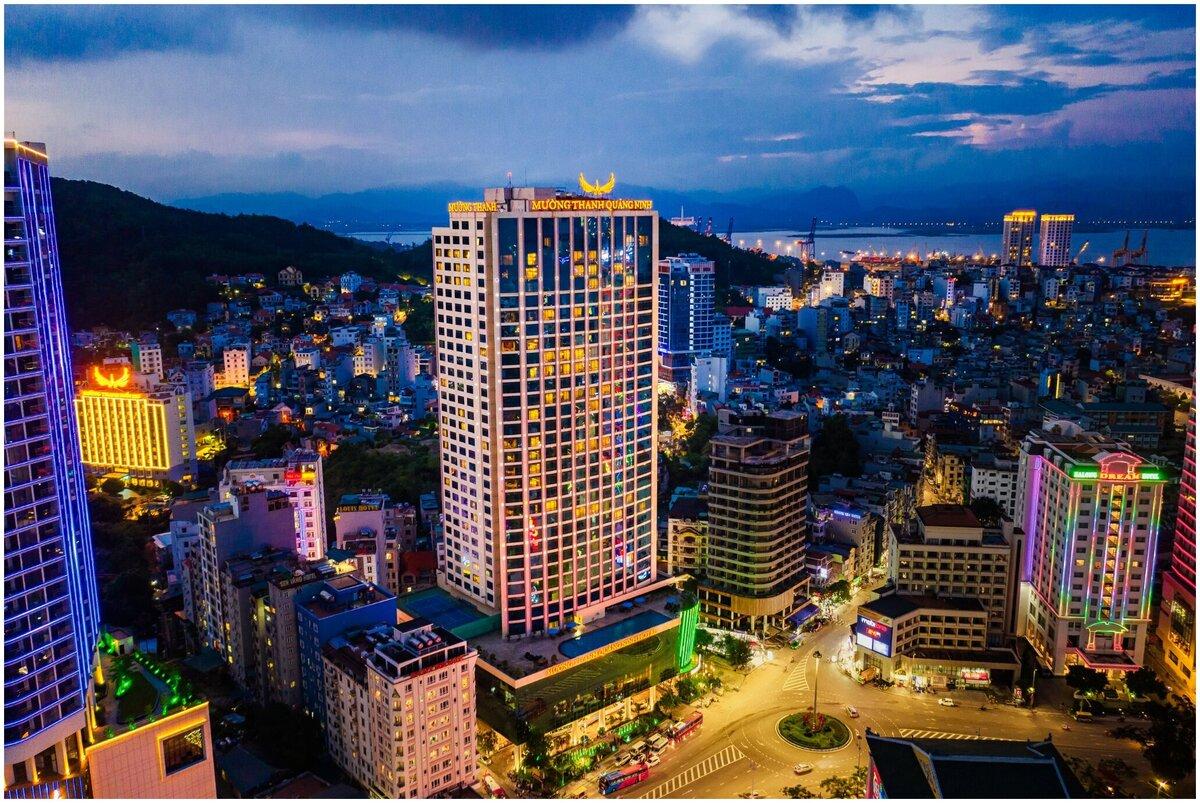 If you want to try a five-star hotel, Vietnam is a great place to splurge. Hotels here are often much cheaper than elsewhere in the world, without compromising on world-class facilities.
The Muong Thanh Luxury, located in the heart of Halong City, also gives you quick access to the region's main ferry services. It really is a win-win situation!
Creative Refuge in Halong Bay - Le Flamboyant
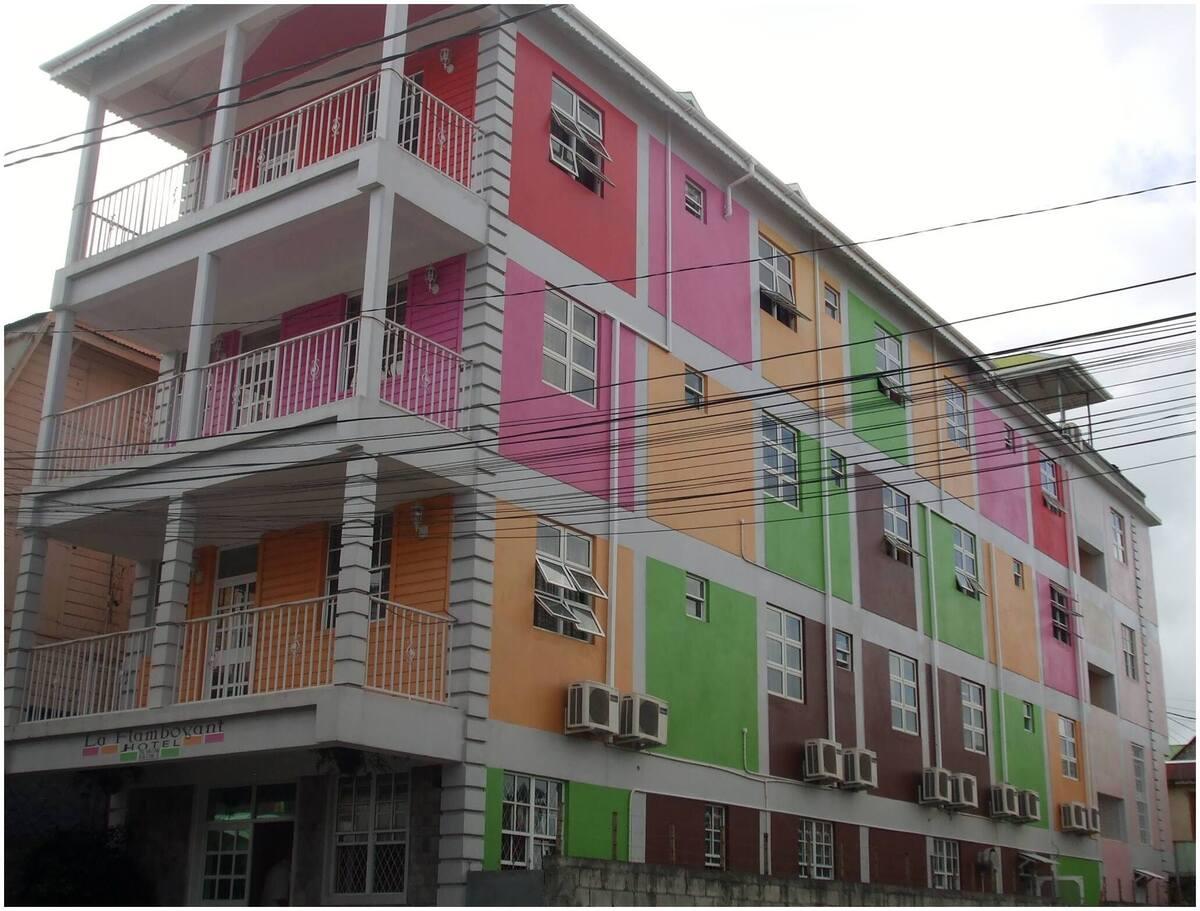 This beautiful flat will make you never want to leave! The stylish interiors create a bright and relaxing space with plenty of room. The walls are decorated with artworks created by local artists and the sturdy furniture adds a touch of luxury. The centre of Haiphong is within walking distance, allowing you to stay in touch with the rest of Vietnam. Perfect if you have a longer itinerary.
Adventure Hostel in Halong Bay - Woodstock Jungle Camp
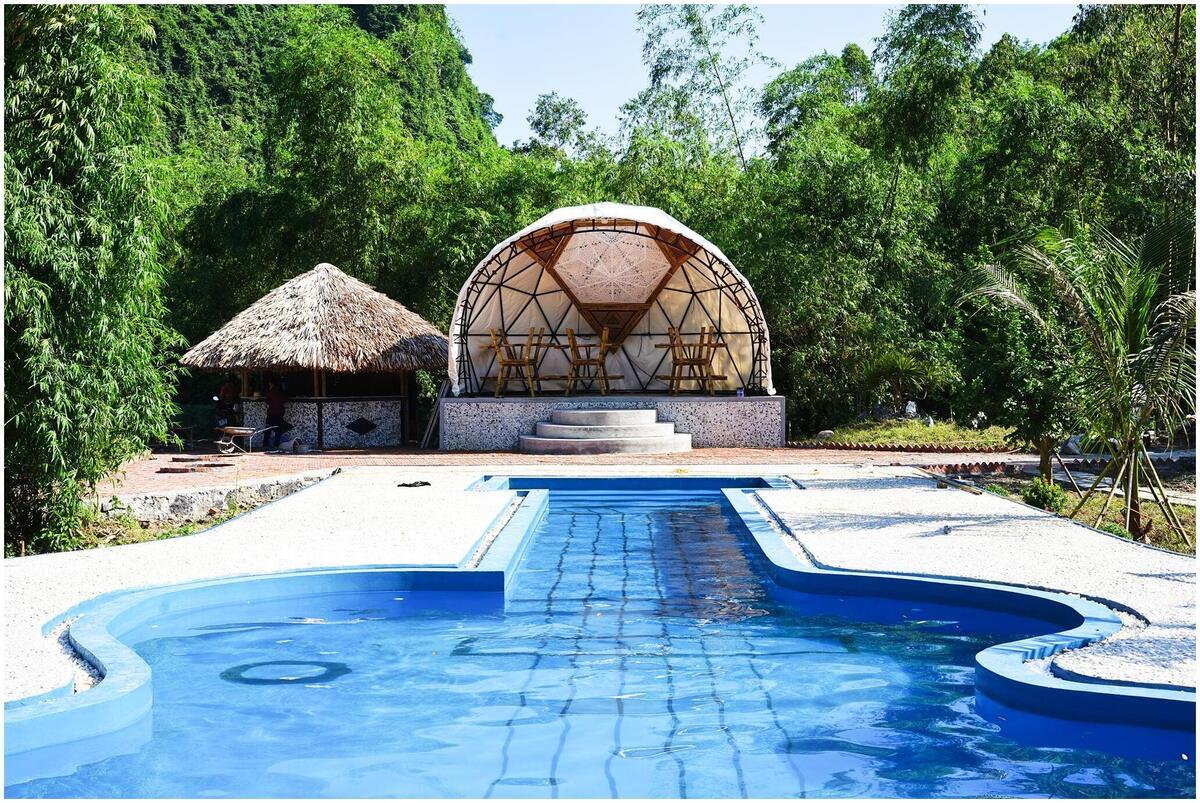 There aren't many hostels in Halong Bay, but fortunately the few available offer exceptional service. Woodstock Jungle Camp is right in the heart of Cat Ba, our favourite spot for adventurous travellers. This makes it an epic choice for a true backpacker experience. It even has its own swimming pool. Prefer to stay on the coast? There's also a fantastic beach camp!
How to visit Halong Bay?
Due to the favourable geographical conditions of the "descending dragon" bay, there are various means of transportation to Halong, including air, road, rail and water. Let's make a table of 4 popular means of transportation to Halong Bay that you can take.
By air - The most convenient way
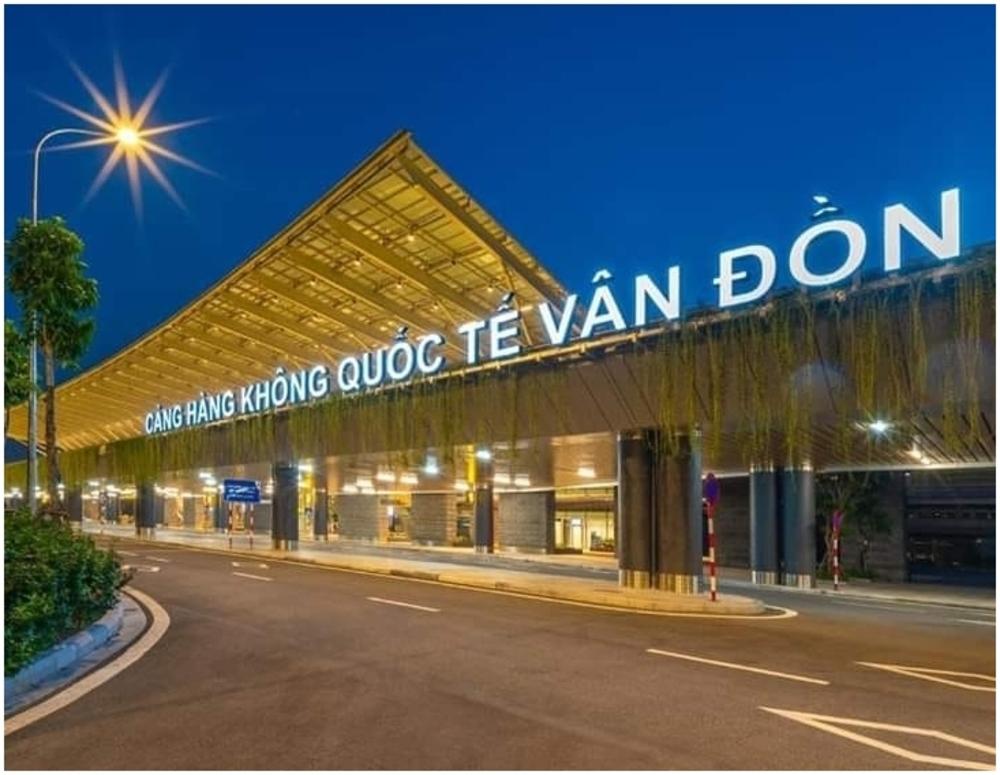 If you are travelling from abroad or further away than Hanoi, flights to Halong Bay should be a priority because of their convenience and time saving. By air, you can fly into one of the following three airports near Halong Bay.
Van Don Airport - Quang Binh Province (VDO)
Distance to Halong: 50 km
Airlines: Vietnam Airlines, VietJet Air, Bamboo Airways
Cat Bi Airport - Hai Phong Province (HPH)
Distance to Halong: 60 km
Airlines: Vietnam Airlines, VietJet Air, Bamboo Airways, Pacific Airlines, Donghai Airlines, Ruili Airlines, etc.
Noi Bai - Hanoi Airport (HAN)
Distance to Halong: 180 km
Airlines: Vietnam Airlines, Pacific Airlines, VietJet Air, Bamboo Airways, AirAsia, Cathay Pacific, Hong Kong Airlines, Thai Airways, etc.
From abroad
So far, Vietnam has many land crossings with its neighbours and international air links.
From Asian countries: China, Hong Kong, South Korea, Taiwan, Thailand, Cambodia, Laos, Malaysia, Singapore, etc.
From Western countries: France (Paris), UK (London), Germany (Frankfurt), Russia (Moscow), etc.
Don't let the limitations of direct flights to Vietnam dampen your desire to travel. Sometimes, an indirect flight to Vietnam can save on transportation costs.
There is a large collection of transit flights through Thailand, Singapore, China, Hong Kong, Seoul, etc. before flying to Vietnam.
Advantages and disadvantages
Advantages: Flying saves a lot of time and energy for your trip to Halong. It is also convenient and economical when you opt for cheap airlines.
Disadvantages: Airfares, especially on first class airlines, are expensive at times. Options are limited when flying into Van Don and Cat Bi airports.
By road - the most popular way
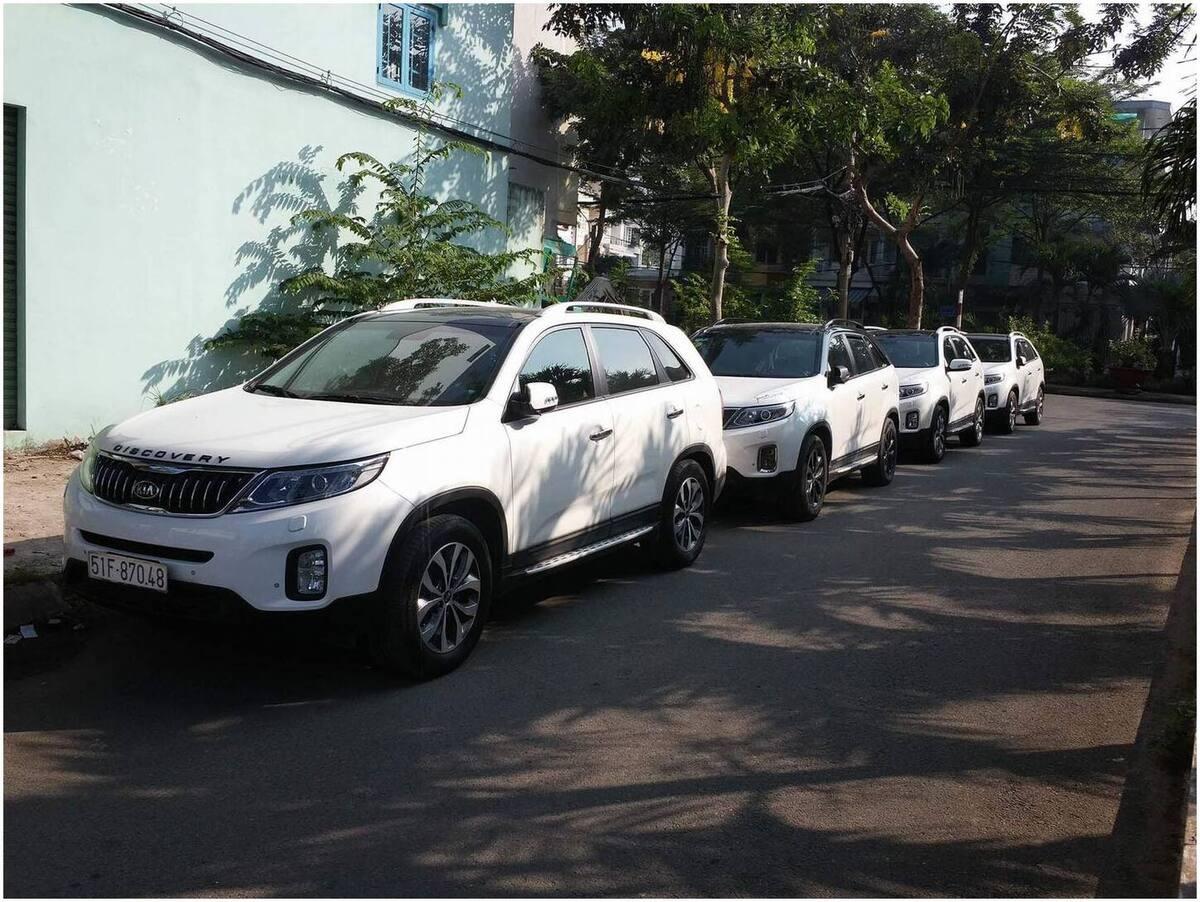 Another popular way to travel short or long distances in Halong is by road. With the improvement of Vietnam's expressways, travelling by shuttle bus, limousine, private car, taxi and even motorbike is easier than ever. This allows you to enjoy more of the local lifestyle and save money.
Depending on your budget and preferences, you can choose between low-cost and high-end transport. Especially if you are travelling from Hanoi, SapaNinh Binh and other destinations in northern Vietnamwe highly recommend the shuttle or luxury limousine to make the most of your trip.
If you are travelling from central and southern Vietnam, it is best to take a night bus for optimum comfort.
Some itineraries
From Hanoi
Starting point: Hanoi
Distance and travel time: 180 km and 2.5 hours
Route: National Road 5B (Hanoi - Hai Phong Road)
From Hoi An
Starting point: Hoi An
Distance and travel time: 920 km and 17.5 hours
Route: National Road 1A from south to north
From Ho Chi Minh City
Starting point: Ho Chi Minh City
Distance and travel time : 1,800 km and 33 hours
Route : National Road 1A south to north
From Ninh Binh
Starting point: Ninh Binh
Distance and travel time: 220 km and 3.5 hours
Itinerary: Route 1 = QL38B via Hung Yen/ QL39A via Ha Nam
Route 2 = QL5B via Hai Phong
Advantages and disadvantages
Advantages: A road trip is one of the cheapest ways to get to Halong Bay. Luxury buses offer pick-up/drop-off services, wifi, air conditioning, bottled water, leather berth (night bus), and other essential amenities.
Disadvantages: If you're travelling a long distance, it's quite dangerous and tedious to take a road trip. Not to mention that the reclining seat is uncomfortable on a long-haul trip.
By train - The most atypical way
 For those looking for a local way to travel to Halong Bay, the train will allow you to soak up the scenery at a slow pace. There are several options to choose from: a soft or hard seat or sleeper cabin; a local train or a luxury tourist train.
Although train travel takes longer than bus or car travel, you still enjoy a comfort zone and good sleep over long distances. Moreover, train tickets are much more expensive than bus tickets.
Some routes
From Hanoi
Starting point: Hanoi - Yen Vien Station
Distance and travel time: 180 km and 7 hours
Itinerary: Hanoi - Halong by train
From Ninh Binh
Departure point : Ninh Binh - Ninh Binh Station
Distance and travel time: 100 km and 2.5 hours
Itinerary: Ninh Binh - Hanoi by train
From Sapa
Starting point: Sapa - Lao Cai Railway Station
Distance and travel time: 300 km and 8 hours
160 km and 2 to 7 hours
Itinerary: Sapa - Hanoi by train
Hanoi - Halong by road/train
Advantages and disadvantages
Advantages: The train is the safest way to travel to Halong Bay. In addition, it offers an authentic and comfortable experience to get around Vietnam.
Disadvantages: The slow pace and length of the journey can make train travel more undesirable and unsuitable for those short on time.
By river - The most scenic route
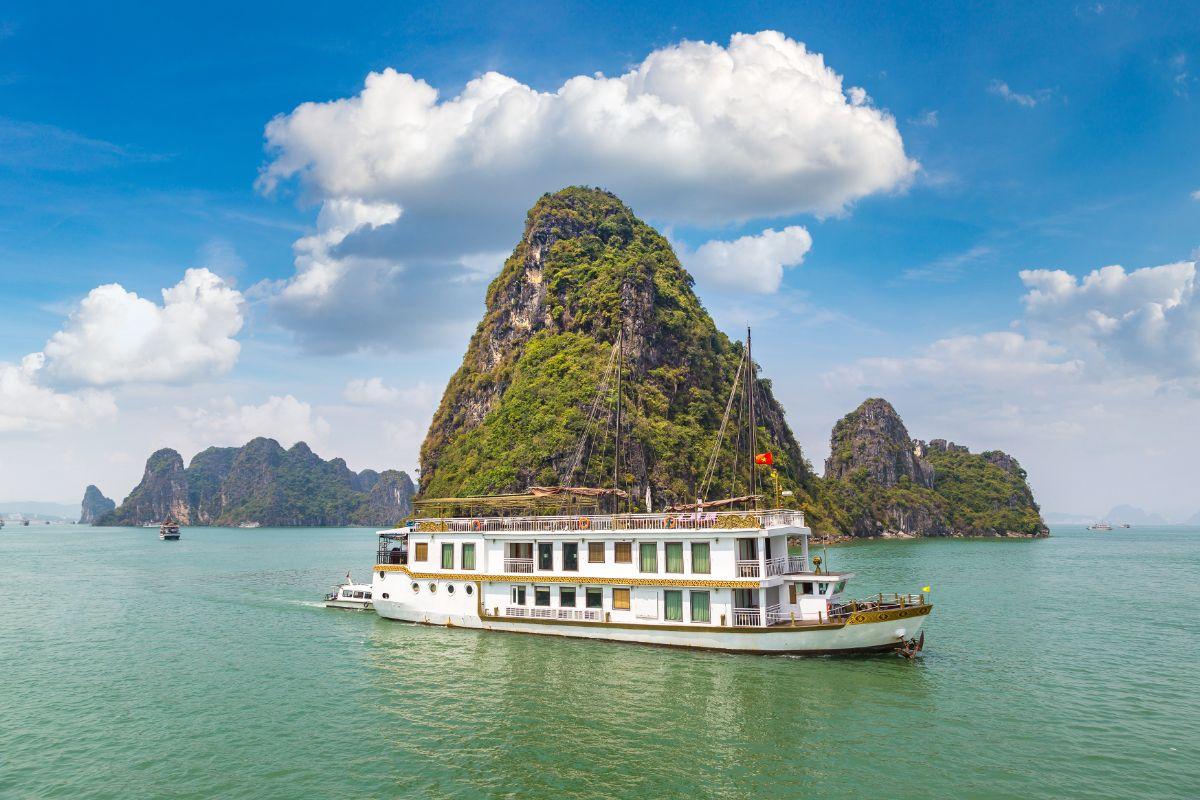 From nearby areas, you can easily get to Halong Bay by river with cruise ships, ferry or speedboat. The nearest route is the Cat Ba - Tuan Chau ferry and speed boat from Hai Phong, or you can take a cruise from Da Nang, Nha Trang, Ho Chi Minh City or other countries and arrive in Halong at Vinashin Port or Halong International Port.
In addition, you can choose a Halong Bay cruise from Hanoi to explore the profound beauty of this world natural heritage. Ha Long has a few international ports that serve both logistical and tourist purposes.
Advantages and disadvantages
Advantages: Taking the river route allows you to see Halong Bay up close. In addition, the ferry and speedboat ticket is affordable for any budget traveller.
Disadvantages: This route can take longer to travel and is not suitable for those who are seasick.
By seaplane
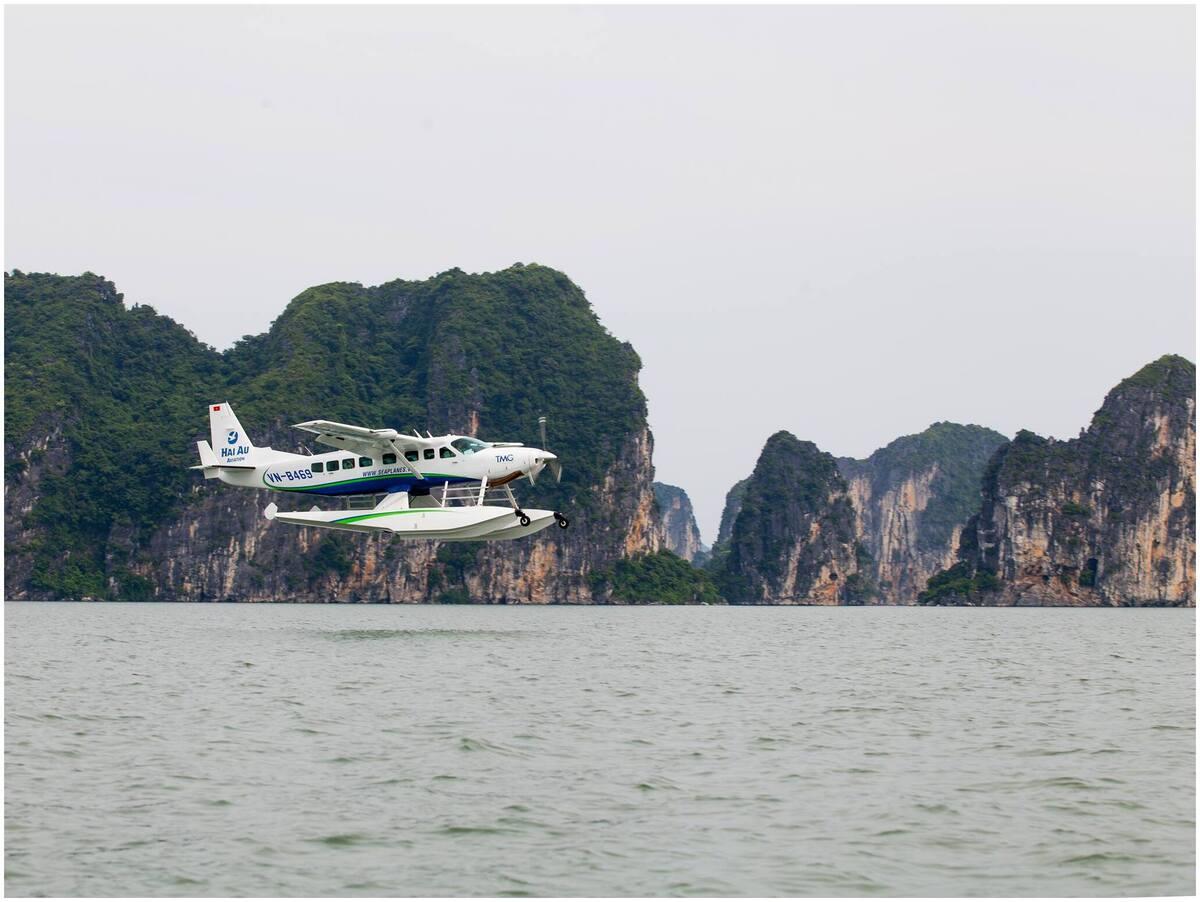 If you're feeling particularly adventurous, it's possible to take a seaplane from Hanoi's Noi Bai Airport to Tuan Chau Marina, where you can board your cruise or head to your hotel. Assured of a fast, comfortable and fun ride, the seaplane trip is a rather unique experience that will provide you with great memories of your trip to Halong Bay. The flight is only available from Hanoi and takes about 45 minutes.
Costs vary considerably depending on the time of year due to the higher demand during the high season and whether or not you choose to add an additional 15 minute scenic tour of Halong Bay to your flight.
Benefits: The fastest way to get to Halong Bay from Hanoi. Flying by seaplane is an invaluable experience and a great way to get your first glimpse of Halong Bay.
Disadvantages: Flying by seaplane is not an economical way to travel.
How to get around Halong Bay?
By taxi
 First of all, the taxi! Getting around Halong Bay by taxi is a great option. There are many taxis ready to take you to the pier, airport or just about anywhere you want to go. As taxi drivers are usually locals, they can even give you travel tips!
Taxis are cheap in Vietnam. The starting price is usually about 0.2 euro and then about 0.7 euro.
Tips:
Make sure you choose reputable taxi companies such as Ha Long Taxi, Mong Cai Taxi or Mai Linh Taxi. If in doubt about the reputation of the taxi company, do not get into the taxi and find another one.
When you get in, make sure you can see the meter and that it works. A good solution is always to ask the hotel receptionist to call you a taxi.
Car and bicycle hire
Taking a taxi is fine, but it doesn't offer as much flexibility as private transport. There are several rental agencies in town, but the safest and most efficient way to rent a bike or car is always to go to the hotel where you are staying. If you are not renting at the place you are staying, always inspect the vehicle carefully before you leave. We recommend that you take photos of any scratches or other damage you may see on a rental vehicle. This will ensure that the rental company does not blame you for any damage already incurred.
If you are stopped by the police, never give them your passport or driving licence and pretend you don't speak English or French.
By bike
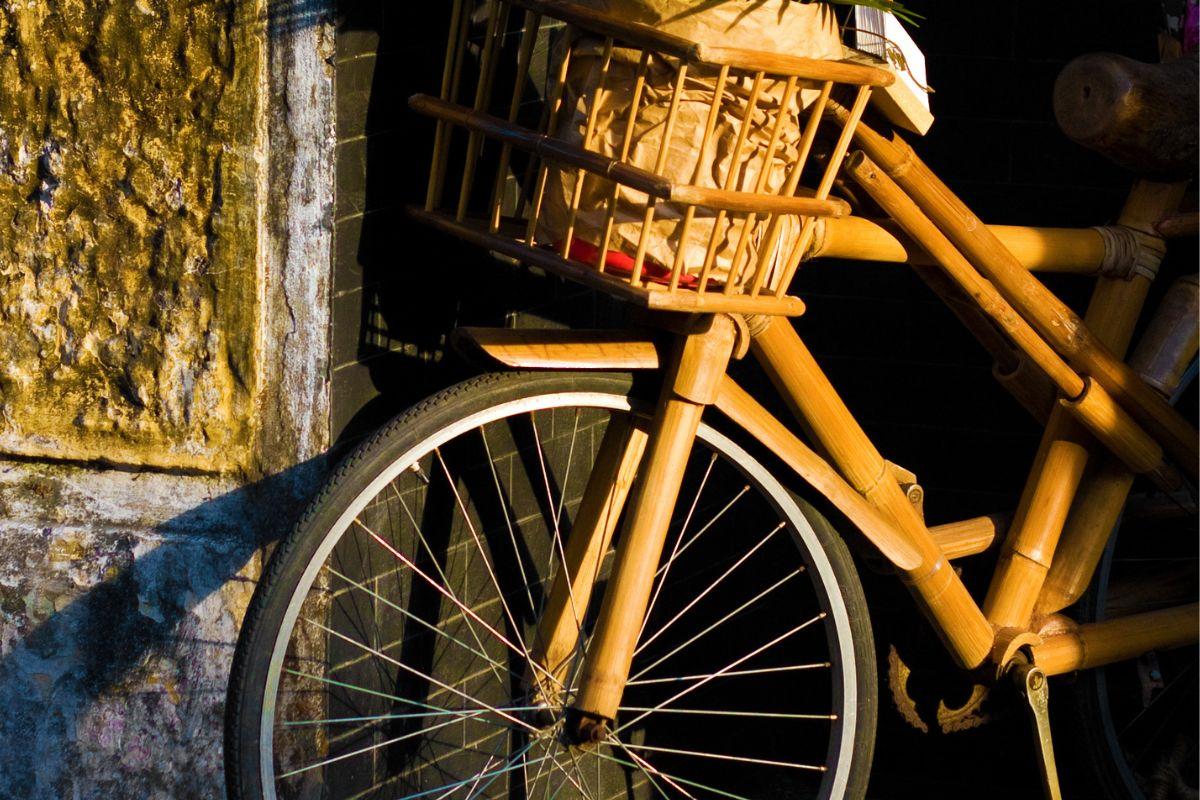 The price of hiring a bike varies according to the type of bike. Semi-automatic bikes are generally cheaper than automatic bikes. A semi-automatic bike costs about 5 euros per day, while an automatic bike costs about 7 euros.
When you are moving around the city, the automatic bike is the best choice. If you are planning to go to the mountains, you might consider renting a semi-automatic bike.
Make sure you always wear your helmet as the traffic police can stop you and fine you on the spot for any minor offence. A full face helmet is always recommended as Vietnamese roads are generally dangerous.
By car
A car is an ideal and comfortable way to get around. Renting a car for a day should cost you between 40 and 60 euros. A car is generally safer than a bike as you are better protected and it is the best option when you are not quite ready to explore Vietnamese roads by bike.
As it can be very hot in Halong Bay, especially in summer, the other great advantage of the car is that it is equipped with air conditioning. In any case, both cars and bicycles are excellent ways to get around the area.
What to do in Halong Bay?
Enjoy a day cruise
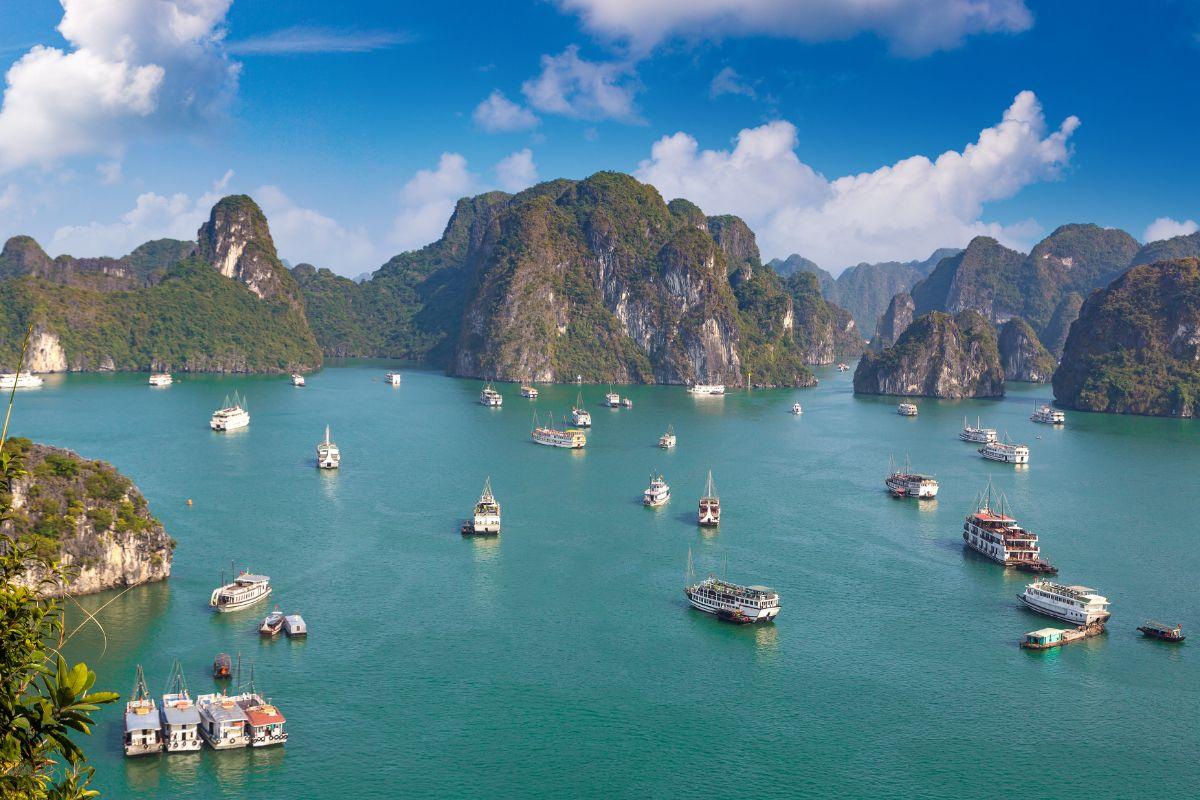 To explore the whole of Halong Bay in just a few hours, hop aboard a day cruise, ideal for island hopping, lunch and kayaking. Soak up the beauty of the vast pristine beaches, limestone islets, caves and rocky headlands as you sail past attractions such as Sung Sot Cave, Luon Cave, Titop (Titov) Island and Cap La floating village.
Stellar of the Seas Cruise and Bhaya Cruises are the largest day cruise operators in Halong Bay.
Experience a unique night cruise
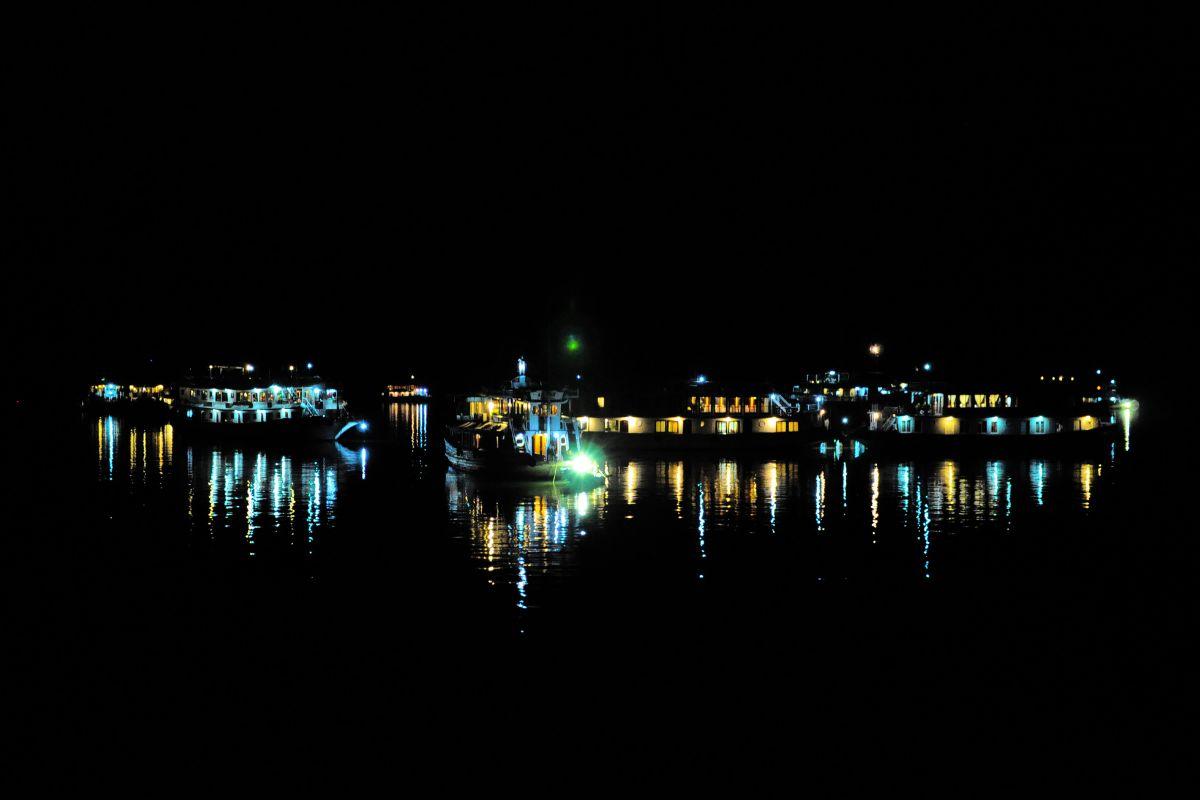 Explore the beautiful natural scenery of Halong Bay on luxury overnight cruises including the spectacular Sung Sot Cave, Titop Island, Ba Hang, Tung Sau Pearl Farm, Luon Cave and Dog Island.
Enjoy luxurious stays with panoramic views in fully furnished cabins, dine and stay up until dawn and enjoy refreshing dives.
Bhaya Cruises and Oasis Bay Classic offer exciting overnight cruises from €170.
Visit Cat Ba Island
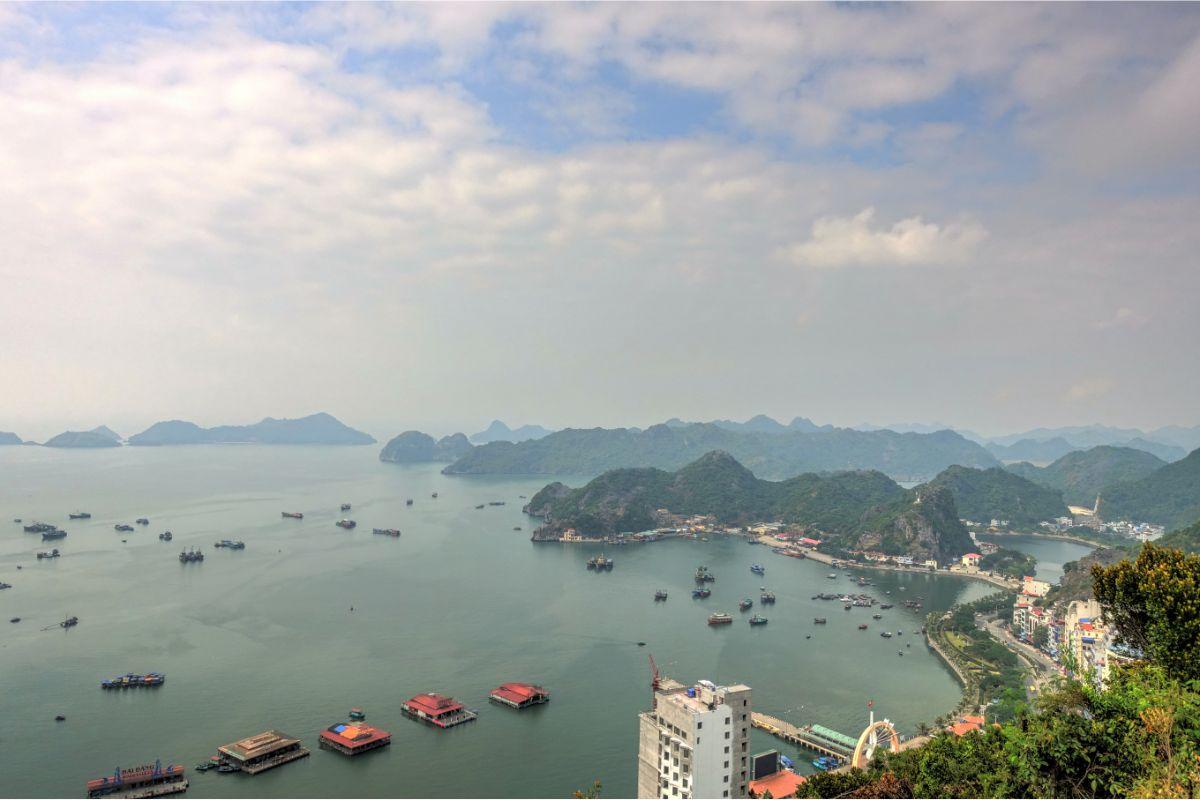 Cat Ba Island is the largest island in Halong Bay and the best stop if you want to do more than explore the deep turquoise waters. The island is home to some beautiful hotels, Cat Ba National Park, which covers a third of the island, and a number of tourist attractions related to the Vietnam War, including the Hospital Cave, a bomb-proof underground hospital and shelter.
Cat Ba is also the starting point for adventurers who want to experience Halong Bay up close. It's the best place to get a kayak, join a tour to explore the island's caves, go hiking in the national park (the trails are clearly marked so you won't get lost), or go rock climbing.
Organised excursions are available if you want to try something that isn't included in your cruise package, but many visitors simply pay a local for a ride on their boat.
Cat Ba doesn't have many roads, so walking and cycling are not only the easiest and most environmentally friendly ways to get around, but also the best options to make sure you don't miss anything, including opportunities to encounter giant lizards or spot a rare eagle in flight.
Read also: Visit Cat Ba Island: Top 19 amazing things to do
Watch a sunset from Fort Cannon
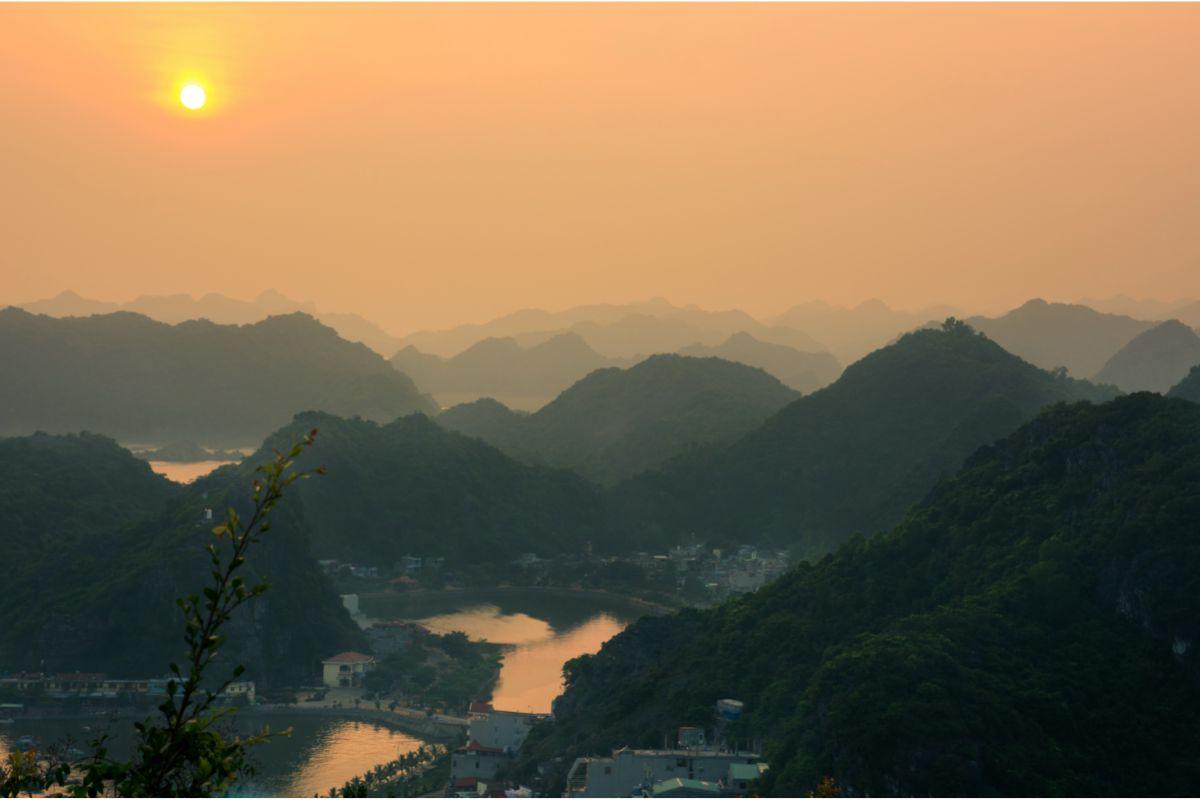 Cannon Fort is a beautiful attraction on Cat Ba Island, overlooking beautiful jungles and hills. The fort is a symbol of Vietnamese history and the country's involvement in the World War. There is a steep walk to reach the fort, but the mesmerising views of sunrise and sunset are worth the visit.
Venture into Cat Ba National Park
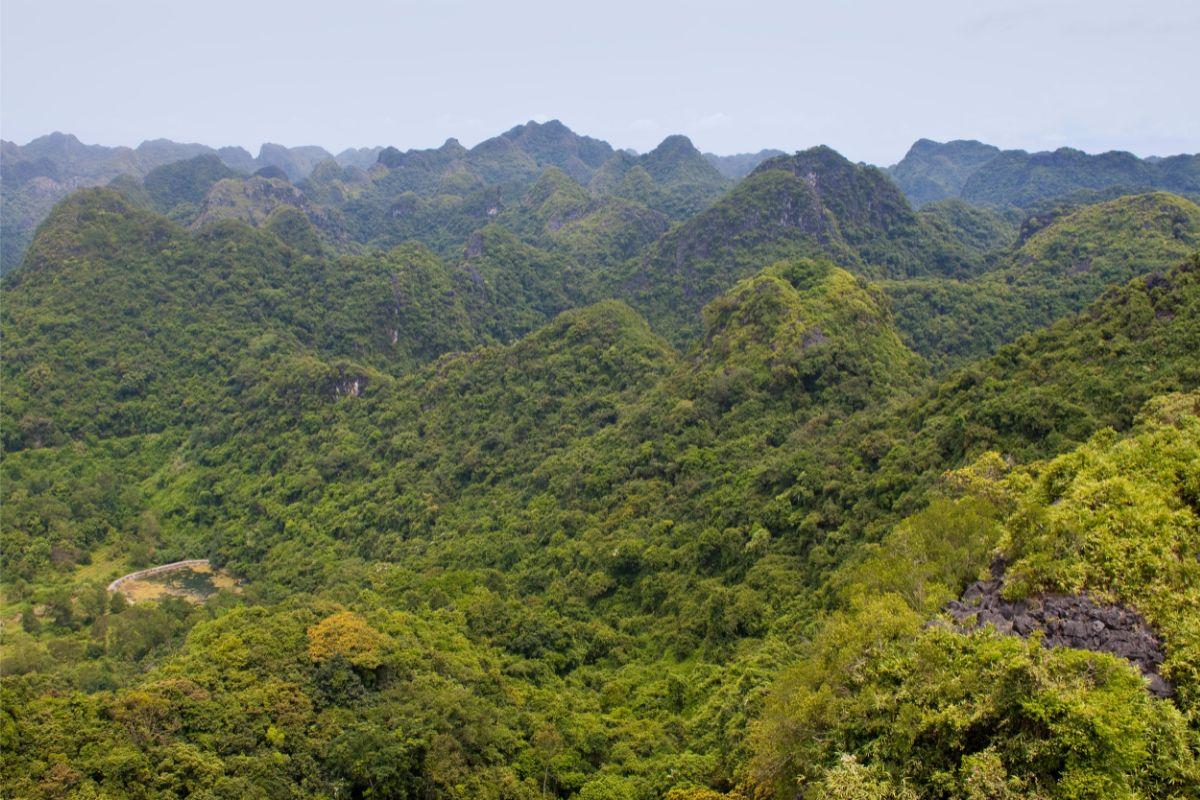 Cat Ba National Park is recognised as a biosphere reserve in the northern part of Vietnam. The national park is a World Heritage Site and is administered by the nearest city, Hai Phong.
Geographically, the park is located in an archipelago that includes 367 other islands adjacent to Halong Bay. Trekking in Cat Ba National Park is known to be an essential activity for enthusiastic visitors. The view of the limestone forest after trekking attracts young people from all over the world.
Another unique feature of Cat Ba National Park is that it is home to the Cat Ba langur or white-headed langur, which is known to be a critically endangered primate and one of the rarest. In addition, if you are lucky, you may encounter 32 different mammals and 70 species of birds. Limestone karsts, waterfalls, countless streams, the conquered Ngu Lam Peak and ancient rocks adorn Cat Ba National Park and add to the visual delight.
Tips:
As visiting Cat Ba National Park involves hiking, it is advisable to bring enough food and water as the humidity can get on your nerves and disrupt your hike.
As the climb can be slippery, wearing waterproof trekking shoes is the best option.
Carry mosquito repellent and wear long-sleeved clothing, as you will be surrounded by trees and insects of all kinds. You don't want to be bitten by one.
Go on kayaking expeditions
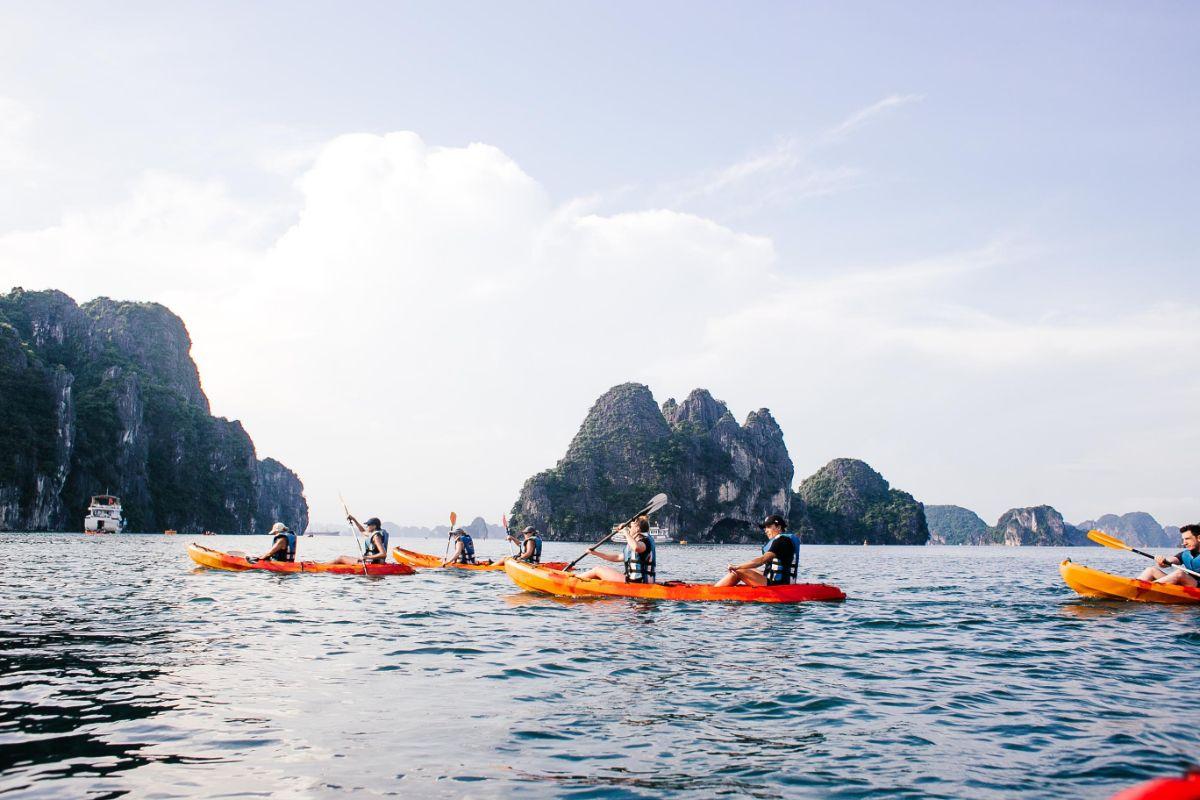 Explore the UNESCO heritage landscapes of Halong Bay on leisurely kayaking expeditions through the sea, which is lined with huge caves, limestone islets and tourist sites. Halong Bay has eight designated kayaking areas, where you can rent kayaks and jackets, and outside which the sport is prohibited. These are Tung Sau Pearl Farm, Ba Hang, Luon Cave, Vung Vieng Village, Cong Do Island, Hon Co, Cua Van Floating Village and Hang Trinh Nu.
Cat Ba also has three beaches, perfect for swimming and relaxing in the morning before the cruises arrive. Between May and September, it is also possible to snorkel around the island.
Snorkelling near Cong Do Island
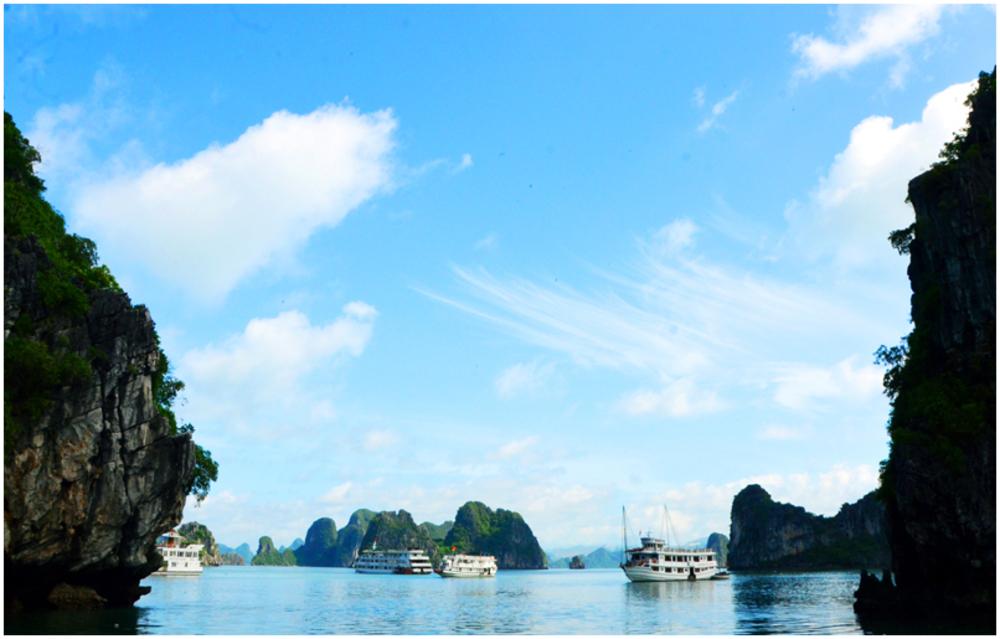 Reaching a depth of 33 metres, the ocean waters of Halong Bay are relatively shallow, making diving and tandem diving immensely popular. Explore over 120 kilometres of coastline filled with reef systems, tropical and marine flora, colourful fish, rays and harmless sharks on diving adventures on the beautiful Cat Ba, Cong Do and Monkey Islands. In addition, Trai Cave and Van Gio Island feature ancient submerged limestone formations.
Relax on Ti Top Island
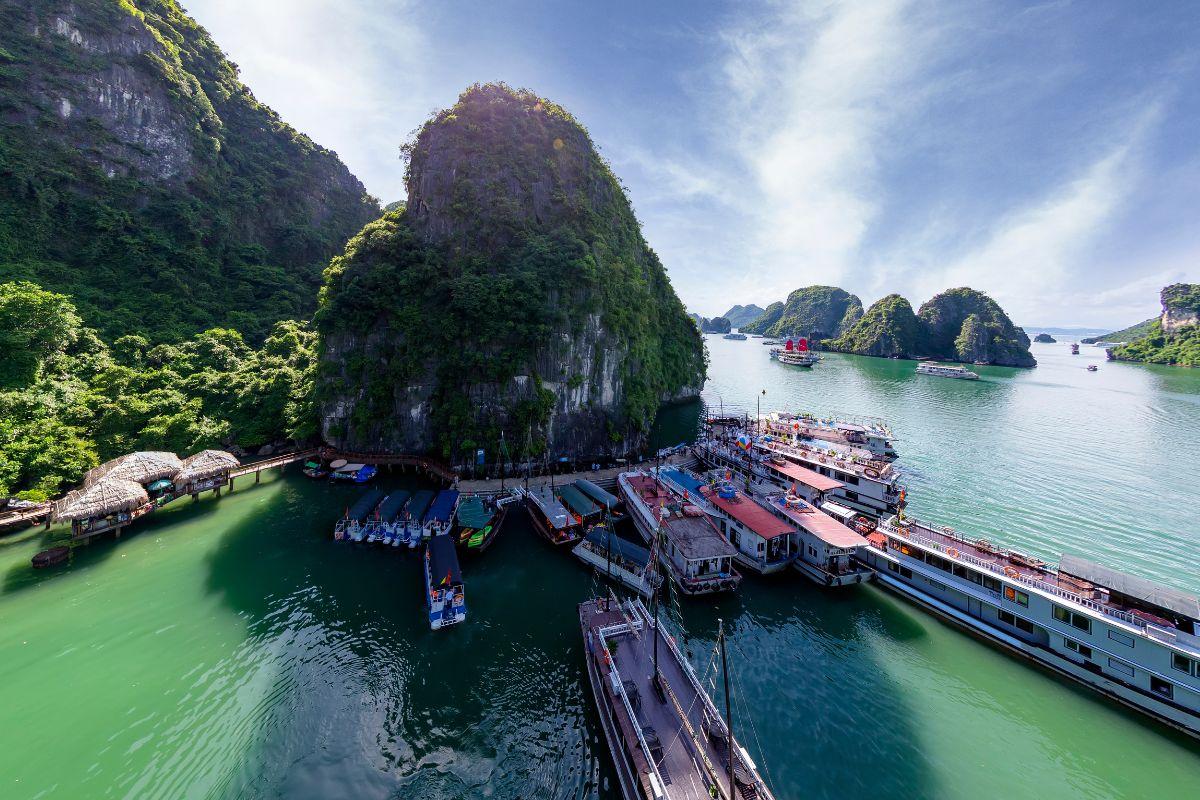 Located in the heart of Halong Bay, Ti Top Island is about 8km from Bai Chay Port. With its many resorts, restaurants and high-end hotels, the island is a popular holiday destination in Vietnam. Also known as Titov Island, the island offers a magnificent panoramic view of Halong Bay. Ti Top Island is also famous for its palm-fringed beach, a golden expanse that blends into the azure water.
To enjoy the breathtaking view of Halong Bay, you have to climb a few hundred steep steps to Tip Top Mountain, but the view is well worth it.
Feast at Vien Duong Restaurant
 Vien Duong is a seafood restaurant known for its fresh produce. Asian, European and vegetarian dishes are also available. There are pools full of fresh sea creatures in the restaurant. The meals are extremely affordable and a popular choice among locals. Shrimp, squid, lemon fish and fruit desserts are a must try.
Eat delicious food at Quang Anh Restaurant
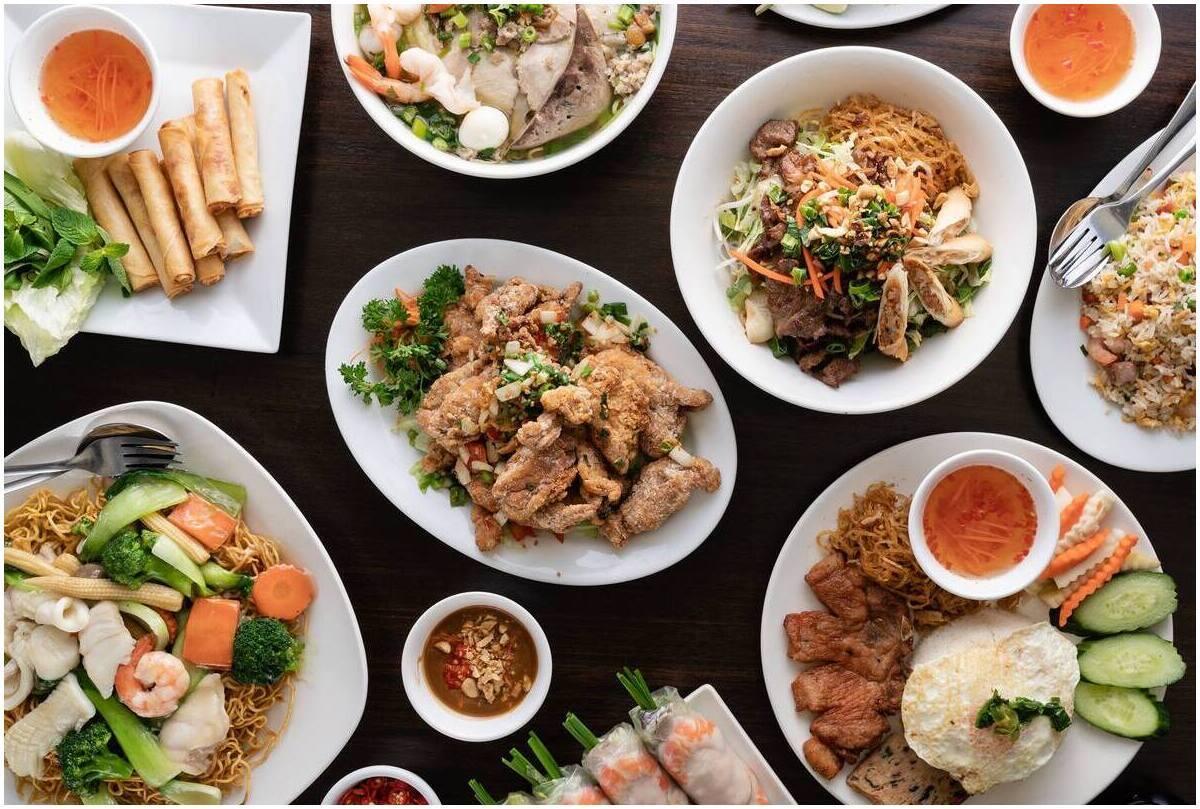 Quang Anh Floating Restaurant is a perfect, peaceful and romantic place for a meal. The restaurant selects seafood fresh from the cages in the nearby sea, and prepares your order with special herbs. The dishes are safe, hygienic and extremely tasty. Fish roll, Mu fish and sea snakes are the most popular choices here.
Admire the Long Tien Pagoda
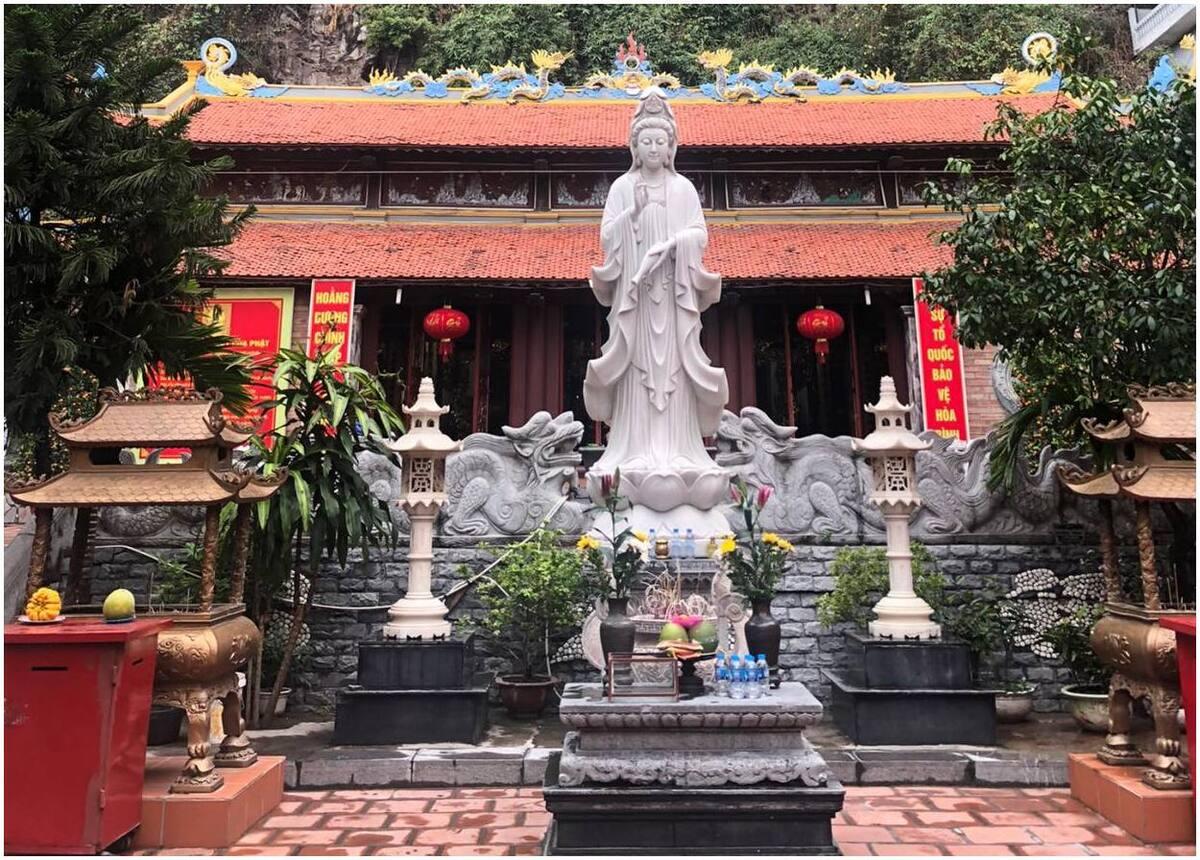 The largest pagoda in Halong, Long Tien Pagoda features a unique architectural style of the Nguyen Dynasty. It has a three-door entrance with a seated Buddha statue at the top, and a bell tower below. The pagoda attracts large crowds on the 1st and 15th of each month, as well as during the Tet Festival, when the temple site is transformed into a colourful festival.
Taste Halong's specialties at the night market
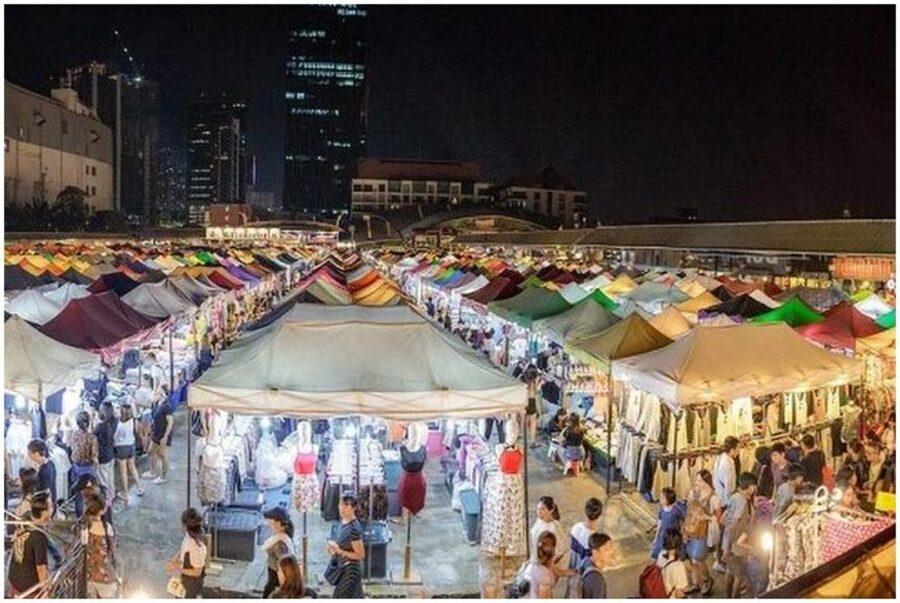 The Halong Night Market is one of the liveliest destinations in Halong City at night. Visitors can savour the flavour of Halong specialities at over 100 food stalls spread over two floors of the market. The first floor mainly includes shoe, bag and souvenir departments. The second floor offers a variety of local specialties such as squid sausage, horseshoe crab, etc.
Marvel at Hang Sung Sot Cave
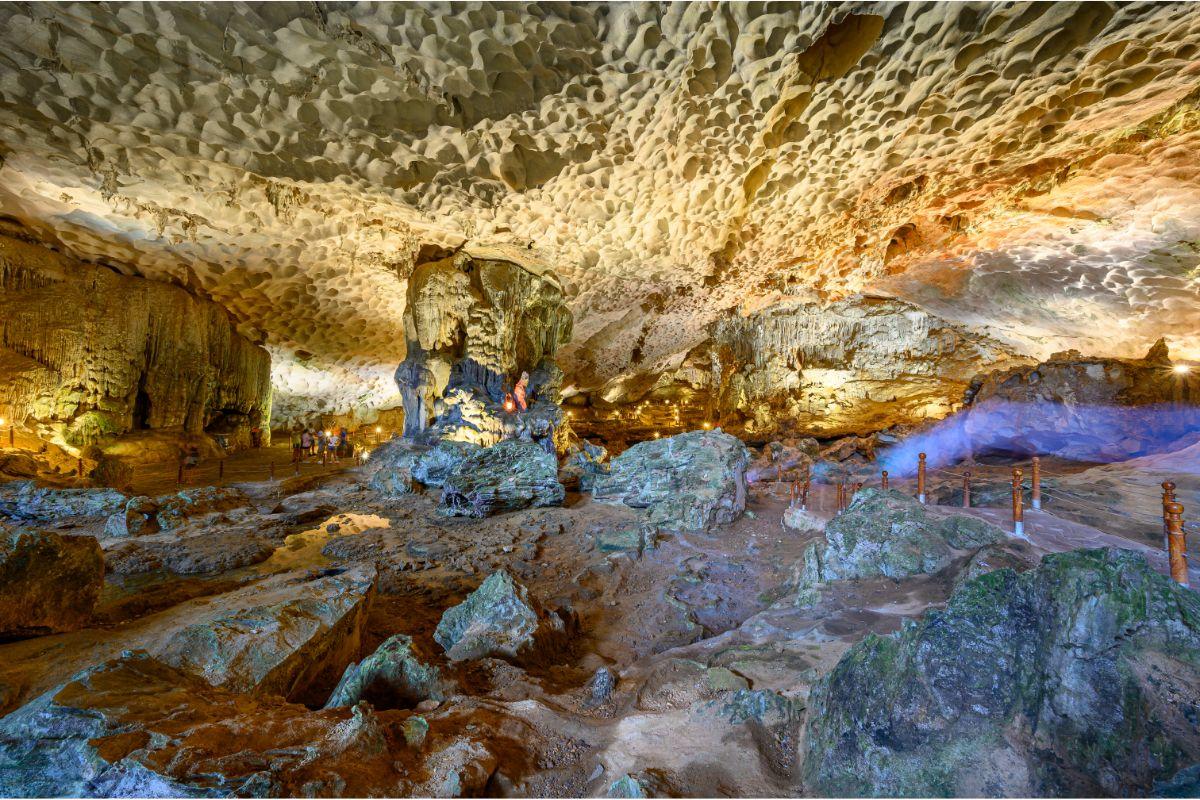 Popularly known as the "Cave of Wonders", Hang Sung Sot is one of the largest caves in Halong Bay, discovered by the French. Filled with unusual rock formations, including a Buddha, a turtle and a phallus illuminated by coloured lights, the massive interior of the cave is breathtaking. There are also many stalactites and stalagmites of different shapes inside Sung Sot Cave.
Visit the heavenly beauty of Dong Thien Cung
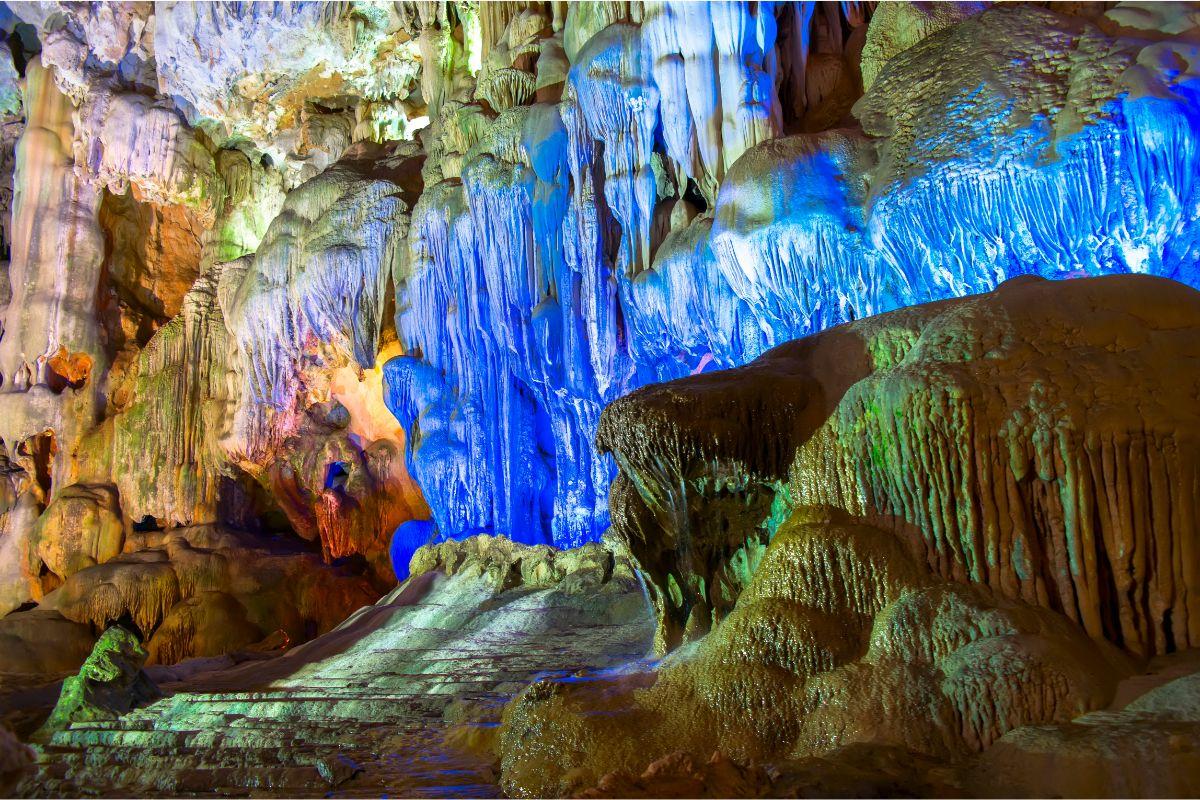 One of the largest and most beautiful caves in Halong Bay, Dong Thien Cung, better known as the "Sky Cave", is a natural wonder. It has a magnificent system of stalactites and stalagmites with strange shapes such as birds, fish and human activities, illuminated by fluorescent lights. In addition to this celestial beauty, the cave also has three small ponds.
Experience the thrill of Sun World Halong Park
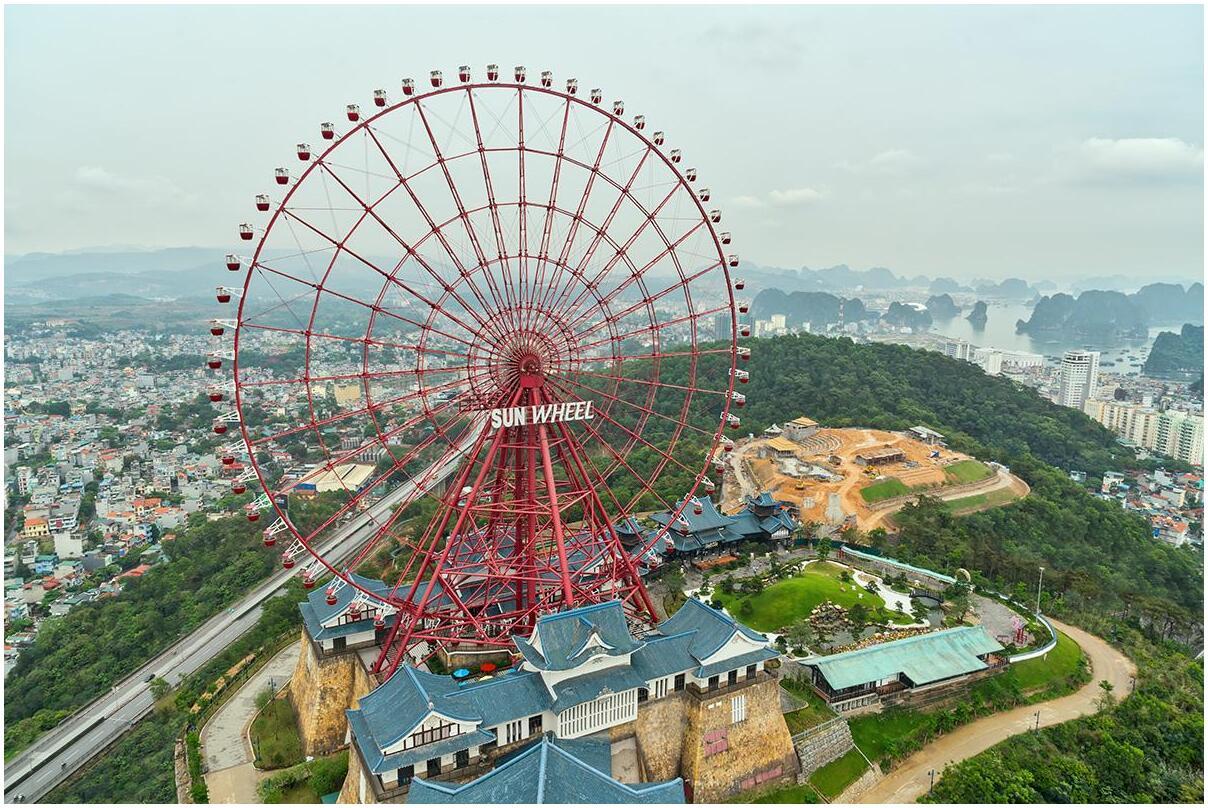 Covering an area of 214 hectares, Sun World is an amusement park in Halong offering an unparalleled experience. Major attractions include the Dragon Park, which offers thrill rides, the unique Queen Cable Car System, the Ba Deo Mystic Mountain Fun Park, which takes you back to an ancient era, the picturesque Zen Garden and the Sun Wheel, which rises 215 metres high and offers the best views of Halong Bay.
Enter Thien Canh Son Cave
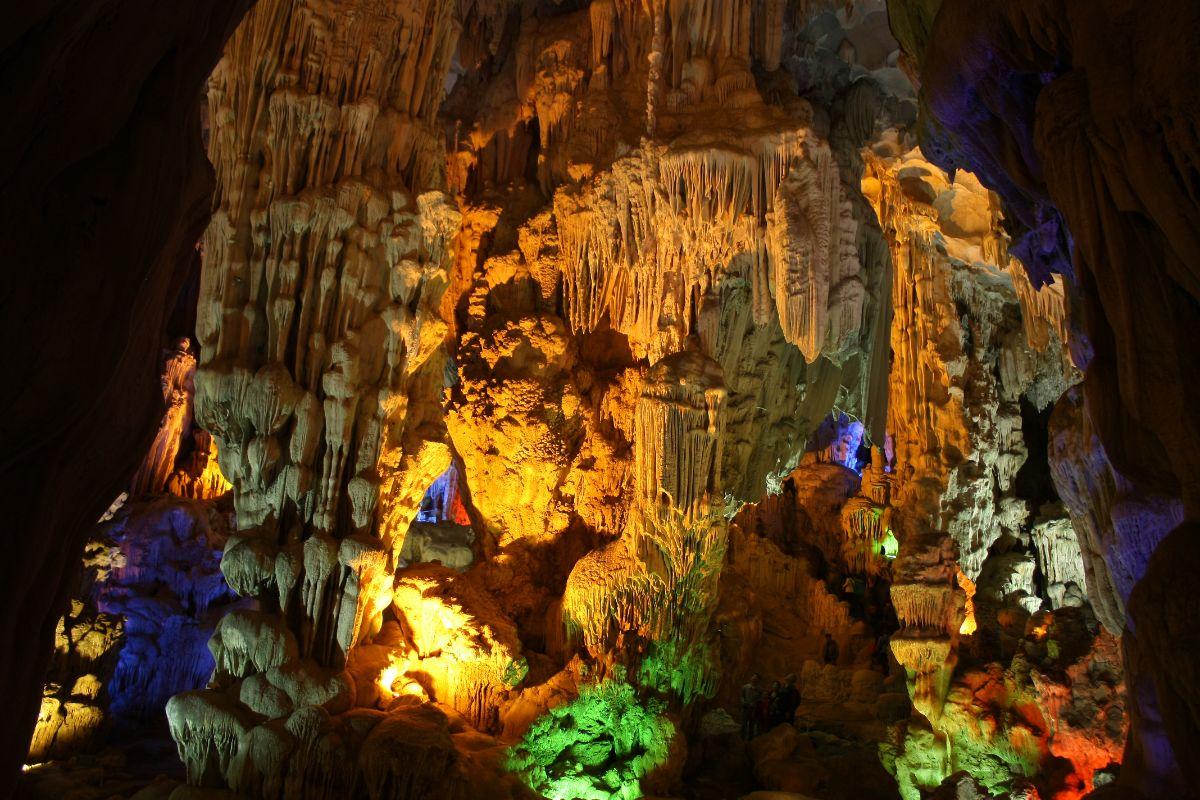 Thien Canh Son Cave is a breathtaking cave located 60 steps from the island. It has three caverns inside, each filled with unique stalactites and stalagmites lit by artificial lights. The cave has a small entrance and is tiny compared to other caves in Halong, but this is an advantage as it is not crowded.
Discover the Quang Ninh Museum
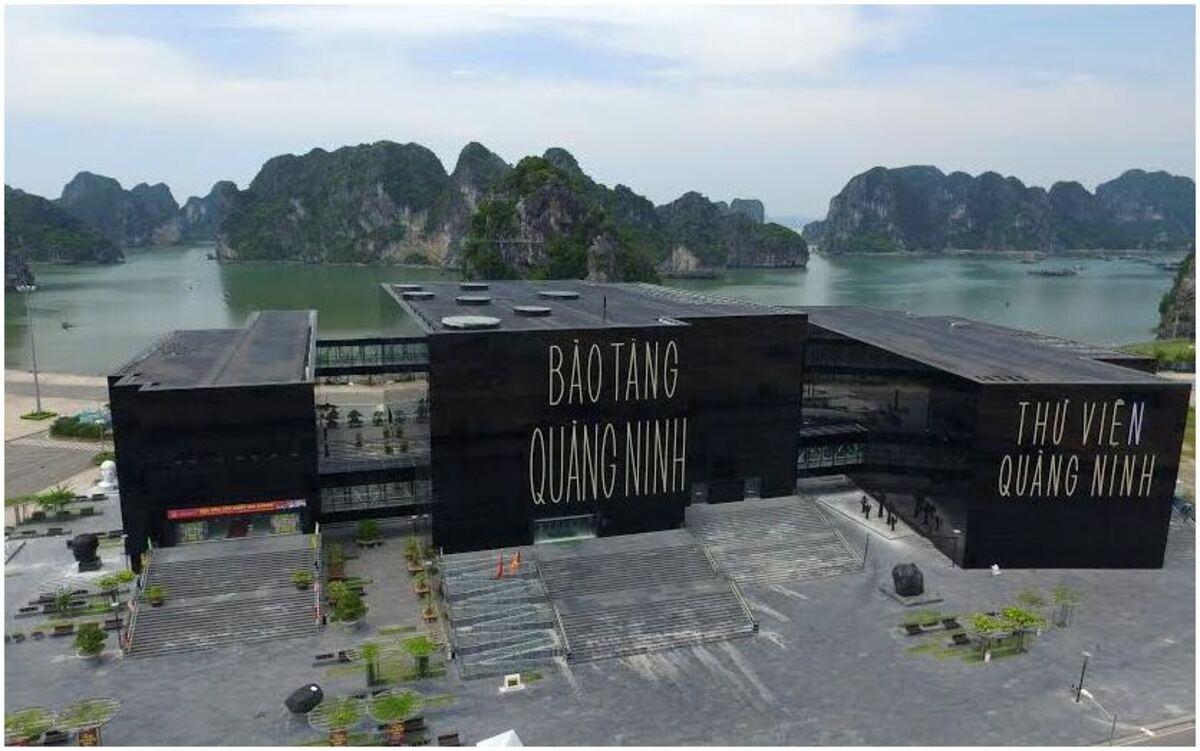 With its simple yet unique and elegant architecture, the Quang Ninh Museum is described as a "black pearl" in the centre of Ha Long city. The exterior of the building is entirely black and designed to function as a massive mirror. The museum is a famous destination for taking beautiful pictures.
A whale skeleton, model ships, pictures and documents tracing the history of Buddhist culture and wars in Vietnam, as well as other items displaying Halong's economic and cultural achievements, you will find it all in this museum.
Laze on the Cat Co Cove beaches
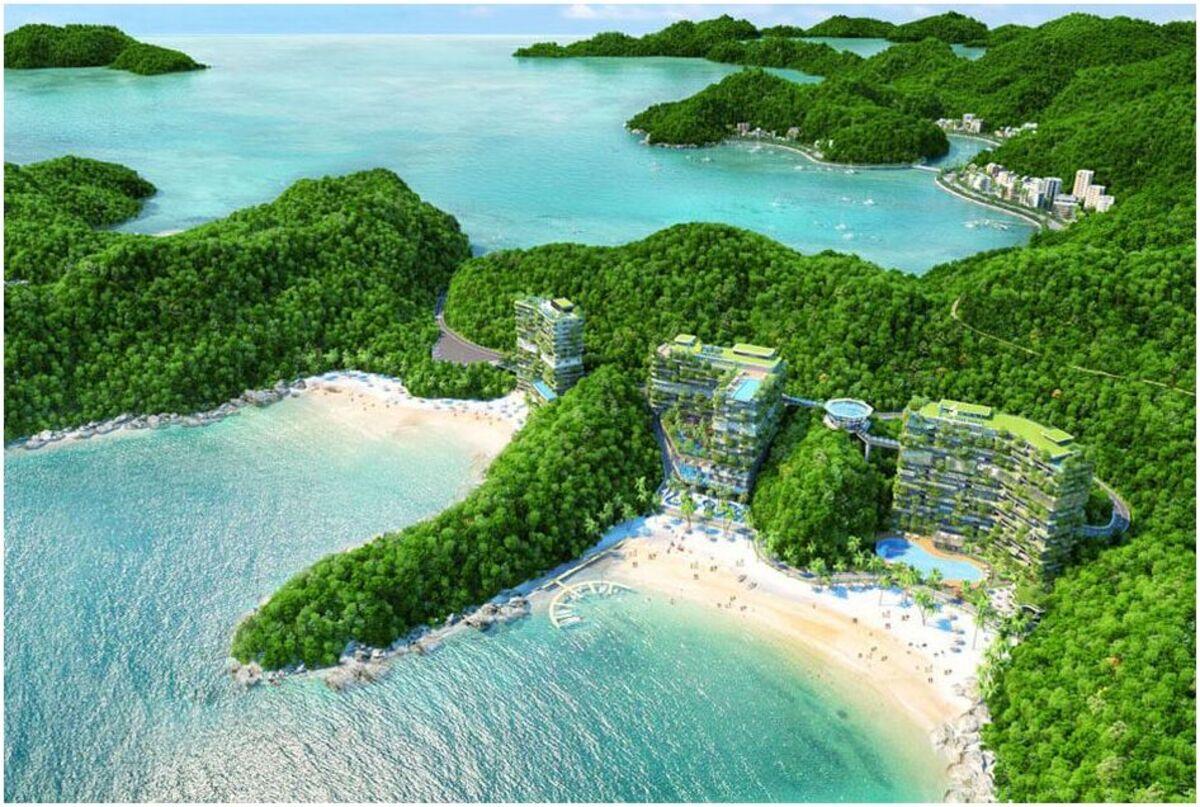 This is a group of three pristine white sandy beaches, covered with limestone cliffs at the back. Tourists and locals often visit Cat Co to swim and enjoy other water sports such as kayaking and windsurfing. Cat Co 2 is prettier and more popular, however, head to Cat Co 1 or 3 if you want to avoid the crowds and just laze on the beach and sunbathe.
See the Ho Chi Minh monument
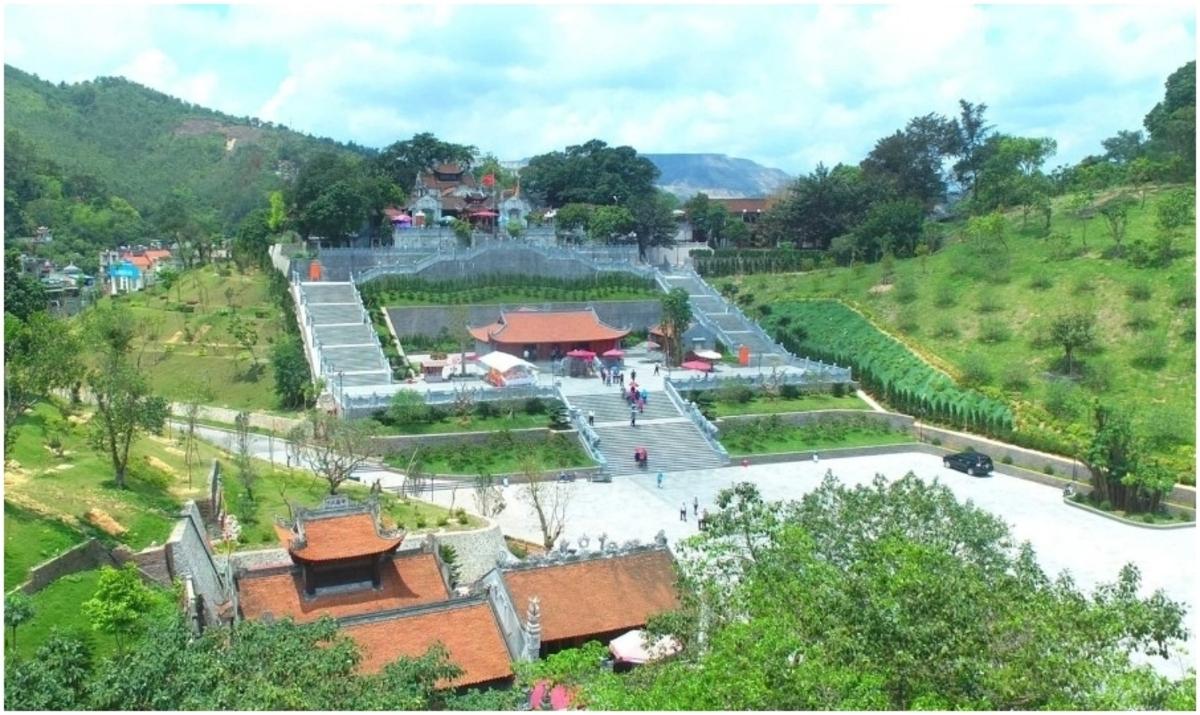 This monument is a memorial built to commemorate Ho Chi Minh's visit to Cat Ba Island in April 1951. Located at the top of a mountain, a steep but short staircase leads up to this viewpoint. From here, travellers can get a panoramic view of Cat Ba Bay and Lan Ha.
Travel to Hang Trinh Nu Shrine
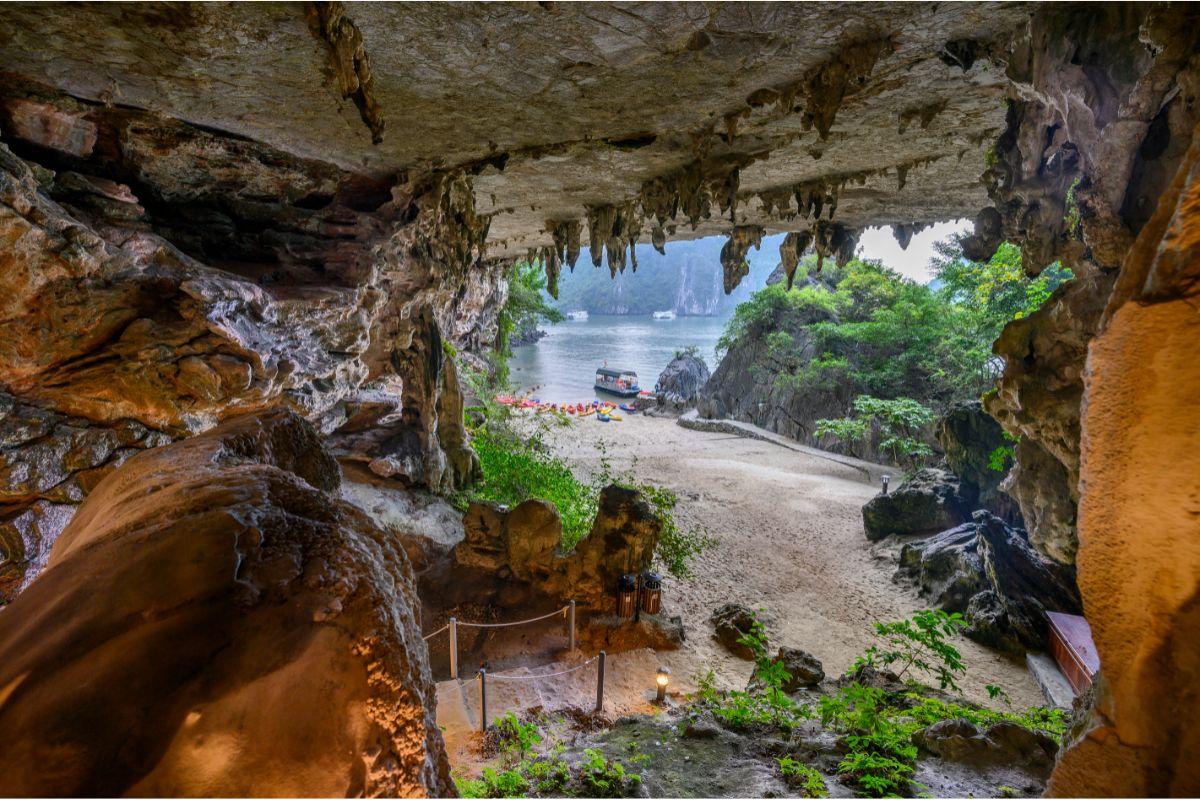 Hang Trinh Nu is known as the "Maiden Cave", a popular cave because of the history attached to it.
The cave is called the Maiden Cave because of the historical story of a beautiful young girl who refused to marry a rich old man from the Maldives, and then committed suicide. At the heart of the cave is a stone statue of a long-haired woman, believed to be the maiden of the story. This 'maiden cave' is considered a symbol of eternal love by the locals.
Listen to the sound of drums in Hang Trong
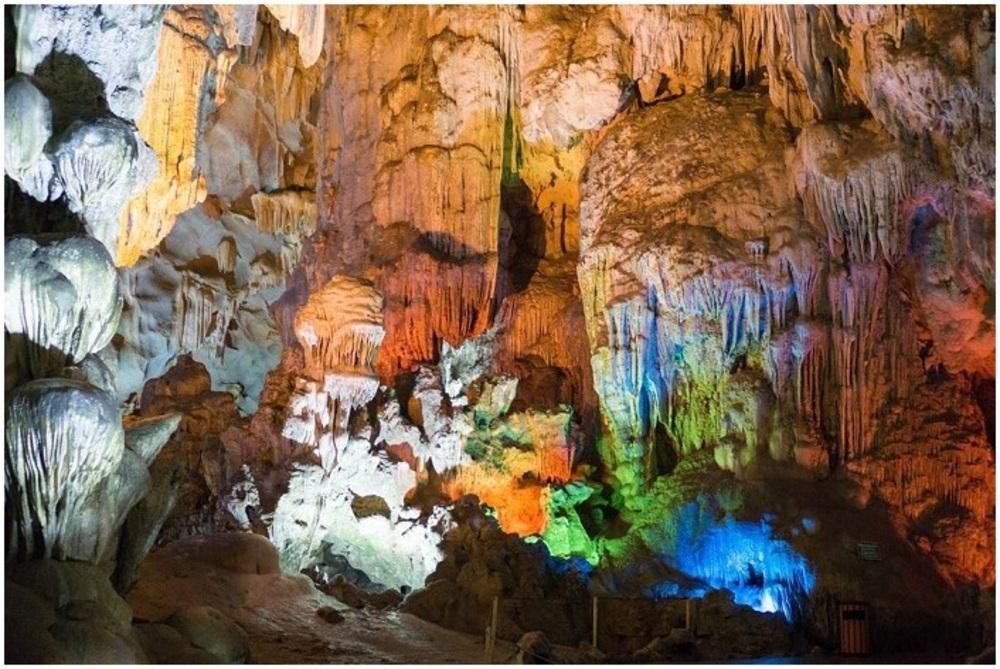 Hang Trong or the Drum Cave is located in the southeastern area of Halong Bay. Located opposite the virgin cave, it gets its name from the sound produced by the many stalactites on its ceiling, which make the sound of distant drums when the wind blows. It's strange but an experience not to be missed.
Go to Bai Chay beach and its surroundings
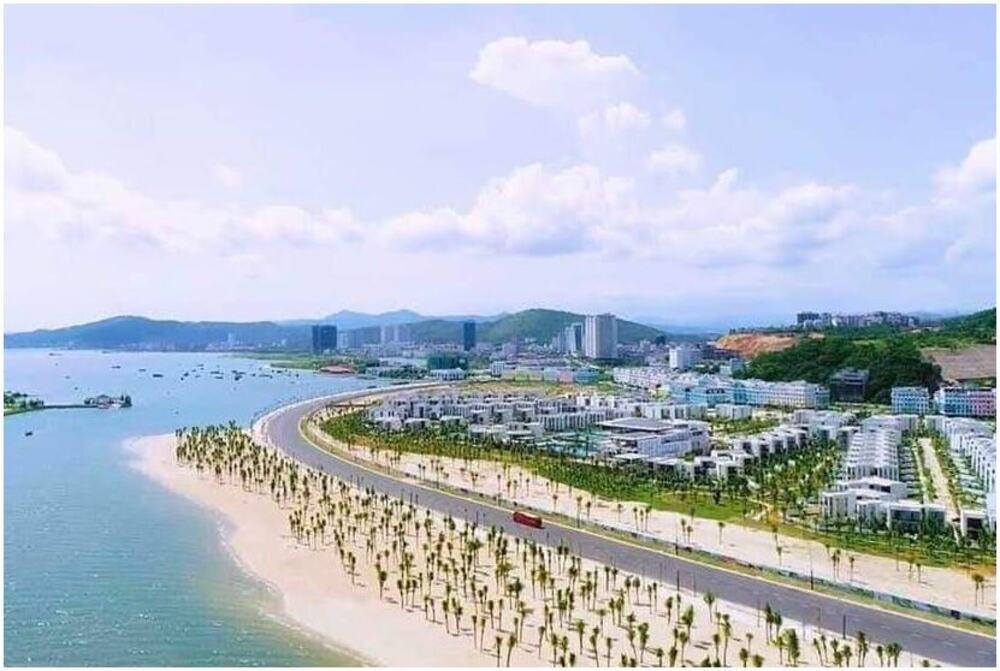 As the closest beach to Halong Bay, Bai Chay Beach is popular and attracts many people during the summer. There are several landmarks such as Hong Gia Park, the Vietnamese Cultural Theatre, the Antique Museum and the popular Halong Night Market. If sightseeing is not your thing, you can go jet skiing, surfing or canoeing. There are also many beach resorts and restaurants.
Explore Me Cung Cave
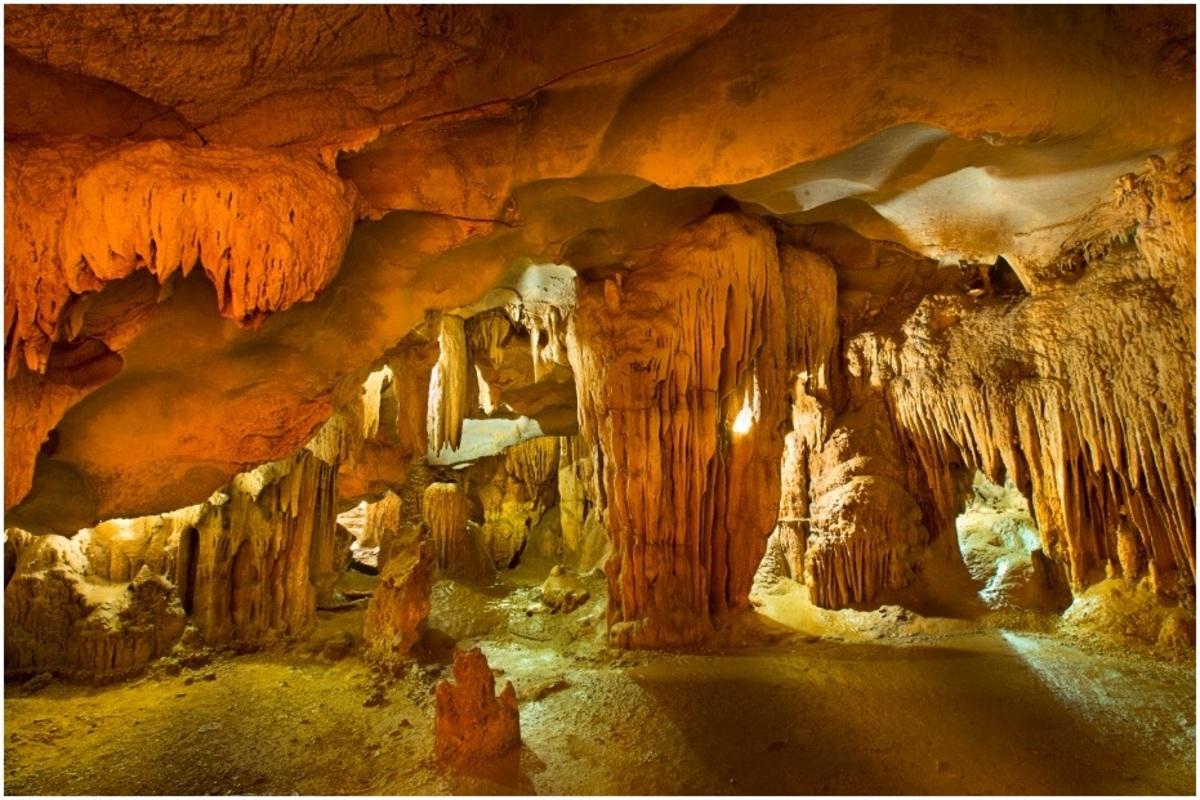 Me Cung Cave (or Labyrinth Cave), as whimsical and attractive as its name, is one of Halong Bay's many famous attractions. The entrance looks like the roof of a house that digs deep into the slopes of the island. Inside, you will feel as if you are entering the grand palace of a Persian king.
With the light shining in from outside, the sparkling stalactites make the cave glitter like a paradise. In addition, the blue waters of Me Cung Lake inside the cave also create a picturesque beauty of nature.
Visit the floating village of Cua Van
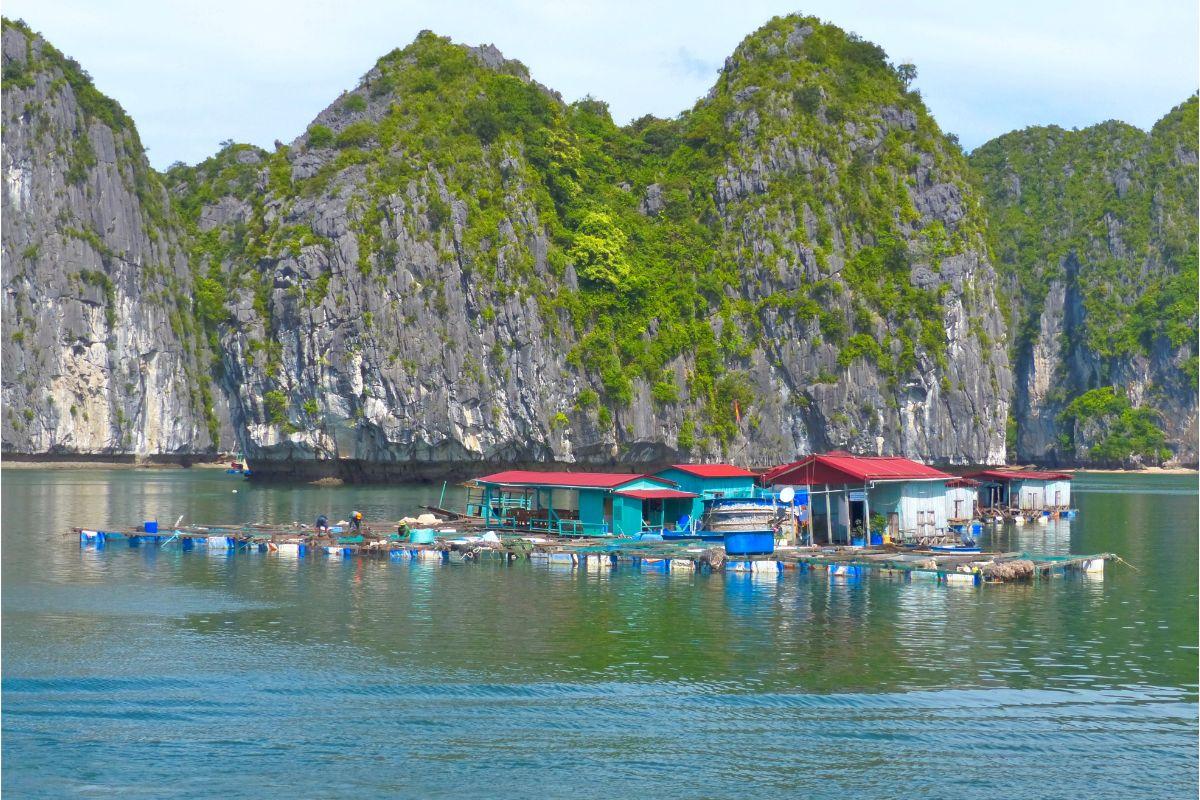 Cua Van is the largest fishing village in Halong Bay, located in Hung Thang commune. The village lies in a quiet bay surrounded by islets and limestone mountains. It is home to 733 people who live mainly from fishing. The fishing families all live on small floating houses that are anchored in the protected bay. Cua Van is voted as one of the 15 most beautiful fishing villages in the world. It is a great place to learn about the daily life of fishermen who will teach you how to make fishing traps and nets.
Photograph the most unique island, Hon Ga Choi
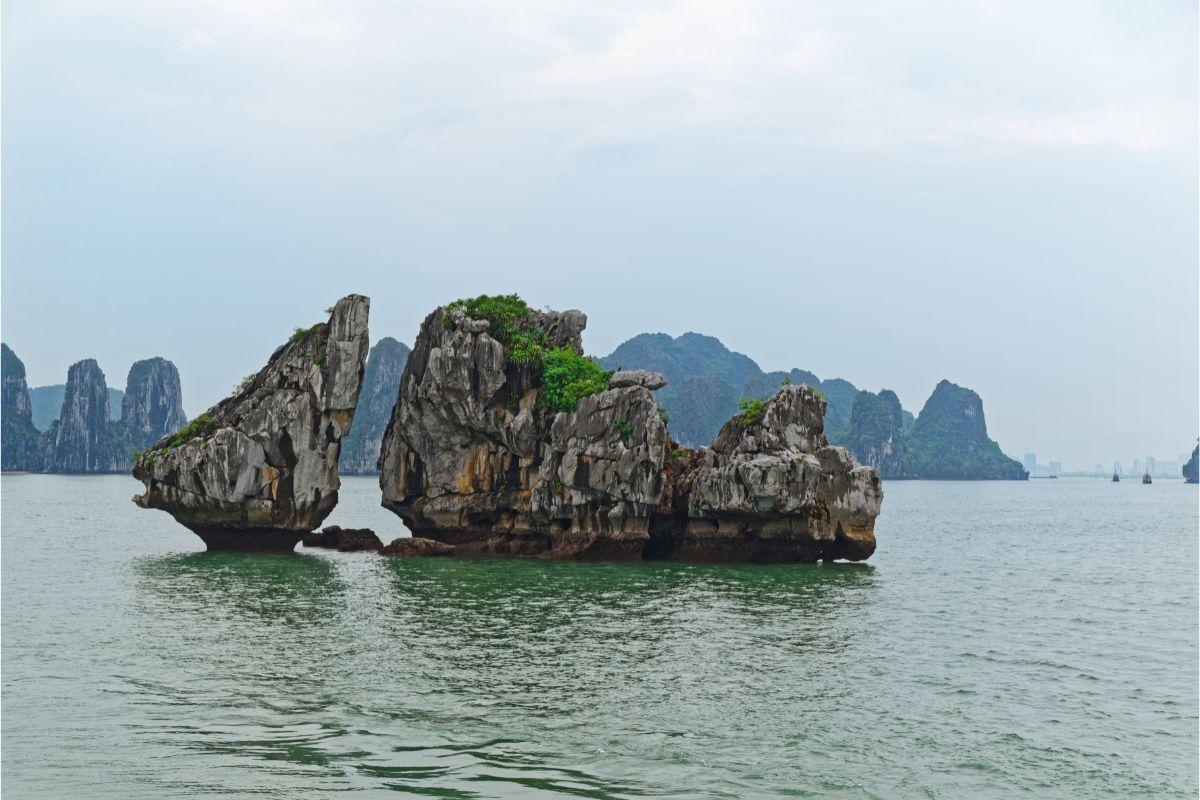 Hon Ga Choi Island is one of the most unique and most photographed pair of islets in Halong Bay. Also known as the 'fighting cockerel' island, its rock formations rise 12 metres above the water. Tourists, especially photographers, usually visit at sunrise and sunset, when the light casts a beautiful hue.
Visit the pristine island of Quan Lan
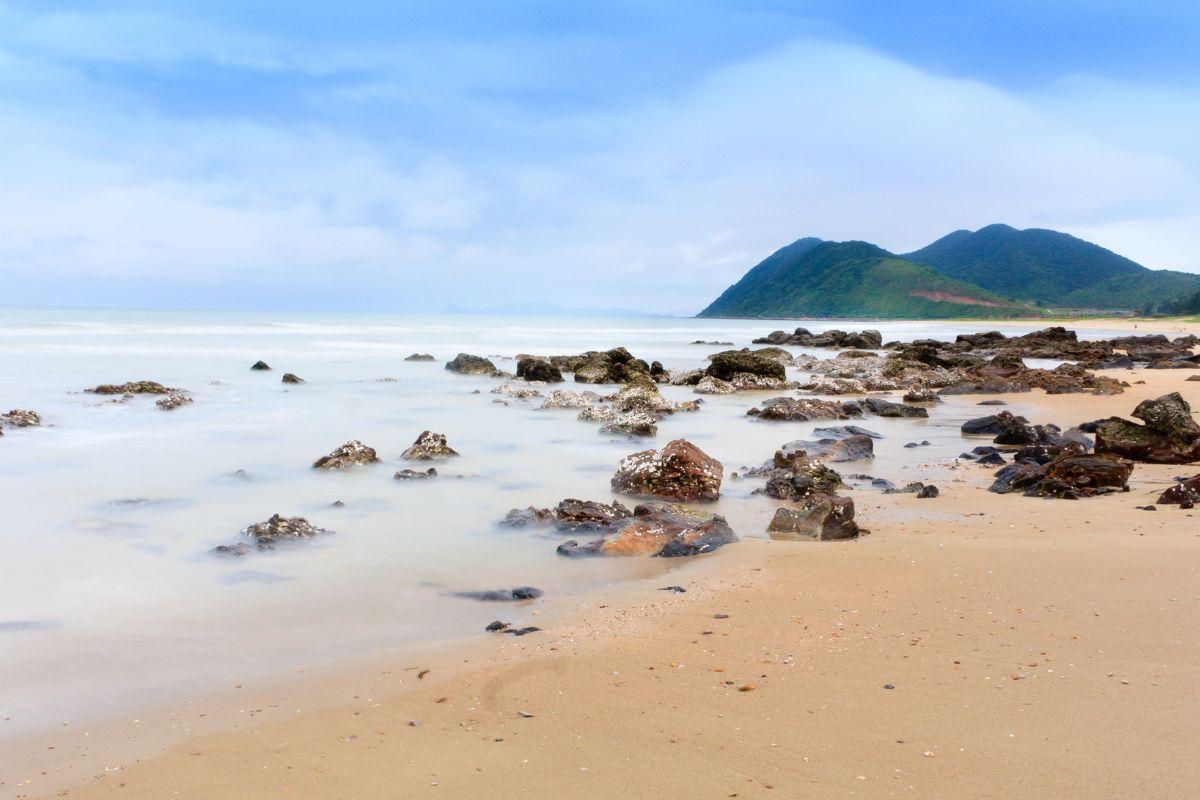 In the 11th century, Quan Lan was in the middle of an important trade route between Japan, Vietnam, the Philippines, Thailand and China. Today, it looks more like a sleepy island than a bustling port. Although inhabited by local people, Quan Lan's landscape remains largely untouched, with beautiful forest areas and three long white sandy beaches. It's also a great place to enjoy local seafood thanks to the abundance of butterflies, mackerel, squid and prawns in the waters.
Fishing for squid at night
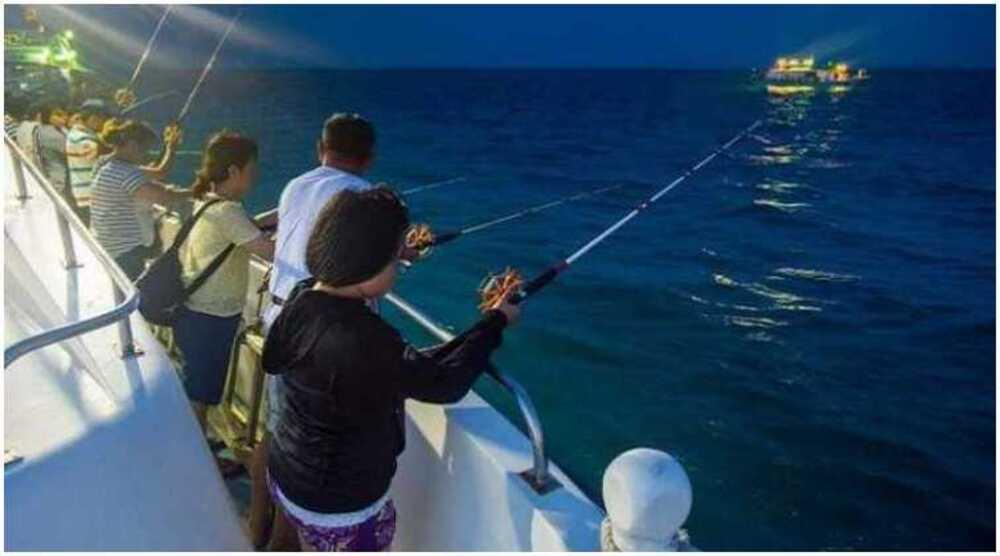 As night falls in Halong, torches can be seen everywhere - a manifestation of night squid fishing activities. Most tour boats will offer you the opportunity to test your squid fishing skills - a great way to enjoy the beautiful evenings in the bay while being surrounded by huge squids that only appear at night.
The squid (another name for them) will be attracted to the light and hopefully take the bait. Some times of the year are better than others, but it's always fun to be out on deck in the middle of the night trying to catch these local delicacies.
Once you've caught these molluscs, you can also enjoy a barbecue as the staff show you how to grill these delicious sea creatures.
Go for a bike ride
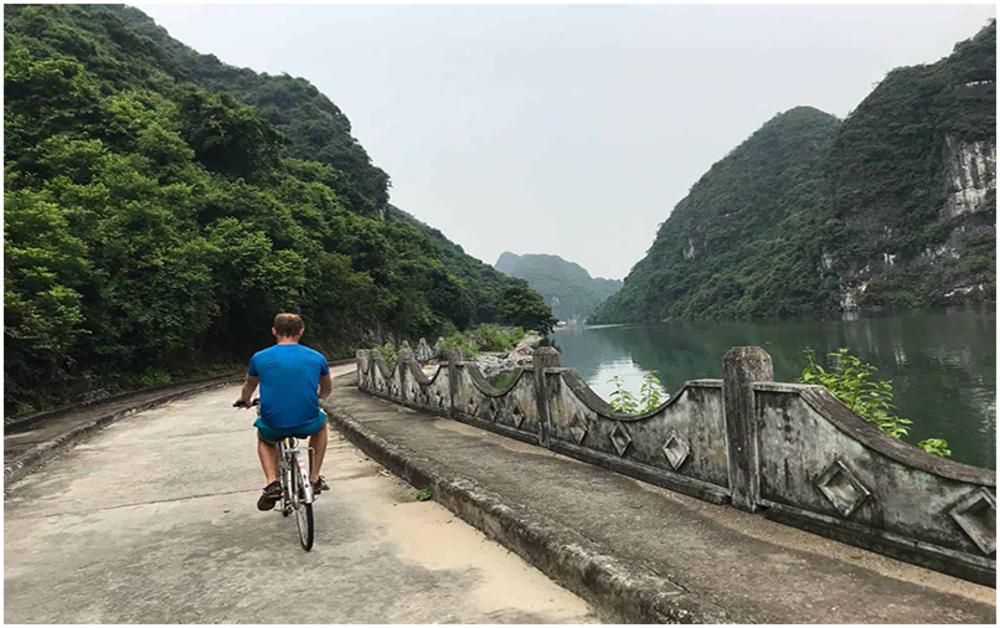 Halong Bay is known for its laid-back atmosphere and if you want to see for yourself, you should hire a bike.
There are bike tours you can take throughout the region, or you can go it alone and explore at your leisure.
There is no better way to visit Halong Bay than to cycle to the various beaches on Cat Ba Island and cool off at the end of a long bike ride.
Explore the emerald water cave of Dau Go Island
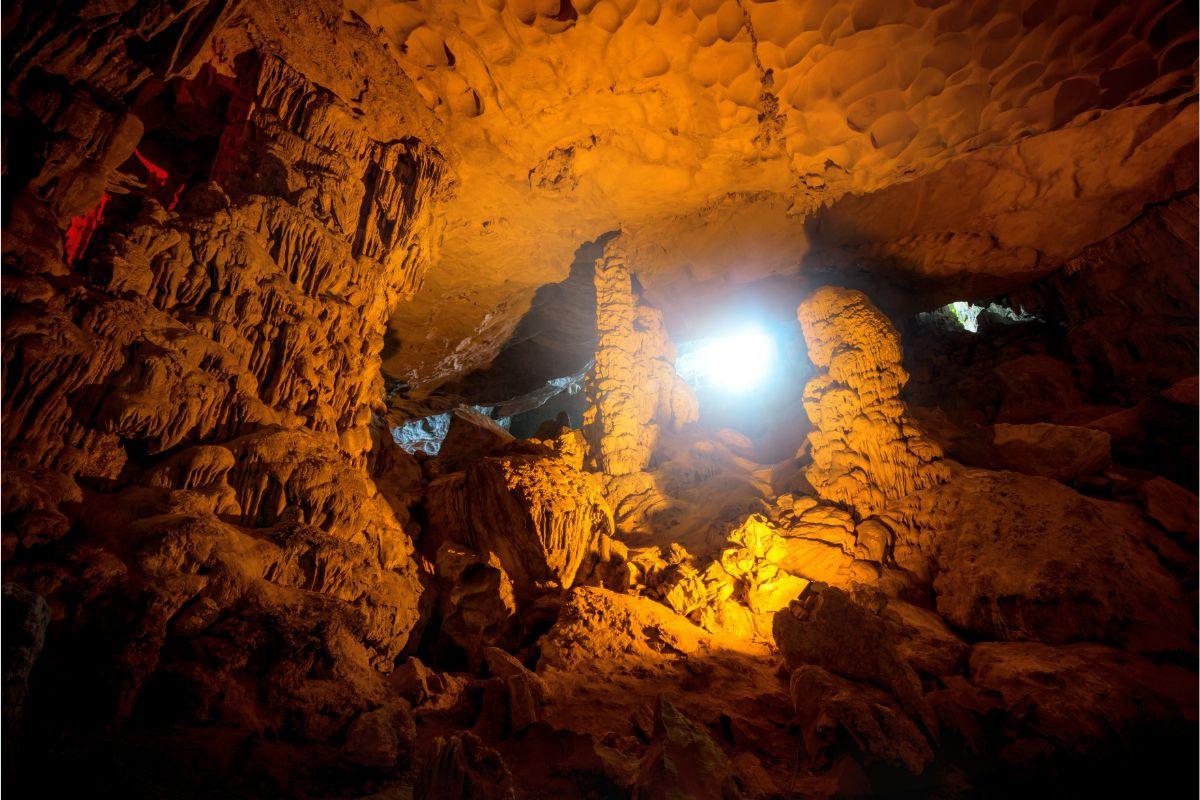 Seemingly floating on emerald water, Dau Go Island, or Wooden Head Island, is a popular name among Halong tourist attractions that is famous for Dau Go Cave - a spectacular cave. From a distance, the cave looks like a jellyfish with a 90-step staircase. Discovering the inner beauty of the cave is a wonderful thing to do as it is extremely mysterious and surprising. You will feel as if you are lost in a fairy tale place that offers a landscape of incredible beauty.
Read also: Vietnam cave, top 9 spectacular caves in the country!
Take a diversion to the intriguing Hospital Cave
During Vietnam WarDuring the Vietnam War, the Hospital Cave was built high in the limestone karst, invisible from the ground and air, making it an ideal refuge.
The cave includes concrete rooms that were built as doctors' offices and surgical rooms for wounded soldiers. Those interested in history and war should definitely visit this unique attraction.
A guide will take you on a tour of the 17 or so rooms spread over three floors.
Visit Tuan Chau Island
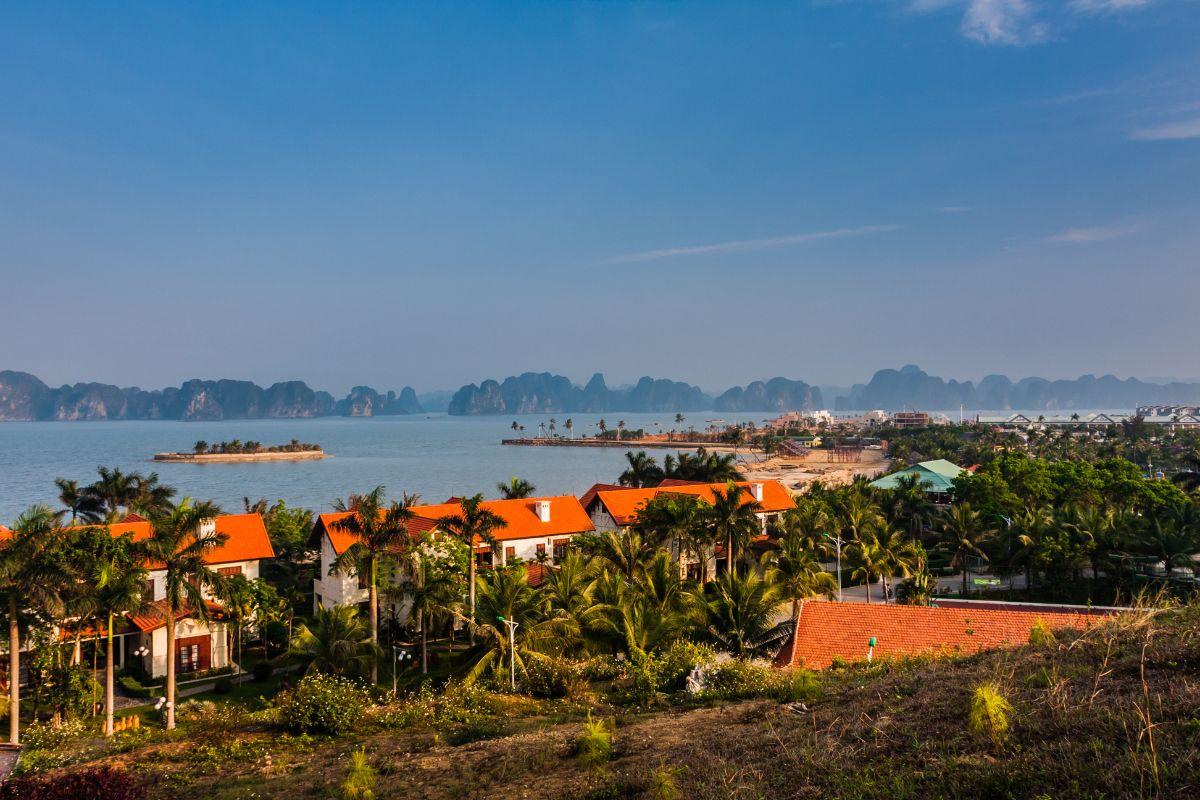 Tuan Chau Island is a perfect tourist destination in Halong Bay with a two-kilometre long artificial beach. There are multiple luxury villas and resorts, international restaurants, shops and roadside food stalls.
The island offers various activities such as jet skiing, kayaking and rock climbing. As a popular tourist attraction, the island hosts dolphin, seal, circus and martial arts shows almost daily.
Experience the world's highest cable car
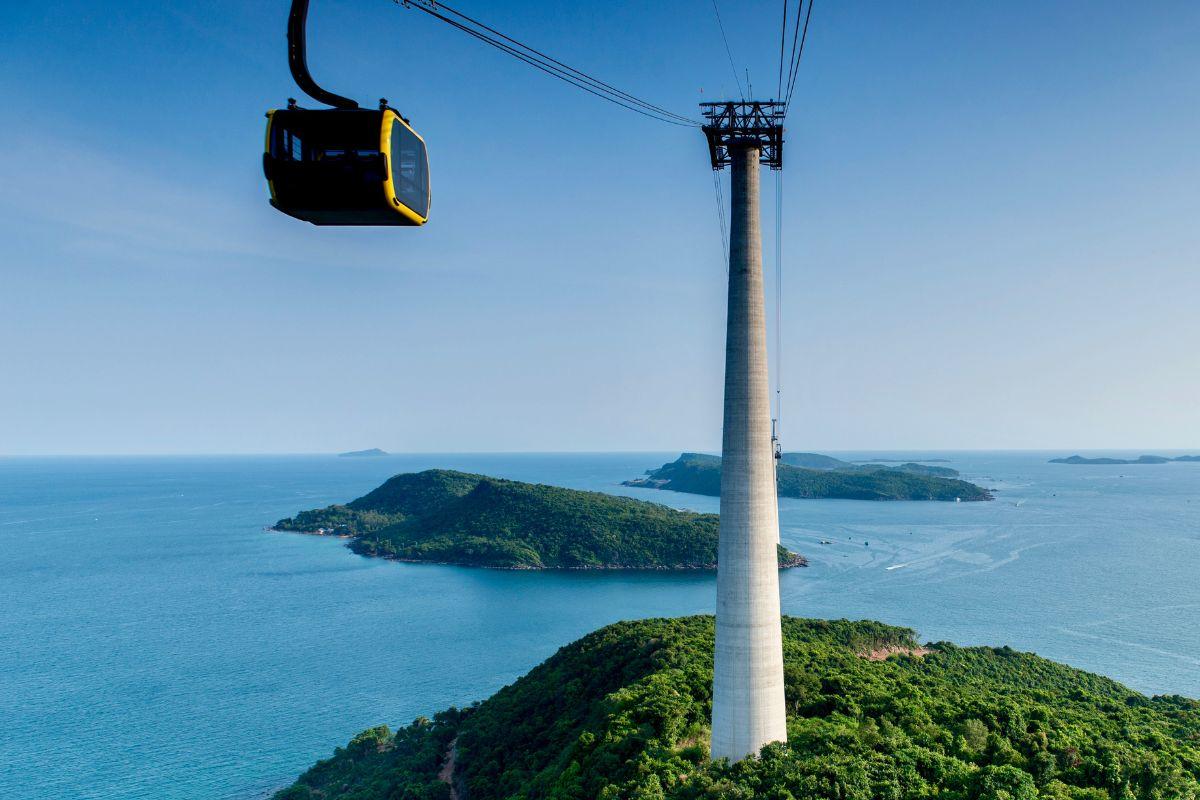 Budding landscape photographers flock to Sunworld Amusement Park. It offers one of the best overviews of the UNESCO site. The big attraction is the Queen's Cable Car, from which panoramic views abound.
It actually holds two Guinness World Records: the largest reversible aerial tram that can carry up to 230 passengers, and the highest cable car with a height of 188.88 metres. It's no wonder that tourists have named Sunworld Amusement Park as one of the best things to do in Halong Bay. Not only is the ride comfortable, but it's also very affordable: €12 for adults and €8 for children (under 1.3m).
Stand on the Bai Chay Bridge
 Bai Chay Bridge, located in Halong Bay, is known for connecting two important economic centres - Bai Chay and Hon Gai. This cable-stayed bridge has a modern and beautiful architecture, and serves as a key project for transportation, economy and defence. The bridge has a slight curve and two towers, and a tourist should stand on the bridge to experience the most hypnotic view of Halong Bay.
Shopping at Bai Chay Market
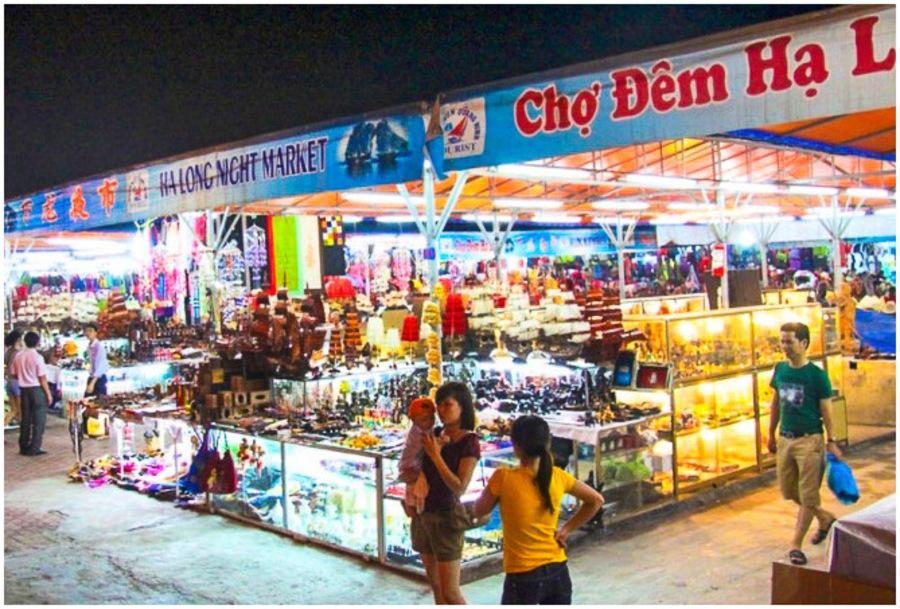
The Bai Chay Night Market in Halong Bay is popular with tourists and locals alike because of the wide range of goods on offer and the lively atmosphere. There are over 100 open-air stalls selling items such as handicrafts, accessories, clothes, souvenirs and more. Bargaining is common here and you will find the prices very affordable.
This is a great place to stock up on souvenirs and sample some of the local produce of Halong Bay.
Dine in one of the many caves in Halong Bay
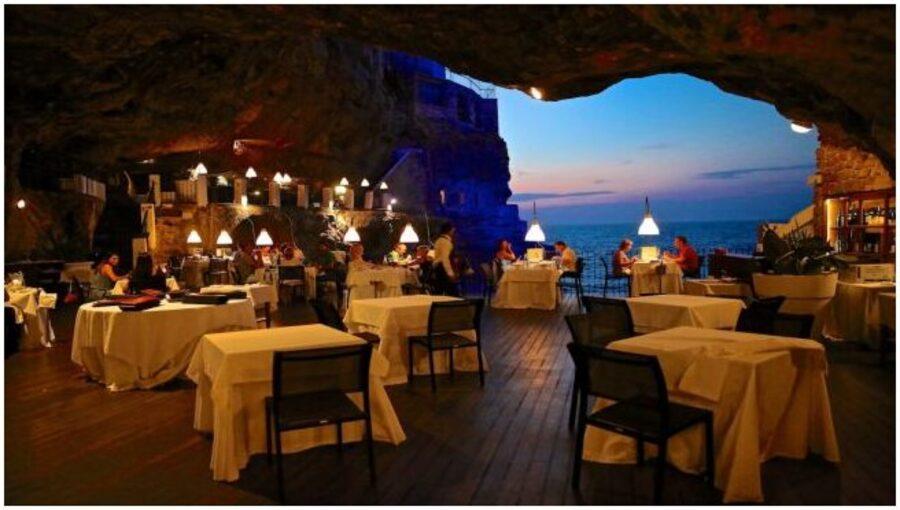 Dining in a cave in Halong Bay is a must if you have never done it before. Many cruises now offer this service on a daily basis. You can contact some agencies to ask if they include this experience in their itinerary.
The dinner is not only a candlelight experience, but also an admiration of the divine work. This is something you may never find in other places.
Discover Bai Tho Poetry Mountain
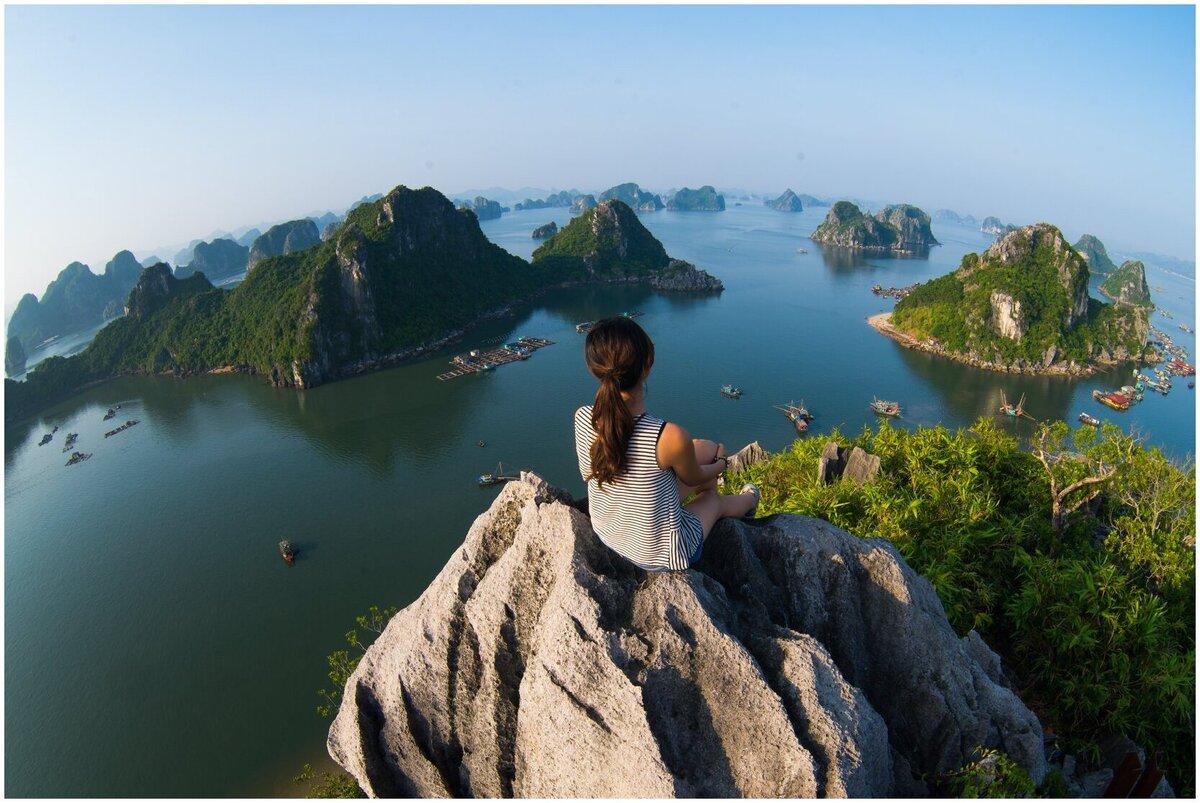 Poem Mountain (Bai Tho Mountain) got its name in 1268 when King Le Thanh Tong carved a poem on a cliff of the mountain. Thanks to the mountain slope overlooking the bay, Poem Mountain is the most ideal viewpoint of Halong Bay. Standing on the mountain and looking down, you will understand why the bay is called Halong. The air in this area is fresh all year round, so you can visit whenever you like.
Here you can see hundreds of different plants growing on the cliffs, listen to the melodious singing of the birds and play with the goats grazing on the slopes. It's a real treat!
Travel to Monkey Island
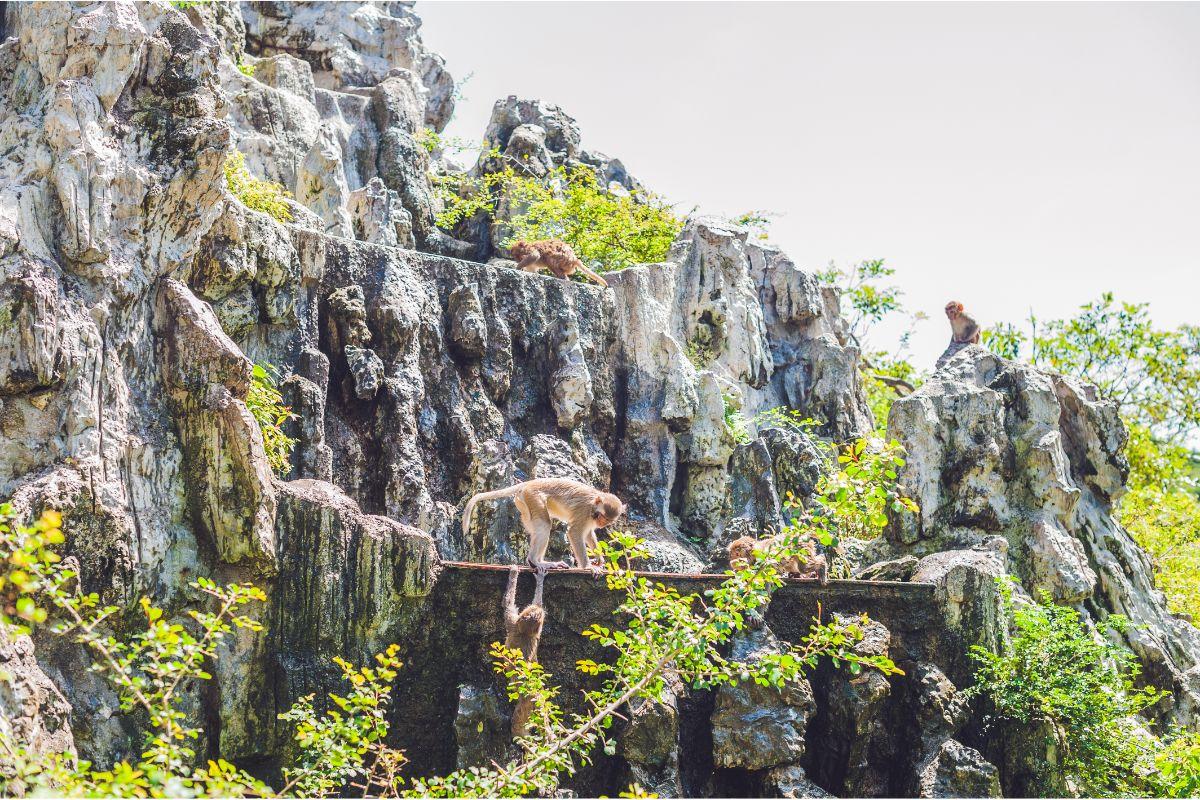 Monkey Island is a famous and popular tourist attraction. Most tours encourage visitors to visit this island. It is an ideal destination for swimming in the blue water. And, the existence of many monkeys is of course the highlight of Monkey Island. Here, visitors will have the opportunity to take pictures or brush up against monkeys comfortably sitting on branches. In addition to the monkeys, the island's bungalows offer tourists an unforgettable experience.
Get a glimpse of Halong Bay from a seaplane
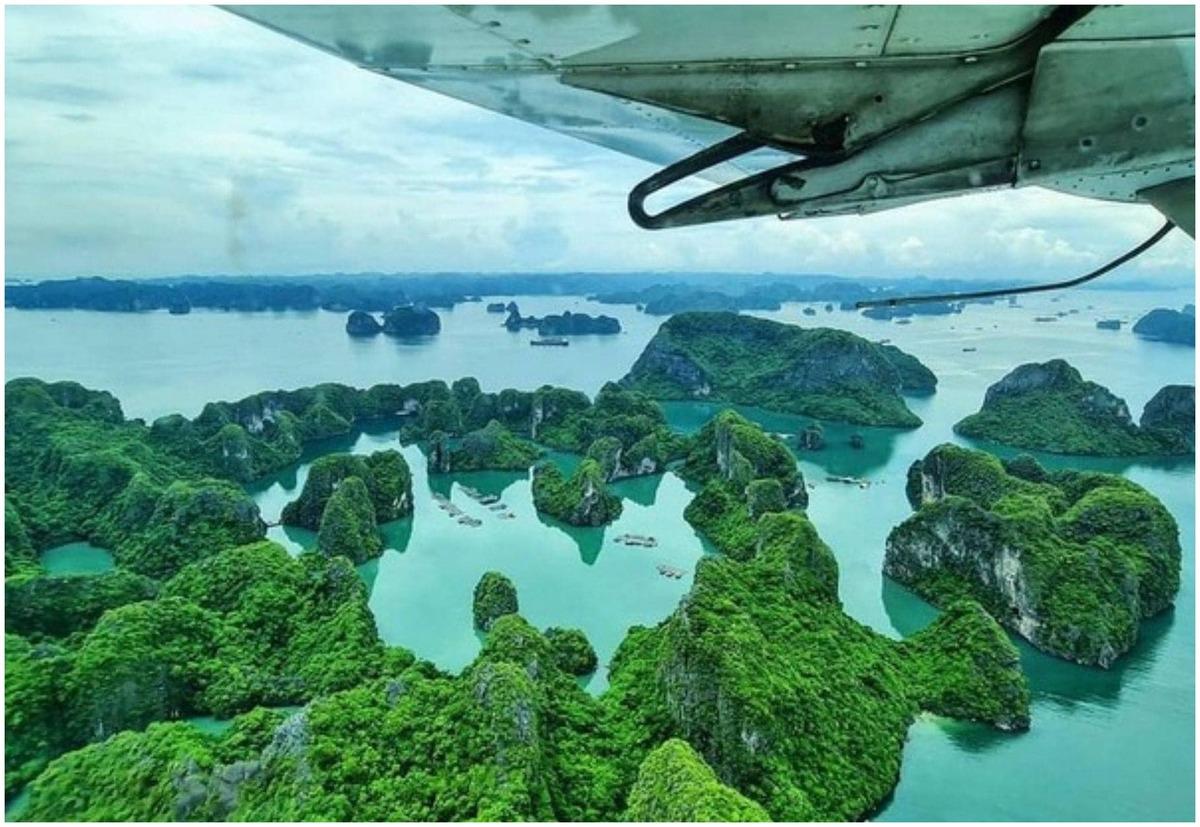 The Vietnamese will tell you that Halong Bay was formed when dragons spat gems into the South China Sea to create a fortress against the armies of the north. From the air, it's easy to imagine they'd be right as you gaze at the more than 2,000 jade-green forested islets, encircled by silver beaches and, beyond, open emerald seas.
Head to Bai Tu Long Bay
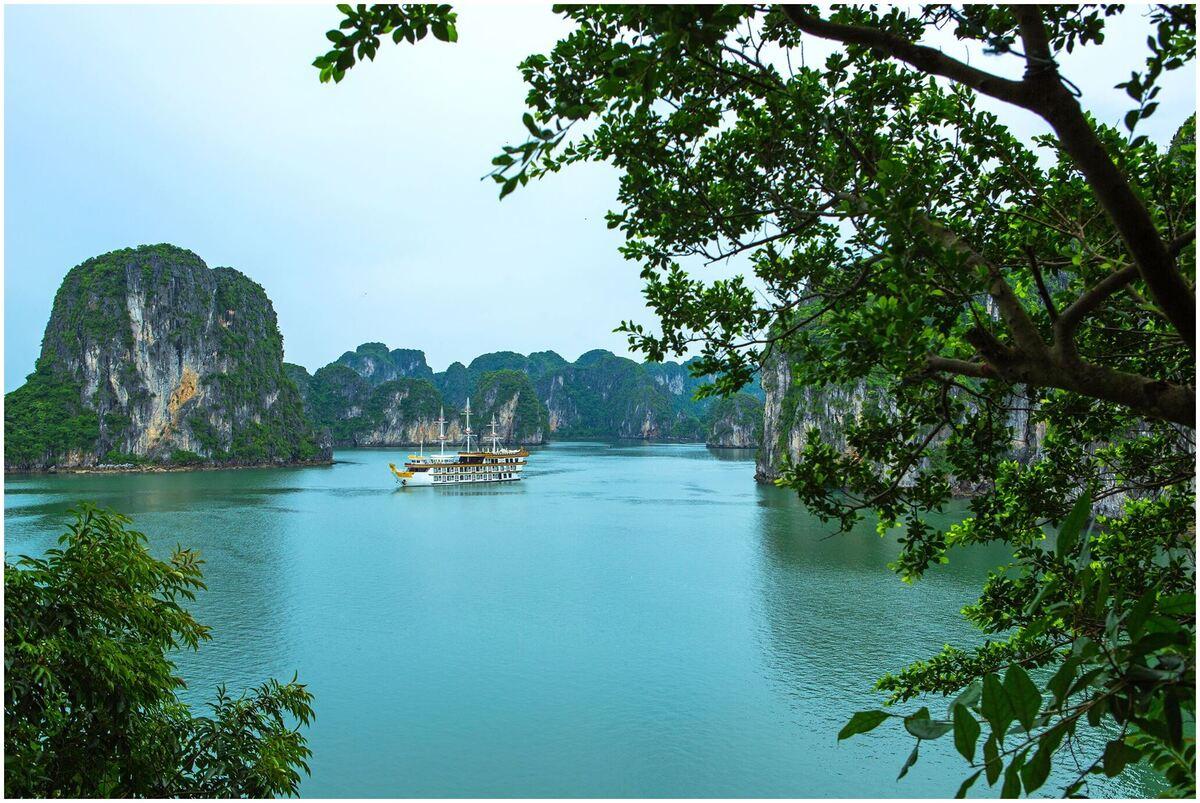 Bai Tu Long Bay in northeastern Vietnam is an extension of Halong Bay - a UNESCO World Heritage Site - located just 30km away. However, this small distance creates a big difference in the experience you can have here!
The same limestone karsts, teal waters and languid cruising without the crowds of Ha Long Bay are what set Bai Tu Long Bay apart from its sister destination.
Discover the floating village of Vung Vieng
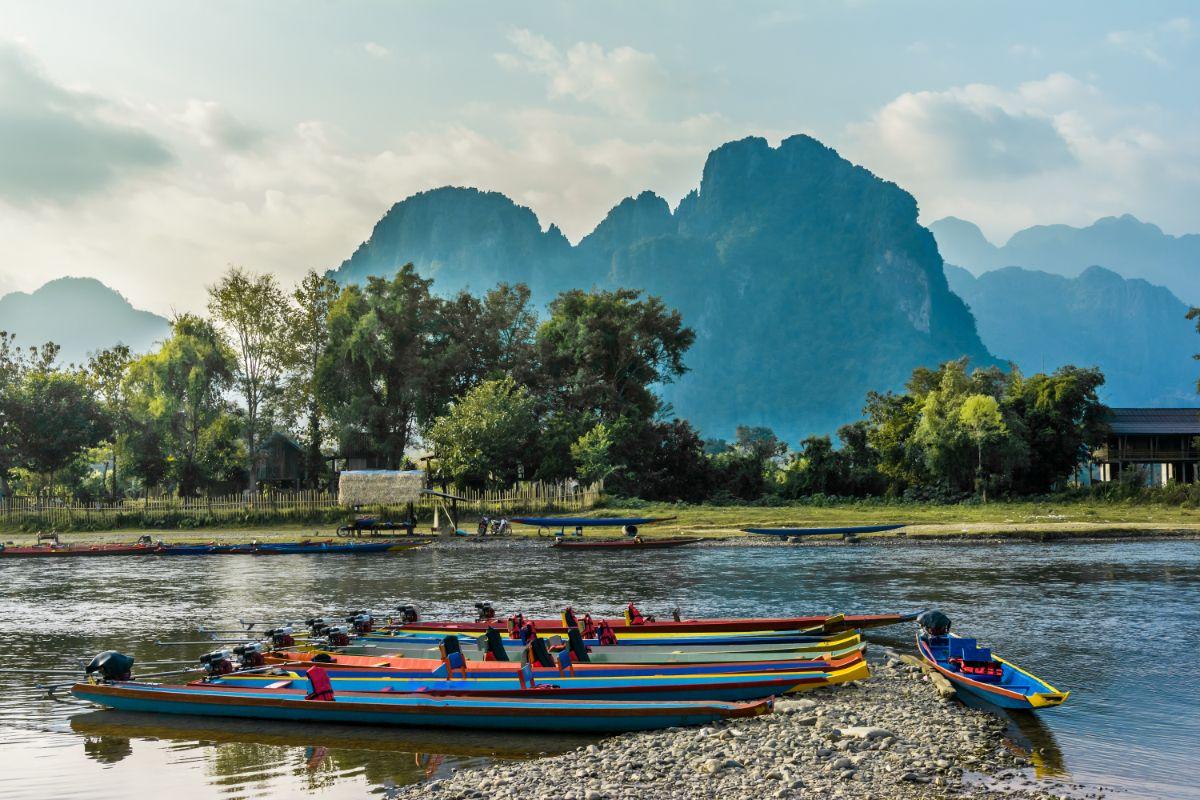 The fishing village of Vung Vieng is a typical Vietnamese village located near Bai Tu Long Bay and Halong Bay. Vung Vieng is a small, floating and quiet Vietnamese fishing village, located about 25 km from the mainland in Quang Ninh province. Located in the middle of karst rocks, this village is only accessible by boat. Vung Vieng can be reached by taking a motorboat from the port of Tuan Chau. But once you arrive at the village, you'll have to take smaller bamboo boats around, ridden by locals.
Although Vietnam is famous for the presence of such villages, Vung Vieng is in fact one of only four such villages remaining in the Ha Long Bay area. And of the four, it is arguably the most harmonious, community-oriented and ecologically sustainable, maintaining its traditions and nurturing its roots in authenticity.
A visit to Vung Vieng is rewarding in terms of the breathtaking scenery of Bai Tu Long Bay and a heavenly boat ride through its nooks and crannies.
You will also be fascinated by the cultural enrichment and simple livelihoods that go hand in hand in the fishing community of this small village.
Escape to Lan Ha Bay
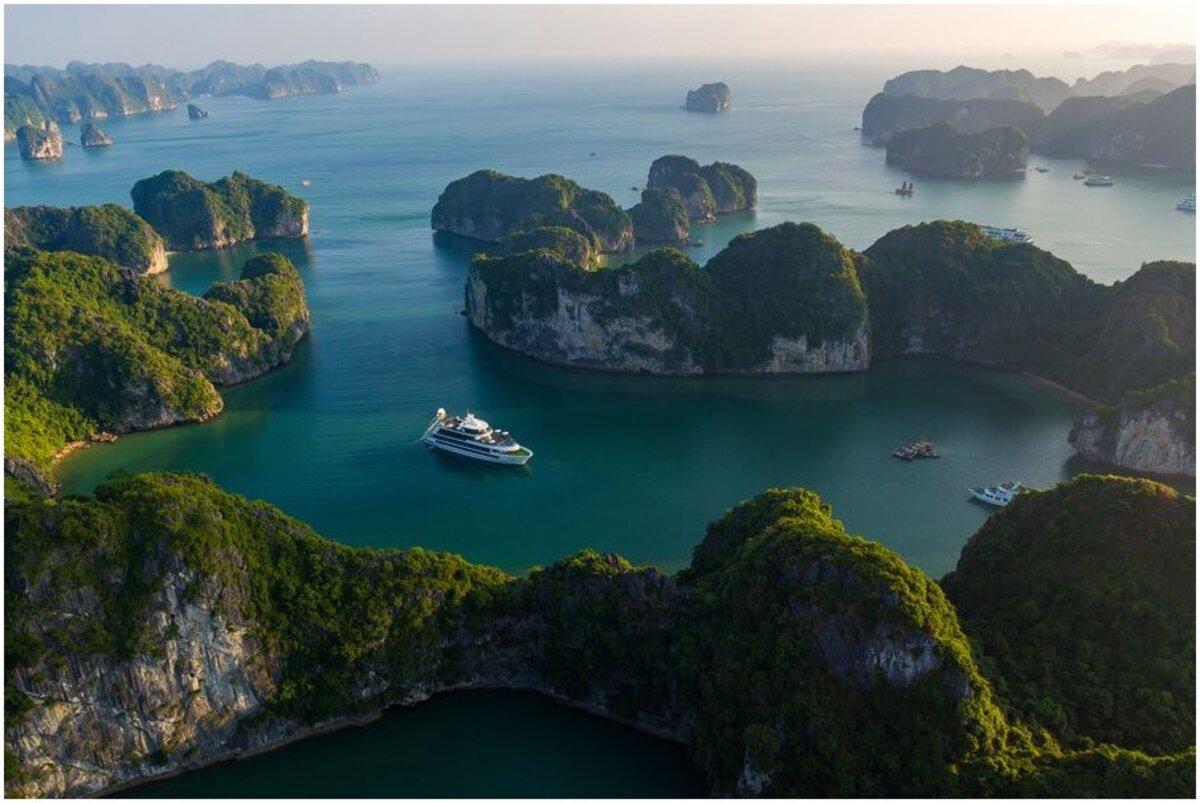 Lan Ha Bay, located off the southern and eastern coasts of Cat Ba Island, is the next big attraction in the world of UNESCO heritage sites. Thanks to its sustainable and eco-friendly tourism policies, Lan Ha Bay is untouched and uncrowded, with a number of "hidden gems" yet to be explored!
Lan Ha Bay certainly rivals Halong Bay in terms of its breathtaking natural beauty, with the added bonus of being much quieter and less touristy. Comprising over 300 karst islands and islets, the bay has some absolutely stunning white sandy beaches to enjoy. It's also a great place if you want to go rock climbing.
When to go to Halong Bay?
Best time for the weather
Benefiting from the warm tropical climate of northern Vietnam, Halong Bay's climate is characterised by two distinct patterns: a hot, humid summer and a cold winter. Between these seasons, there are also transitional seasons called spring and autumn over a short period of time.
Spring (March to April)
Pleasant, dry weather makes spring one of the best times to take a trip to the bay. Temperatures range from 18°C to 23°C. During these months you can also expect to enjoy mild sunshine and little rainfall, perfect for sightseeing and outdoor activities.
Summer (May to September)
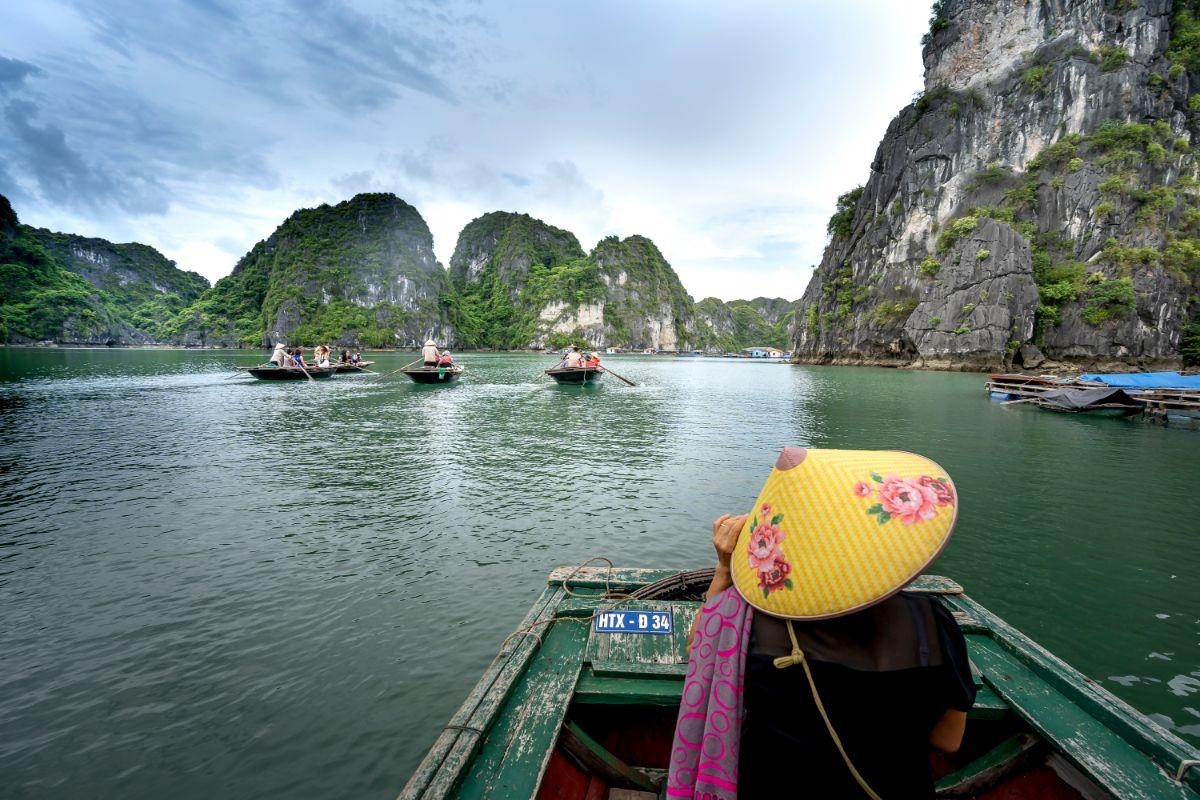 Considered the off-season, especially for foreigners, the hot and humid summer can be really irritating and harsh for travellers. The extreme heat usually lasts all day, averaging 30°C, so sunscreen is a must. The hottest months are June, July and August. August also has the highest rainfall and the highest risk of storms.
Despite this, summer allows beachgoers to swim freely in the cool water and participate in many water activities. Budget-conscious travellers can also save a lot of money as many tour operators offer promotions and discounts during this season.
Autumn (late September - October)
All too short in duration, autumn is still the best season of the year. It is also the second peak tourist season in Halong Bay. Your cruise holiday will also be more enticing with less rain and more sunshine, ideal for going out.
Winter (November - February)
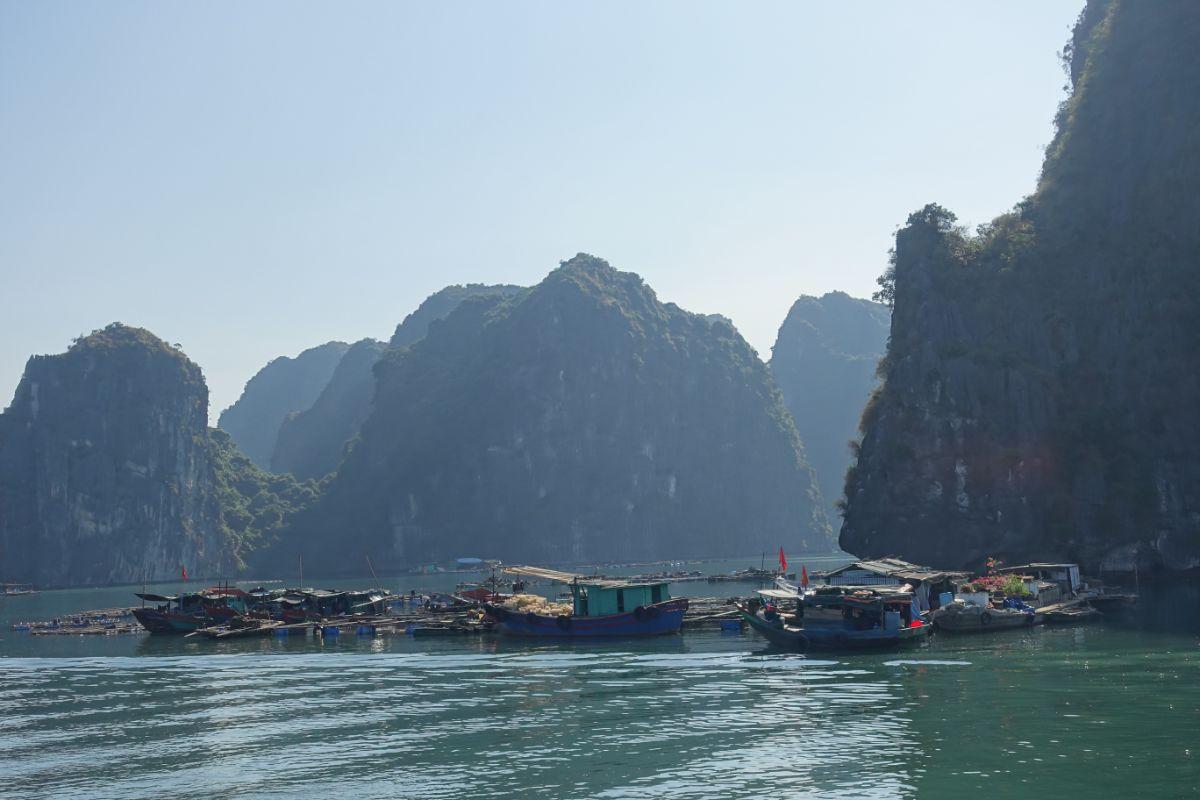 Winter is undoubtedly the coldest time of the year. Temperatures drop to around 10°C and 20°C and the weather is dry. As a result, it is almost impossible to swim during this period and thick fog in the early morning can obstruct your vision. An advantage of winter is that it is the festival season with several important occasions such as New Year and Lunar New Year.
Verdict
For the best weather conditions, the best months to visit Halong Bay are probably April and May. The weather is likely to be warm but not too hot, with fewer showers and more sunshine.
Best period according to tourist seasons
High season
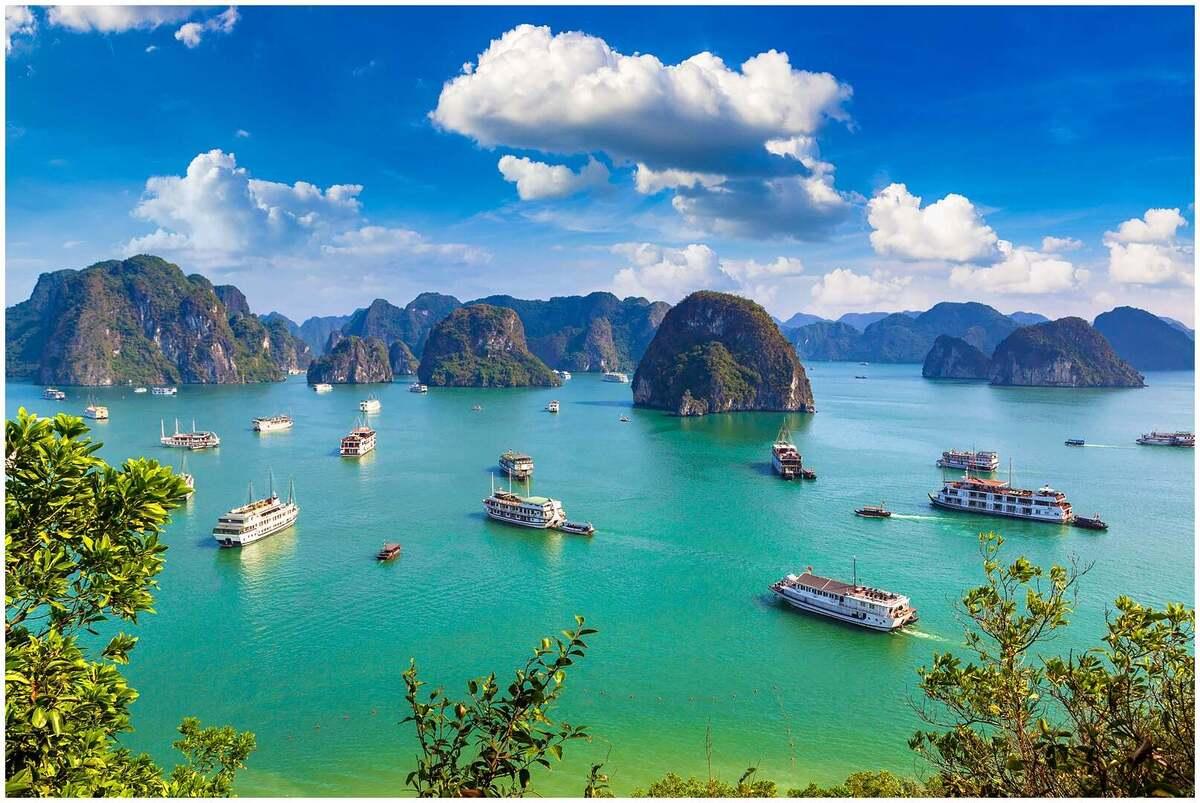 Any time is a good time to visit Halong Bay, but some months receive more visitors than others. The high season falls in December and January - the months that coincide with the Christmas and New Year holidays. October, November, February, March and April are also popular with travellers. During these months, the weather is also the best for visiting Halong Bay.
Off season
The period from May to September is often considered a low season for international travellers to Halong Bay. Aside from the bright sunshine - which makes the bay perfect for water activities - the uncrowded beaches and various cruise promotions are all reasons to plan your holiday at this time of year.
Verdict
A happy medium would be the months of March to May, between the peak and off-peak seasons. There are fewer international travellers, which means that prices are generally not at their highest and there are fewer crowds. In addition, the weather is milder than the rest of the year: not too hot, not too humid. What more could you want?
Best time according to the events calendar
Vietnamese people love to party, so naturally there are many festivals and celebrations to consider when planning your trip to Halong Bay. Some festivals mean that the area comes alive, while others mean that many locals stay at home and enjoy some quality family time.
Tet (Lunar New Year)
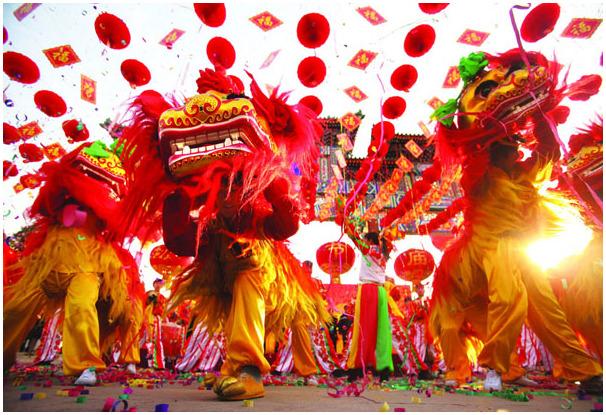 Tet is considered the most important of all national holidays in Vietnam, and is primarily a time for Vietnamese to spend with family and friends. It is traditionally celebrated on the first day of the Lunar New Year, which is always in January or February.
Although this is an exciting time of year, it is also a very busy time, as for 9 days Vietnamese people are off work and travelling around the country to visit family, so transport networks are often very congested.
Despite the holiday, cruises and tours in Halong continue to operate as normal and are sure to give you a good time with the festive atmosphere. Just be sure to allow extra time if you plan to visit Halong Bay from elsewhere in the country!
Halong Bay Carnival
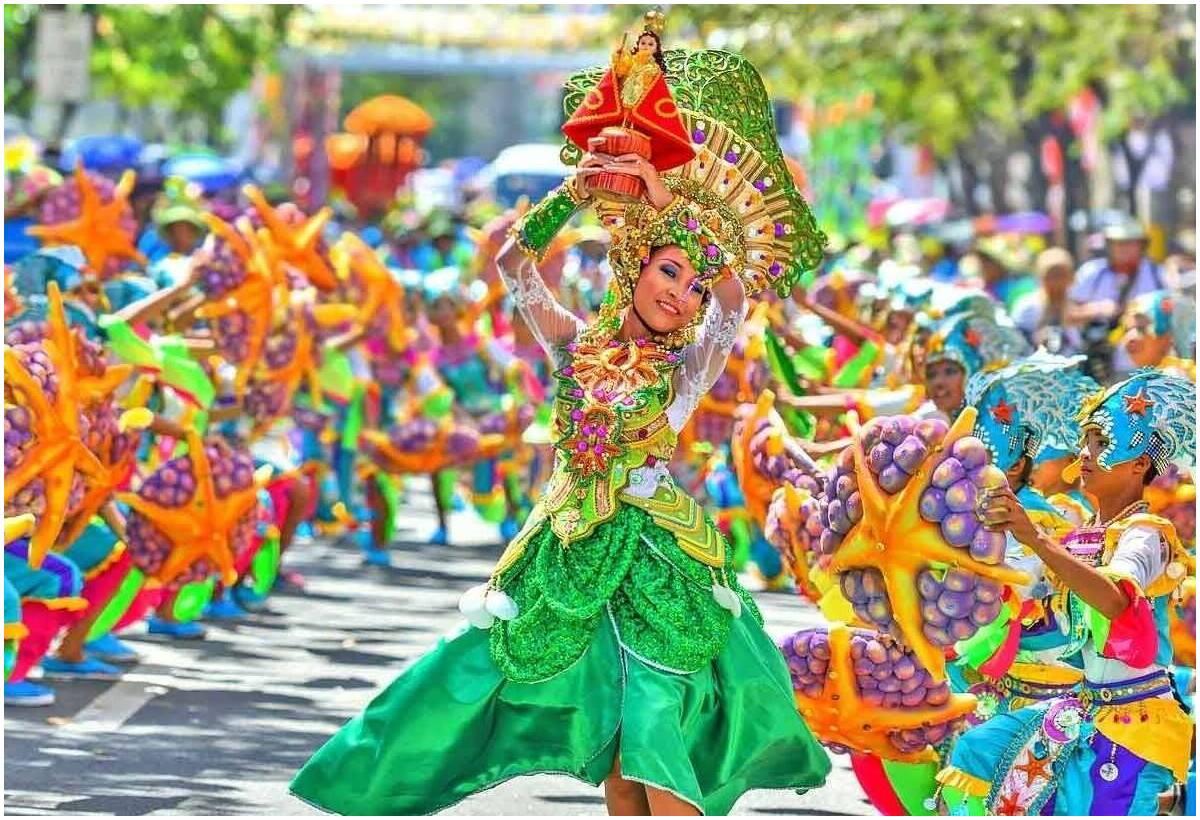 Halong Bay Carnival is one of Vietnam's most exciting annual festivals and attracts thousands of tourists from all over the world. Highlights include lively street parades, performances by international troupes, dazzling fireworks and a great display of local culture. The carnival is usually held at the end of April or beginning of May, which is very timely as it coincides with the best weather.
Other festivals
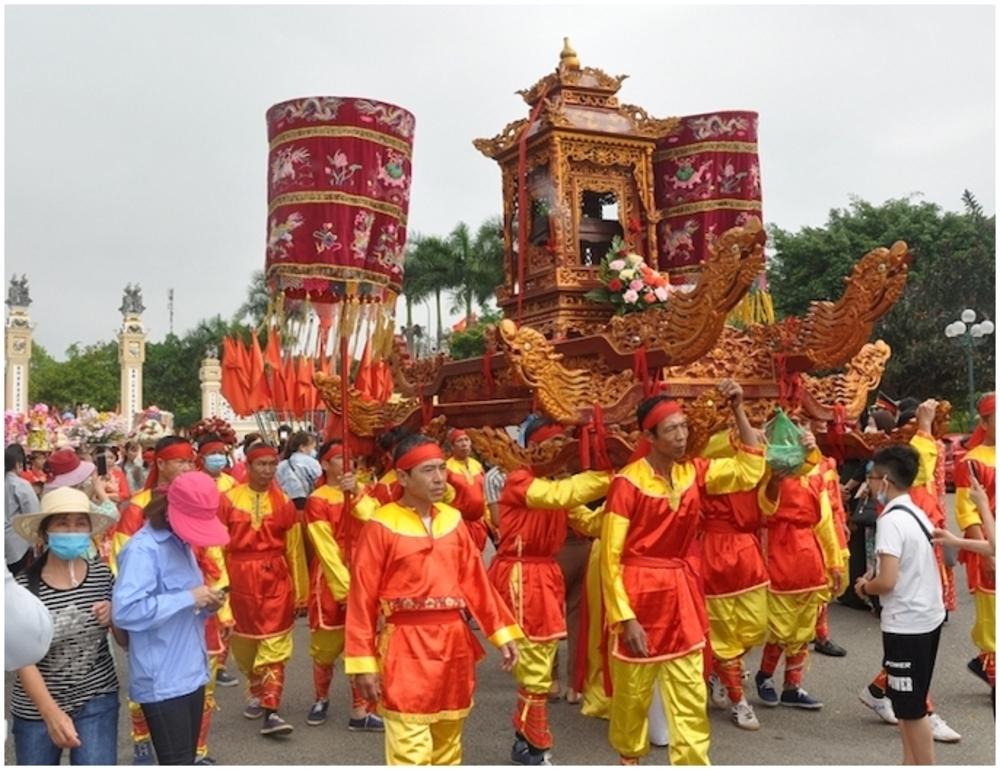 There are many other festivals that are celebrated in and around Halong Bay. The Yen Tu Festival is a period after the Tet holiday when thousands of people make a pilgrimage to the top of Yen Tu Mountain to pray for good news for the New Year. It takes place from the first to the third lunar month, which usually runs from February to April.
The Bach Dang Festival celebrates the historical military victories on the Bach Dang River and attracts many tourists and visitors every year. During the Bach Dang Festival, there is a river procession, wrestling, and a general party atmosphere! Bach Dang is also celebrated around April or May.
Verdict
If you are looking for excitement and fun festivities, then you should definitely plan your trip to Halong Bay to coincide with the Halong Carnival. However, if you prefer a quieter holiday, avoid the months of April and May!
In brief
Best time to visit Halong Bay: March, April, May, October, November and December.
For sightseeing: April, May, June, October, November and December.
For outdoor activities: March, April, May and June.
For savings: late May, June, July, August and early September.
Read also : When to go to Vietnam? The complete guide for all tastes
How many days do you need in Halong Bay?
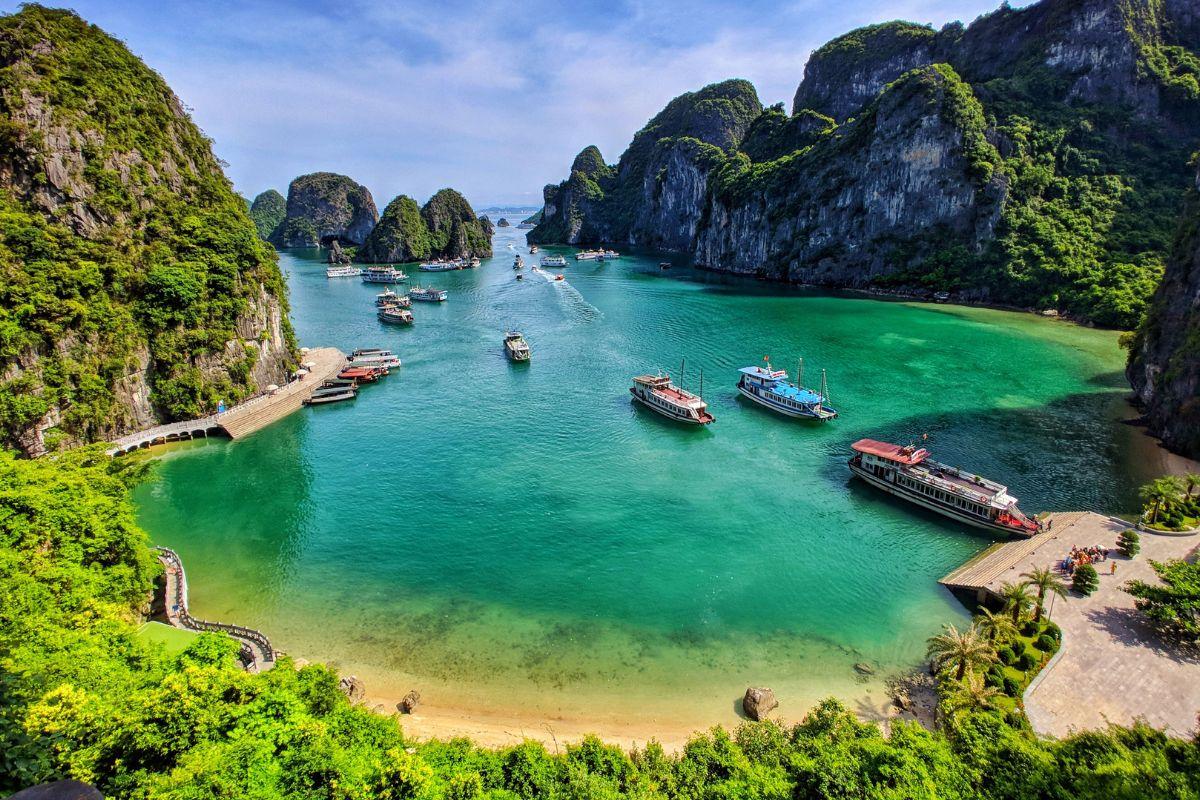 For most travellers planning to visit Vietnam's top tourist destination, a frequently asked question is "How many days do I need to stay in Halong Bay?".
Although there is no right or wrong answer, most tourists visiting Halong Bay take a 1-2 night cruise, often spending another night on Cat Ba Island.
If you are on a tight schedule, you will probably only be able to visit Halong Bay. If you have the luxury of more time, look for a cruise ship that goes to Lan Ha or Bai Tu Long Bays, allowing you to explore and discover the hidden side of this UNESCO gem.
Final Thoughts
Halong Bay is an amazingly beautiful place. Whether you like to sit by the beach, are a thrill seeker or want to try your hand at a cooking class, there is something for you in Halong Bay during your stay.
You'll find that the activities to do here are endless - pick your favourites from our list!
Or if you're ready to take to the sea, simply choose your cruise and let the adventure begin!
Halong Bay FAQs
Can I swim in Halong Bay?
Absolutely! This World Heritage Site is considered one of the best places to swim in Vietnam because of its many pristine waters. The bay is not only a great place to sunbathe, it is also ideal for swimming in the clean, refreshing, emerald-coloured waters. The best places to swim are in areas where the waters are calm and the beaches are not overcrowded. Swimming in the bay is a unique experience not to be missed!
Are there sharks in Halong Bay?
So far, NO sharks have been found or warned about in Halong Bay. If you are travelling on a cruise ship, simply follow all the safety instructions given by the cruise operator when you go swimming or kayaking, and you will have nothing to worry about.
Is Halong Bay a natural wonder of the world?
The central area of Halong Bay has been recognised twice by UNESCO as a World Natural Heritage Site in 1994 and 2000, with special global geological values. On 12 November 2011, Ha Long Bay was designated by the New Open World organisation as one of the seven new natural wonders of the world.